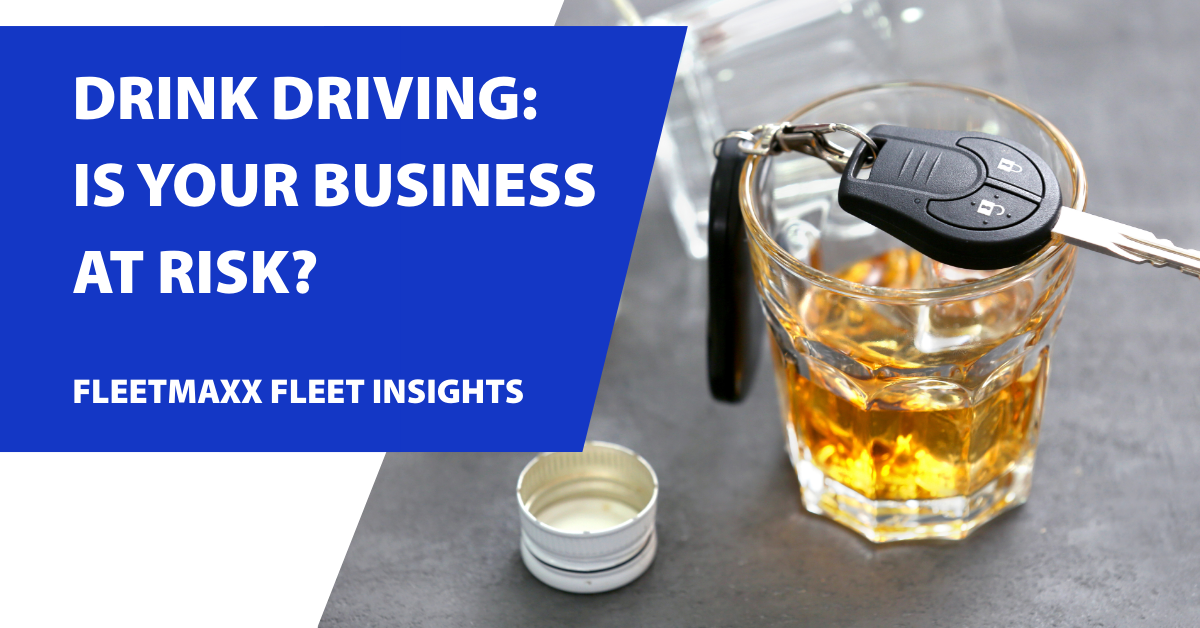
2,500 repeat drink drivers and counting: what this means for your fleet
Repeat drink driving article by Rachel Pearson, Key Account Manager, Fleetmaxx Solutions
As Key Account Manager at Fleetmaxx Solutions in Whitstable, I spend my days talking to fleet operators about compliance, safety and responsibility. Most businesses I work with take that responsibility seriously. They train drivers, monitor behaviour and invest in safer vehicles.
That is why the latest figures make such sobering reading.
Recent analysis by the RAC, using data from the Driver and Vehicle Licensing Agency, has revealed that more than 2,500 motorists have been caught drink driving three or more times in the past 11 years.
Yes, three or more times.
A Freedom of Information request uncovered 2,553 drivers who received at least three DR10 or DR20 endorsements since 2014. One individual racked up 10 convictions. Another had eight. Thirteen drivers had six. In total, 26,819 licence holders were convicted more than once during that period.
Overall, 220,638 motorists currently hold drink driving endorsements. Those endorsements remain on a licence for 11 years from the date of the offence. That is not a short memory. That is more than a decade of record.
Why repeat drink driving matters to fleets
For businesses running vehicles, this is not just a headline. It is a risk conversation.
Drink driving is not only illegal. It is catastrophic for reputation, insurance costs, duty of care obligations and, most importantly, for human life. One poor decision can undo years of hard work building a business.
The fact that thousands of drivers are reoffending suggests that licence disqualification alone is not always enough to break the cycle. As Rod Dennis from the RAC rightly pointed out, if someone is determined to drive after drinking, a ban does not physically stop them.
That is where alcohol ignition interlocks, often called alcolocks, enter the discussion. These devices require a breath test before the vehicle will start. If alcohol is detected, the engine simply refuses to cooperate. No drama. No negotiation. Just a firm mechanical no.
With 82 percent of drivers reportedly supporting their introduction for repeat offenders, the debate is clearly moving forward. The data has been published as part of the Lock Out Drink Driving Campaign, launched in December 2025, calling for a mandatory alcolock programme.
A broader road safety picture
This conversation also aligns with the Government’s new Road Safety Strategy, which aims to cut road deaths and serious injuries by 65 percent by 2035. Consultation on new measures is open until 31 March 2026.
For fleet operators, this is a reminder that compliance is not static. It evolves. Expectations rise. Standards tighten. And rightly so.
At Fleetmaxx Solutions, we often talk about keeping vehicles on the road, for less. However, the first priority must always be keeping people safe. Policies, training, telematics, clear driver guidelines and robust checks are not box ticking exercises. They are protective layers.
Support when difficult situations arise
Of course, prevention is always better than cure. Yet sometimes transport businesses find themselves facing difficult HR situations, including drink driving offences involving employees.
That is where the right support makes all the difference.
Through our transport consultancy partner, small to medium sized businesses can access professional HR advice, support and guidance covering every stage of an employee’s life cycle. From recruitment and onboarding, to managing conduct issues while employed, right through to exit processes, you are not left to navigate it alone.
With over 30 years of HR experience and knowledge, the consultancy service covers a wide range of HR matters, helping ensure that any disciplinary processes, investigations or compliance concerns are handled fairly, consistently and in line with current employment legislation.
For transport operators, that reassurance is invaluable. Road safety, regulatory compliance and employment law often overlap. Having expert guidance in place helps protect your people, your business and your operator licence.
Repeat drink driving: The reality remains stark.
More than 2,500 motorists caught repeat drink driving, three or more times in the last 11 years.
That is not just a statistic. It is a warning light on the dashboard of road safety in Great Britain, and a reminder that strong policies, clear leadership and the right professional support are essential for every fleet.