Company vehicle collision procedures every business should know
Vehicle Collision Procedures Guide by Rachel Pearson, Key Account Manager and Advanced FORS Practitioner at Fleetmaxx Solutions
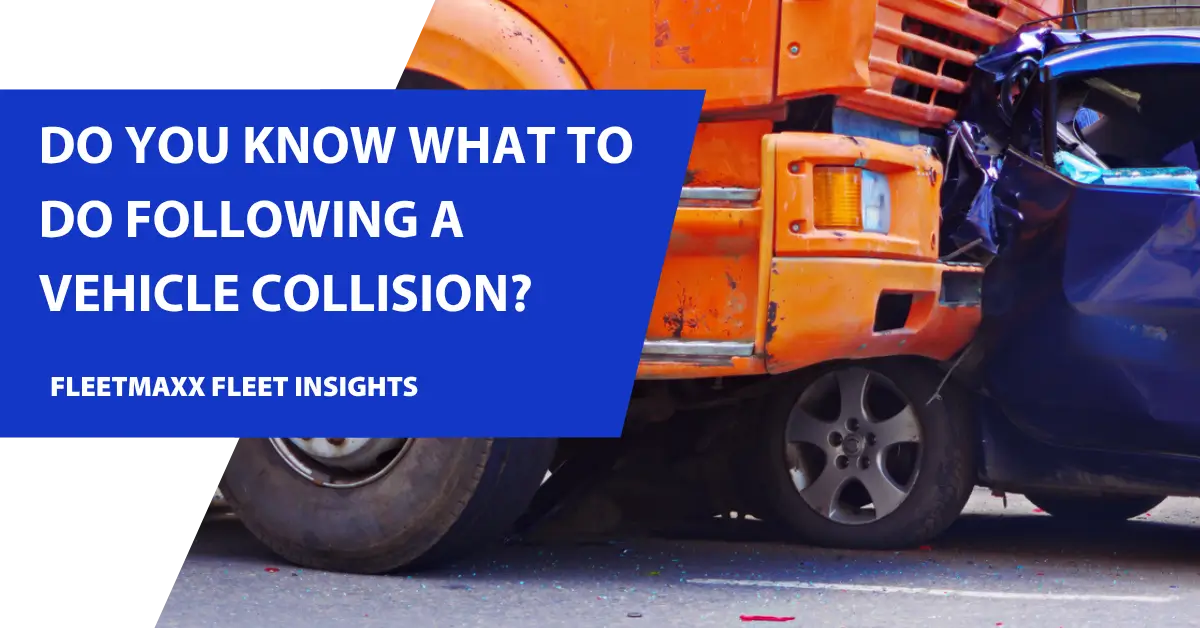
According to provisional figures from the Department for Transport, there were 127,161 reported road casualties in Great Britain in the year ending June 2025. For businesses that rely on company vehicles, even a minor road traffic incident can quickly become stressful for both drivers and employers.
Many drivers immediately worry about disciplinary action, insurance implications, and whether a collision in a company vehicle could affect their future employment or personal insurance premiums. Fleet operators, meanwhile, must manage legal and regulatory responsibilities, claims processes, repairs, and operational disruption.
Understanding what happens after a work vehicle collision can help reduce confusion and ensure the correct steps are taken from the outset. This guide explains the immediate actions drivers should take, how liability is typically handled in the UK, and how businesses can reduce future road risk through better management and technology.
Vehicle collision procedures guide – Key takeaways
- Learn the immediate steps to take after a company vehicle collision
- Understand how liability is shared between drivers and employers
- Discover how business vehicle insurance usually works
- Find out when disciplinary action may — and may not — apply
- See how telematics and fleet technology can protect drivers and businesses
Vehicle collision procedures guide contents
- Immediate Actions After a Company Vehicle Accident
- Reporting the Incident
- Avoid Admitting Fault at the Scene
- Understanding Liability and Insurance
- Business Use vs Personal Use
- When a Driver May Be Personally Liable
- Potential Consequences for Drivers and Businesses
- Disciplinary Procedures
- Will It Affect Personal Insurance?
- Reducing Future Road Risk
- Using Telematics and Vehicle Tracking
- The Importance of Driver Training
- Final Thoughts
Immediate actions after a company vehicle collision
The first priority after any collision is safety. Drivers should check themselves, conduct a dynamic risk assessment around their safety, check others for injuries and contact emergency services if anyone is hurt or the road is blocked.
Once it is safe to do so, exchange key details with the other parties involved, including:
- names and contact information
- vehicle registration numbers
- insurance details
- employer or company information where applicable
Policies around recording details at the scene of a collision should be followed rigidly. If there is a risk of serious or fatal injury it is highly likely that media devices will be seized by Police, examined and any footage captured may be used during the course of the Police investigation.
If there are independent witnesses, ask for their contact details. Witness statements can play an important role when insurers assess fault.
Reporting the vehicle collision
Drivers should report the incident to their employer or fleet manager as soon as possible, even if the damage appears minor.
Under the Road Traffic Act 1988, if details cannot be exchanged at the scene, the collision must be reported to the Police as soon as practicable, but in any event within 24 hours. To comply with this requirement it is advisable to call Police to make an initial notification of the collision via the telephone and record an incident number. For emergencies use 999, for non-emergency situations use 101.
Many businesses now use digital vehicle inspection and compliance systems to record daily walkaround checks. These records can help demonstrate that a vehicle was roadworthy before the journey began and may support both the driver and employer during investigations. It is therefore important that walkaround checks are thorough and record any vehicle defects or damage on every occasion; even if damage is minor and has been in existence for a long time.
Avoid admitting fault at the scene of the vehicle collision
Drivers should remain calm and professional following a collision. While it is natural to apologise after a stressful event, statements made at the scene could later be interpreted as an admission of liability.
Instead, focus on gathering factual information.
Understanding liability and insurance
One of the most important legal concepts in work-related vehicle incidents is vicarious liability.
In many cases, employers are legally responsible for the actions of employees when they are acting within the course of their employment. For example, if a driver is making deliveries or travelling between appointments for work purposes, the company’s insurance policy would normally handle third-party claims and vehicle repairs.
However, liability can become more complicated when a vehicle is used outside authorised business activities.
Business use vs personal use
Some employers allow drivers to use company vehicles for personal journeys. In these situations, insurance cover may differ depending on the terms of the policy and employment agreement.
Drivers should check:
- whether private use is permitted
- any restrictions within the fleet policy
- who is responsible for excess payments
- reporting requirements after an accident
Under the Health and Safety at Work etc. Act 1974, employers also have a duty to ensure company vehicles are maintained in a safe and roadworthy condition.
If a collision occurs because of poor maintenance or mechanical failure, responsibility may rest with the business rather than the driver.
When a driver may be personally liable
There are situations where responsibility may shift to the individual driver.
This can happen where:
- the vehicle was being used for unauthorised personal activities
- company safety procedures were ignored
- the driver acted recklessly
- criminal offences were involved, such as drink or drug driving
Legal professionals sometimes refer to unauthorised personal use as “frolic and detour”, meaning the employee stepped outside the scope of their work duties.
In serious cases, insurers may refuse cover altogether if policy conditions were breached.
Potential consequences for drivers and businesses
It is understandable for drivers to worry about disciplinary action after a collision. However, a single collision does not automatically result in disciplinary processes.
Most employers will carry out an internal investigation to understand:
- what happened
- whether procedures were followed
- whether training or support is needed
- if any safety improvements should be made
The purpose is often to reduce future risk through learning, rather than simply assign blame.
Disciplinary procedures
Company policies and employment contracts normally outline how vehicle incidents are handled.
There is an important distinction between:
- a genuine driving mistake
- repeated unsafe behaviour
- gross misconduct
Serious offences such as dangerous driving, excessive speeding, or driving under the influence are far more likely to result in disciplinary action or dismissal.
Drivers who believe procedures are being handled unfairly may wish to seek HR or legal advice.
As part of our growing transport consultancy offering, Fleetmaxx Solutions is pleased to introduce comprehensive fleet HR consultancy services, now available through our trusted consultancy partner.
Will it affect personal insurance?
Many UK insurers ask drivers to declare all collisions, incidents or claims from the previous three to five years, including incidents involving company vehicles.
Even where the driver was not at fault, insurers may still consider the incident when calculating future premiums.
Failing to disclose previous collisions, incidents or claims when required could potentially invalidate a future claim or insurance policy.
For this reason, drivers should always answer insurer questions honestly and review the wording of their policy carefully.
Reducing future road risk
For businesses operating fleets, prevention is always more cost-effective than dealing with the aftermath of a collision.
Road traffic incidents can lead to:
- increased insurance costs
- vehicle downtime
- operational disruption
- reputational damage
- legal complications
Investing in driver safety and fleet management systems can significantly reduce these risks.
Using telematics and vehicle tracking
Modern telematics systems provide far more than vehicle location tracking.
Many systems can record:
- speed
- harsh braking
- acceleration patterns
- route history
- driver behaviour data
This information can help businesses investigate incidents fairly and may provide valuable evidence if liability is disputed.
Telematics can also support driver safety by identifying risky driving habits and helping managers plan safer, more realistic routes.
The Royal Society for the Prevention of Accidents identifies fatigue as a major contributing factor in serious road collisions, particularly on high-speed roads. Better route planning and scheduling can help reduce driver fatigue and improve safety outcomes.
The importance of driver training
Ongoing driver training and clear road risk policies are essential for any business operating company vehicles.
Effective fleet safety management should include:
- regular licence checks
- vehicle maintenance schedules
- driver training
- incident reporting procedures
- fatigue management policies
- compliance monitoring
Taking a proactive approach to road risk not only improves safety but may also help reduce long-term insurance and operational costs.
Final thoughts
A company vehicle collision can be stressful for everyone involved, but understanding the correct procedures can make the situation far easier to manage.
Drivers should focus on:
- staying calm
- gathering appropriate evidence
- reporting incidents promptly
- following company procedures
- communicating honestly with insurers and employers
For businesses, strong fleet management policies, driver support, and modern telematics systems can help reduce risk while protecting both employees and company assets.
By taking a proactive and compliant approach to road safety, organisations can better protect their drivers, maintain operational efficiency, and reduce the financial impact of future incidents.