ULEZ vehicle standards, exemptions and how it differs from the Congestion Charge
ULEZ vehicle standards, Your Fleet Matters Guide by Steve Clarke, Marketing Manager at Fleetmaxx Solutions
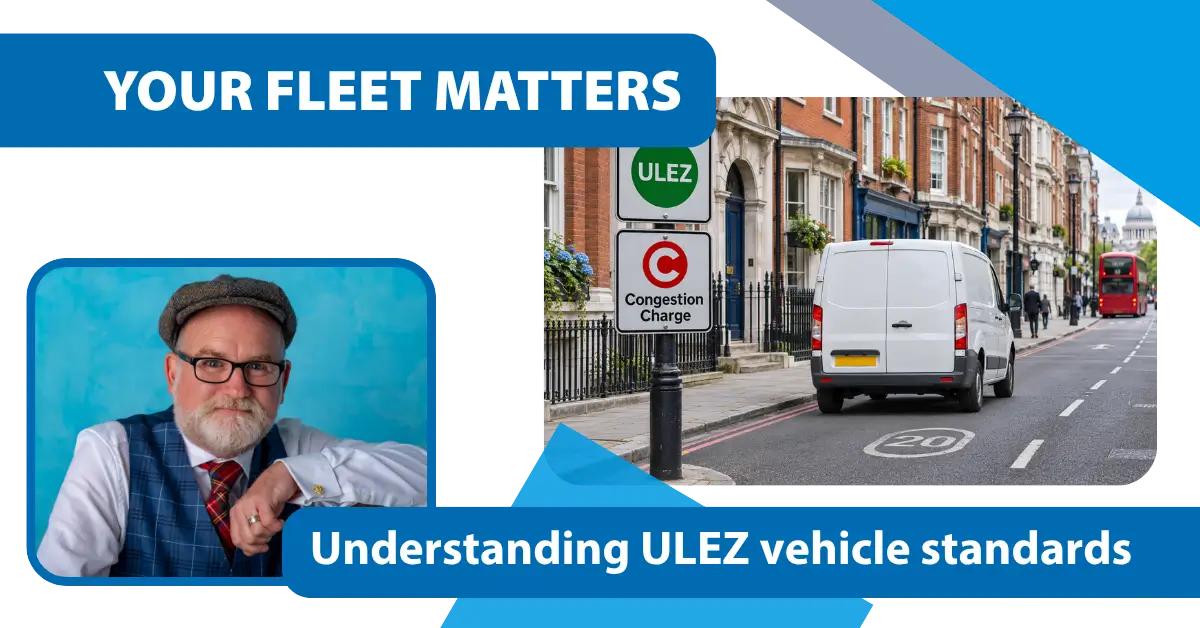
The ULEZ is not the same charge as London’s Congestion Charge. It is an emissions-based charge for vehicles that do not meet the required standards: according to Transport for London, petrol cars and vans must meet Euro 4, while diesel cars and vans must meet Euro 6 to avoid the ULEZ charge. For most covered vehicles, the charge is £12.50 per day.
It is easy to assume that entering the same part of London means paying the same charge, but the two schemes work differently. The Congestion Charge is £15 per day during its charging hours, while the ULEZ depends on a vehicle’s emissions compliance. Some vehicles may also qualify for an exemption, so the ULEZ charge does not apply in every case.
This guide explains which vehicles meet ULEZ emissions standards, what exemptions may apply and how ULEZ differs from the Congestion Charge. You will also learn what to check before travelling, so you can assess whether a journey could incur a charge and plan vehicle use with confidence.
Written by Steve Clarke, Marketing Manager at Fleetmaxx Solutions.
Key takeaways
- Use your vehicle’s fuel type, category and emissions details to understand whether it meets London’s requirements.
- Some vehicles may qualify for an exemption, including certain classic vehicles with historic tax status.
- Keep emissions-based charging separate from the Congestion Charge when planning journeys into London.
- Understand how the charging rules apply before setting routes or scheduling fleet travel.
- Fleetmaxx Solutions offers route planning, Vehicle Tracking Systems and EV Charge Cards to support fleet operations.
Which vehicles meet the ULEZ emissions standards?
Compliance depends on the vehicle’s emissions standard, not simply its age or appearance. According to Transport for London, petrol cars and vans that do not meet the Euro 4 emissions standard are subject to the London ULEZ charge. Diesel cars and vans that do not meet the Euro 6 emissions standard are also subject to the charge. Motorcycles that do not meet Euro 3 are liable too.
Use the vehicle registration number to check a vehicle’s status with Transport for London. Enter the registration accurately, then review the result for that specific vehicle. A model’s year can offer a rough clue, but it does not establish compliance on its own. For example, petrol cars first registered as new with the DVLA after 2005 will generally meet the standards, but the vehicle checker gives a more useful answer for an individual journey. Keep the result with the vehicle record as its ULEZ status.
Check each vehicle separately, including cars, vans and motorcycles. A fleet may include vehicles with different fuel types, emissions standards and registration details, even if they are the same make and model. Record each result against the relevant vehicle so route planning and journey decisions are based on accurate information. If registration details have changed, use the current details when checking.
The charge applies to non-compliant vehicles travelling within the zone, including vehicles passing through it. The M25 is not part of the zone, even where it runs within the boundary. Transport for London allows drivers to pay by midnight on the third day after a journey, or up to 90 days in advance. These payment timings are not a vehicle exemption or a general grace period, so plan around the vehicle’s compliance status and the ULEZ rules.
Exemptions depend on the vehicle category or its recorded status. Classic cars over 40 years old can be exempt if registered with the DVLA in the historic vehicle tax class. A classic car built before 1 January 1973 can also be exempt. Buses, coaches and minibuses over 5 tonnes gross vehicle weight do not need to pay the charge. Check the relevant vehicle’s status before relying on an exemption.
Some owners have also had an alternative to scrapping: since 2024, cars subject to London’s emissions rules could be donated to Ukraine instead. This does not make the vehicle compliant or exempt for a London journey. Treat donations, exemptions and payment arrangements as separate matters. Clear vehicle records help prevent an eligible exemption being confused with an allowance to travel without charge.
Is ULEZ the same as a Congestion Charge zone?
No. ULEZ and the Congestion Charge work differently, so a journey may involve one charge, both or neither. Check the vehicle requirements and route before setting off.
How ULEZ differs from the Congestion Charge
ULEZ charges depend on whether a vehicle meets the required emissions standards. The Congestion Charge applies to driving in its zone during charging hours. Paying one charge does not cover the other: a compliant vehicle may still incur the Congestion Charge, while a non-compliant vehicle may incur the ULEZ charge even when the Congestion Charge does not apply.
According to Transport for London, the ULEZ charge is £12.50 per day for most covered vehicle types. The London Congestion Charge is £15 per day during its charging hours. These fees relate to separate schemes, not alternative rates for the same charge. For example, a compliant diesel car entering the Congestion Charge zone during charging hours may owe that charge, despite meeting emissions standards. A vehicle’s ULEZ status does not settle whether the Congestion Charge applies.
Vehicles covered by each charge
ULEZ focuses on vehicle emissions compliance, while the Congestion Charge applies to driving within its zone during charging hours. Cars, vans and motorcycles may be subject to ULEZ rules, depending on their vehicle type and emissions status. The Congestion Charge is a separate consideration for journeys into its designated area. Check both schemes for each vehicle and route.
This distinction is useful when planning a fleet’s journeys. A vehicle travelling into London might meet ULEZ emissions requirements but still enter the Congestion Charge zone. Another might travel within the wider ULEZ without entering the Congestion Charge zone. Map the intended route and assess each charge separately rather than treating London as a single charging area.
Charging hours matter particularly for the Congestion Charge. The time of a journey can affect whether the Congestion Charge applies. By contrast, the emissions charge is based on vehicle compliance and applies on chargeable days. London’s emissions charge does not apply on Christmas Day, 25 December.
Failing to pay a required charge can lead to a penalty charge notice. The London emissions penalty is £180, reduced to £90 if paid within 14 days. It increases to £270 if it is not paid within 28 days. These amounts make it important to distinguish the two schemes and pay the relevant charge, rather than assuming one payment settles both. An unpaid ULEZ charge can therefore have a different consequence from an unpaid Congestion Charge.
For each journey, note the vehicle registration, destination, route and travel time. Then check the vehicle’s ULEZ compliance and whether the route enters the Congestion Charge zone during charging hours. Reviewing the schemes separately helps identify which charges may apply, including when several vehicles are travelling on different routes.
Vehicle emissions standards & ULEZ vehicle standards
London’s emissions schemes have different rules for different vehicle categories. Their history and scope explain why the same standard does not apply to every road or vehicle.
Checking London’s emission zones
London has both a Low Emission Zone and an Ultra Low Emission Zone, which are separate schemes. The Low Emission Zone targets larger diesel vehicles weighing over 3.5 tonnes, including lorries and buses. That distinction matters for fleets: a vehicle’s category can affect which emissions rules apply, so a car’s requirements should not be used to assess a heavy vehicle.
According to Transport for London, petrol cars and vans that do not meet the Euro 4 emissions standard are subject to the London ULEZ charge. According to Transport for London, diesel cars and vans that do not meet the Euro 6 emissions standard are subject to the London ULEZ charge. Keep these thresholds tied to their fuel types when reviewing fleet records.
London’s Ultra Low Emission Zone launched on 8 April 2019. It expanded in stages, including an expansion to the area up to the North and South Circular Roads on 25 October 2021. These dates describe changes to the scheme, not changes to an individual vehicle’s emissions standard. They can help explain why older route information may show a different zone boundary.
ULEZ coverage across London
The 2023 expansion extended the scheme across all London boroughs on 29 August 2023. This expansion means that route planning should consider outer London destinations, not only central journeys. The M25 itself remains outside the zone, even where it passes within the boundary, so distinguish the motorway from local roads on either side.
Other UK schemes have their own conditions. In Oxford, the Zero Emission Zone operates daily from 7am to 7pm. Near Port Talbot’s steelworks, camera-monitored low emission zones require cars to drive at a maximum of 50mph. These examples show that the term “emission zone” does not guarantee the same vehicle standards or charging arrangement across the country.
For journeys outside London, identify the specific local scheme and the vehicle categories it covers. In Scotland, low emission zone standards for buses, coaches and HGVs are Euro VI. Do not assume London’s car and van thresholds apply to these vehicles. Considering the location, vehicle type and relevant scheme separately gives fleet planners a clearer basis for assigning vehicles and organising routes.
ULEZ exemptions
An exemption means a qualifying vehicle may not need to pay the London emissions charge. It does not automatically exempt every older vehicle or every vehicle used for a particular purpose. Meeting emissions standards and qualifying for a specific exemption are separate matters. For fleet planning, record the rule that applies to each vehicle rather than treating an exemption as a general allowance.
Classic vehicles have specific criteria. A classic car over 40 years old can be exempt if it is registered with the DVLA in the historic vehicle tax class. A classic car built before 1 January 1973 can also be exempt. These are separate qualifying routes, so age alone is not enough to establish eligibility for a car relying on the historic tax class. Check the vehicle’s recorded tax class and build date before relying on either exemption.
Vehicle weight and category matter too. Buses, coaches and minibuses over 5 tonnes gross vehicle weight do not need to pay the charge. That exemption is tied to the stated vehicle categories and weight threshold. A vehicle’s size alone does not show that it qualifies. For example, assess whether a vehicle is a bus, coach or minibus, then consider its gross vehicle weight.
Do not confuse an exemption with a grace period. An exemption concerns whether a qualifying vehicle needs to pay; payment timing concerns when a charge can be settled. Drivers can pay up to 90 days before travelling, or by midnight on the third day after a journey. Those payment options do not change a vehicle’s emissions status or create an exemption.
Christmas Day is another important distinction. The London charge does not apply on 25 December. This is a day when the charge is not in operation, rather than a vehicle-specific exemption. For other travel dates, assess the vehicle’s own status and any qualifying exemption. Recording the travel date separately from the vehicle’s eligibility helps prevent the two rules being mixed up.
Scrappage support was also separate from an exemption. London residents may have been eligible for a £2,000 grant to scrap a non-compliant car, but the Mayor of London’s scrappage scheme closed in September 2024. Since 2024, cars subject to the rules could also be donated to Ukraine instead of being scrapped. Neither option makes a vehicle compliant or exempt for London journeys.
For a fleet record, note the vehicle category, gross vehicle weight, build date and DVLA tax class where relevant. Then record whether the vehicle meets emissions standards, qualifies for an exemption, or requires payment. Keep these outcomes distinct: a classic car exemption, a qualifying bus category and travel on 25 December rely on different criteria.
Fleetmaxx Solutions
Fleetmaxx Solutions helps businesses turn London’s emissions and charging rules into practical fleet planning. Once you know which vehicles may be affected, route planning can help determine where vehicles travel, while Vehicle Tracking Systems support the management of fleet movements. A vehicle compliance app can also help organise wider vehicle compliance tasks.
The right support depends on your fleet’s needs. A business reviewing routes into London may benefit from route planning; one managing a varied fleet may find tracking and compliance tools useful alongside its existing processes. These services support fleet operations, but they do not change a vehicle’s emissions status or exempt it from a charge.
To discuss how Fleetmaxx Solutions can support your fleet planning, contact the team.
Plan your next fleet move
Make London travel part of your wider fleet plan rather than treating each journey as a one-off decision. Build vehicle and route considerations into scheduling, and keep the people managing daily operations aligned. This makes it easier to account for changing destinations and select suitable vehicles for planned work.
Fleetmaxx Solutions supports fleet operations with Business Fuel Cards, EV Charge Cards, Route Planning and Vehicle Tracking Systems. Each service addresses different operational needs, so the right combination depends on how your business uses its vehicles. These services do not change emissions requirements, but can complement your planning and compliance processes.
If you are reviewing how London journeys fit into your fleet, take the next step and contact Fleetmaxx Solutions for fleet support. A practical conversation can help you consider the operational support that suits your business. With a clear plan in place, you can approach future journeys with greater confidence.

ULEZ vehicle standards frequently asked questions
What is the ULEZ?
The ULEZ is London’s Ultra Low Emission Zone, a scheme intended to improve air quality by charging certain vehicles that fail emissions requirements. It launched on 8 April 2019. For drivers, the practical point is that the rules relate to journeys within London’s zone, not simply vehicle ownership. A vehicle used only outside the zone is not charged for those journeys.
How do I know if my vehicle is ULEZ compliant?
Enter the vehicle registration number in Transport for London’s online vehicle checker. The result applies to the registered vehicle, so do not rely only on its model name, appearance or estimated age. For a fleet, record the result against each registration and share it with the people planning journeys. This helps prevent a vehicle being assigned to a London trip without its status being considered.
What is a Clean Air Zone (CAZ)?
A Clean Air Zone is an area-based scheme in England intended to improve air quality, with charges potentially applying to certain vehicle types that do not meet the relevant standards. These zones operate 24 hours a day, seven days a week, every day of the year. A charge can be prepaid up to six days before travel or paid by 11:59pm on the sixth day after driving in the zone.
Are any vehicles exempt from paying the ULEZ charge?
Yes. Some qualifying vehicles are exempt, including classic cars over 40 years old registered with the DVLA in the historic vehicle tax class. Certain buses, coaches and minibuses over 5 tonnes gross vehicle weight are also exempt. Check the vehicle’s recorded category and relevant registration details before relying on an exemption. A vehicle that meets emissions standards avoids the charge for that reason, rather than through an exemption.
Are there low emission zones in Wales, Scotland and Northern Ireland?
Rules differ across the UK, so do not assume London’s requirements apply elsewhere. In Scotland, buses, coaches and HGVs must meet Euro VI standards for low emission zones. Near Port Talbot’s steelworks in Wales, cars must drive at no more than 50mph in camera-monitored low emission zones. For a journey in Northern Ireland, check the local requirements and road signs for the area you plan to enter.
What if my car does not meet the ULEZ or LEZ limits?
If your car does not meet London’s emissions requirements, you can pay the applicable charge for a journey inside the zone or plan a route that avoids it. Transport for London allows payment up to 90 days before travel or by midnight on the third day after the journey. For other low emission zones, identify the local scheme first, as vehicle rules and payment arrangements can differ.
Legal disclaimer: This article is for general information only and is not legal advice. Check current requirements with the relevant authority.