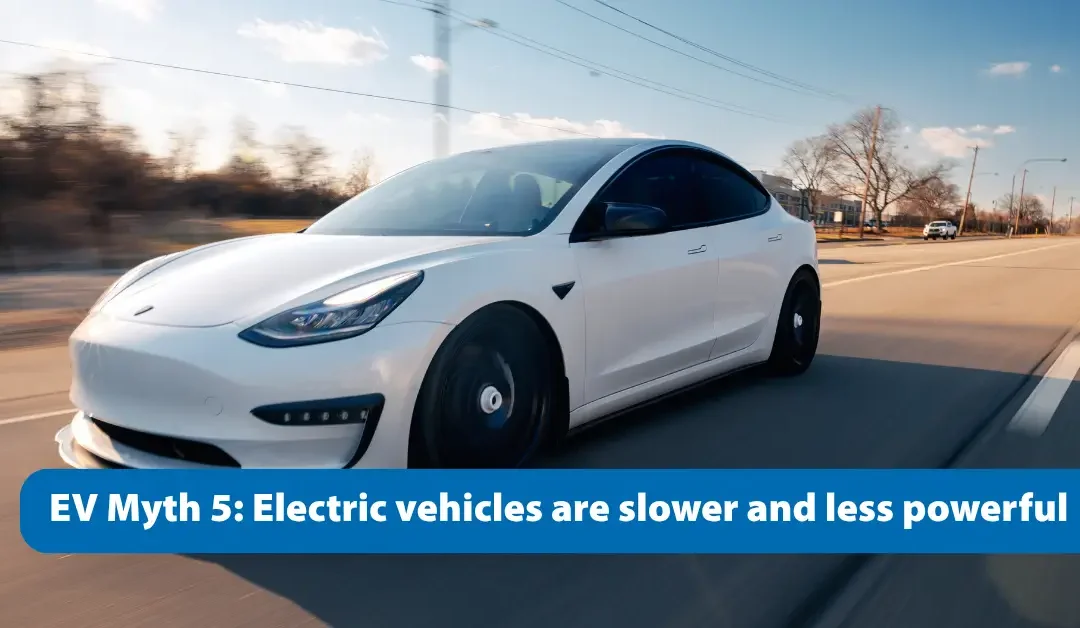
EV Myth 5: Electric vehicles are slower and less powerful than traditional cars
EV Myth 5 By Kyle Davey – EV Specialist, Fleetmaxx Solutions Ipswich
A common misconception persists that electric vehicles (EVs) are sluggish and underpowered compared to petrol or diesel cars. This couldn’t be further from the truth. In fact, many EVs outperform their internal combustion engine (ICE) counterparts — especially when it comes to acceleration and torque.
Understanding the performance capabilities of EVs
Electric vehicles have a unique design advantage: their electric motors deliver power instantly. While combustion engines rely on multiple mechanical components to build up power, EVs use electric current to generate motion — making the process much more efficient and immediate.
Unlike traditional cars, which need to build revs and shift through gears to reach peak performance, EVs deliver maximum torque from a standstill. This results in seamless, rapid acceleration that many drivers find surprisingly exhilarating.
The advantage of instant torque in electric motors
Instant torque is a game-changer. It allows EVs to respond immediately when the accelerator is pressed, with no lag or delay. This makes them especially well-suited for urban environments where stop-start driving is the norm — and incredibly effective when overtaking or merging on motorways.
In fact, several electric models now outperform high-performance petrol cars in 0–60mph acceleration tests. From family hatchbacks to electric SUVs and vans, the modern EV is designed to deliver a smooth, responsive, and powerful driving experience.