
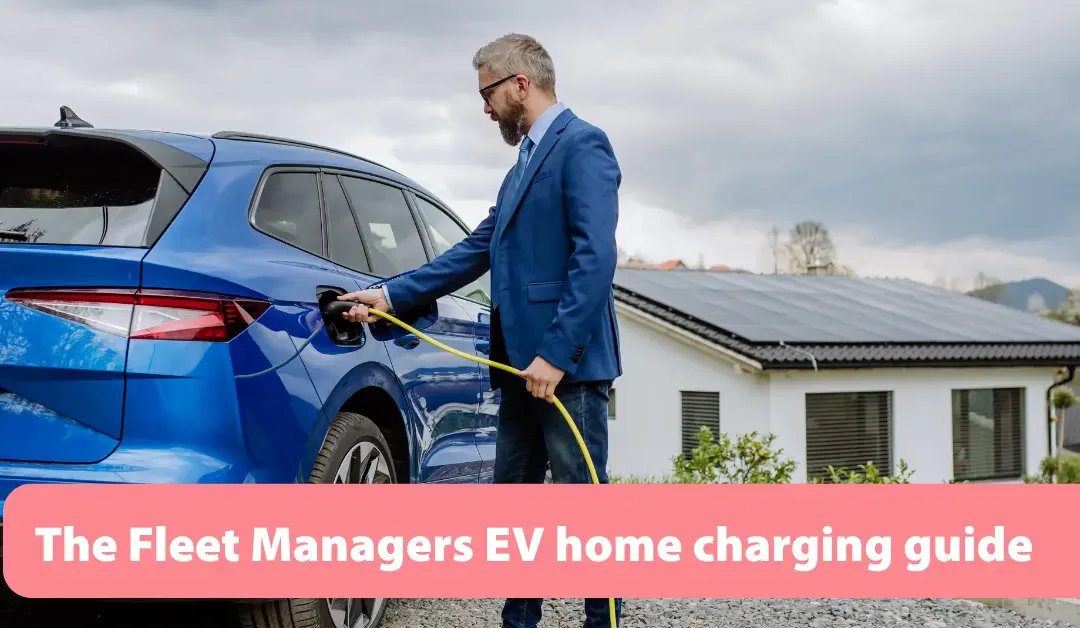
What fleet managers need to know about EV home charging
EV home charging guide By Kyle Davey, EV Specialist – Fleetmaxx Solutions Ipswich, In partnership with Rightcharge
As the UK accelerates towards a cleaner transport future, the Zero Emission Vehicle (ZEV) mandate is reshaping the way fleets operate. Every month, more businesses are introducing electric cars and vans into their operations—and with that comes one of the biggest questions I get asked as an EV specialist:
“How are my drivers going to charge, and how much is it going to cost?”
The answer more often than not is simple:
👉 EV home charging—the most cost-effective, convenient, and scalable charging method for the majority of UK fleets.
In fact, during a recent Rightcharge webinar, Ben King from The AA summed it up perfectly:
“When drivers can charge at home, we see happier teams and lower operational costs. It’s a no-brainer when managed well.”
And he’s absolutely right.
With Fleetmaxx Solutions partnering with Rightcharge, fleets now have access to a streamlined, fully compliant home-charging ecosystem that makes EV adoption easier, cheaper, and more predictable.
In this blog, I’ll walk you through everything fleet managers need to know about EV home charging, from installation to reimbursement, common challenges, and how to unlock major savings.
Why EV home charging matters for fleet managers
Switching to electric vehicles isn’t just about sustainability—it’s about improving the operational heartbeat of your fleet.
Here’s why home charging stands out:
Lower charging costs
Home energy tariffs are significantly cheaper than public rapid charging*.
| Charging type | Estimated cost per mile |
|---|---|
| Home EV charging | 1.7p – 6p (off-peak) |
| Public EV charging | ~16p |
When drivers no longer rely on public charging networks, your fleet immediately benefits from predictable, stable electricity pricing.
Boosted driver productivity
Drivers who charge at home begin every shift with a full battery.
No detours.
No queues.
No downtime.
Better driver satisfaction
Drivers appreciate the simplicity and convenience of waking up to a vehicle that’s ready to go.
Stronger sustainability reporting
Home charging offers clearer data around energy use, carbon output, and renewable tariffs—all essential for ESG (environmental, social, and governance ) reporting.
Key considerations for fleet managers rolling out home EV charging
Home EV charging might be straightforward, but implementing it across a fleet requires planning. These are the key areas to focus on.
Installation and infrastructure
Before installing a home charger, fleets should:
-
Confirm driver home eligibility, including off-street parking and electrical capacity.
-
Use OZEV-approved installers for compliance and safety.
-
Plan installation timelines to avoid delays in EV rollout.
-
Create a structured process for drivers who cannot charge at home and need workplace or public alternatives.
Our partnership with Rightcharge provides fleets with a trusted national installer network, ensuring consistency across every installation.
Cost management for home EV charging
A smooth rollout requires attention to cost and budgeting. Fleets should:
-
Budget for hardware and installation fees (grants may apply).
-
Compare long-term home charging savings with public charging costs.
-
Encourage the use of smart chargers to benefit from off-peak tariffs.
-
Ensure fair, accurate reimbursement so drivers are never out of pocket.
Rightcharge’s automated reimbursement platform removes manual admin work and ensures total transparency.
Data tracking and monitoring
With a reliable home EV charging setup, fleets can access:
-
Charging sessions
-
kWh usage
-
Charging cost
-
Mileage
-
Carbon impact
-
Renewable tariff usage
This data is essential for reporting, compliance, and cost optimisation.
Safety and compliance
Home EV chargers must meet UK safety standards. To ensure compliance:
-
Use qualified installers with accredited hardware.
-
Make sure chargers have full UK certification.
-
Schedule safety checks where necessary.
-
Provide driver training on safe charging practices.
Common challenges in home EV charging and how to overcome them
Every transition brings challenges. These are the three we see most often—and how to manage them effectively.
Driver resistance and knowledge gaps
Many drivers are new to EVs and have concerns such as:
-
Charging time
-
Forgetting to plug in
-
Cost and reimbursement
-
Charging reliability
These are best resolved with clear, early communication, simple EV training guides, and support from early adopters within the fleet.
Coordinating multiple home charger installations
Installing chargers across many homes can be complicated without a structured approach.
Using a single, trusted partner like Rightcharge ensures:
-
Consistent standards
-
Predictable timelines
-
Fixed pricing
-
Smooth project management
Reimbursement accuracy and fairness
Manual reimbursement processes can be slow and frustrating for both drivers and fleet administrators.
Rightcharge solves this by:
-
Automating home charging payments
-
Capturing accurate charging data
-
Ensuring drivers are always reimbursed correctly
-
Removing the need for mileage logs or manual claims
The business case for EV home charging
The numbers speak for themselves.
Financial savings*
Switching from public to home charging can save:
✔ Up to 75% per driver
✔ Around £2,040 per driver per year
✔ For a 100-vehicle fleet: £3.17 million over five years
Reduced operational downtime*
Drivers avoid detours, queues, and time-consuming charging stops—worth an estimated £4,500 per driver per year.
Improved ESG performance
Home charging allows for accurate carbon reporting and easier adoption of renewable energy tariffs.
Reduced dependence on public infrastructure
This means fewer delays, fewer charging bottlenecks, and more predictable fleet operations.
EV home charging benefits at a glance
-
Up to 75% lower charging costs*
-
Higher driver satisfaction and retention
-
Full batteries every morning
-
Consistent, reliable overnight charging
-
Accurate carbon tracking
-
Less reliance on public charging networks
Conclusion
Implementing an EV home charging strategy is one of the most impactful steps a fleet manager can take. It reduces operational costs, boosts driver satisfaction, strengthens sustainability efforts and improves the reliability of your entire fleet.
With Fleetmaxx Solutions and our trusted partner Rightcharge, you can streamline installations, automate reimbursements and create a high-performing, cost-efficient EV fleet.
Ready to optimise your fleet’s EV home charging?
📞 Have a chat with our Fleetmaxx EV Specialists today, 03302 320 220

*figures supplied by Rightcharge