What to do after a motorway breakdown in a van
Motorway breakdown guide by Kyle Davy, Sales Manager – Fleetmaxx Solutions Ipswich
A motorway breakdown can go from inconvenient to dangerous very quickly. Fast-moving traffic, poor visibility and a driver who is understandably stressed are a bad combination.
Every person who drives for work should know what to do before the situation happens. This guide is a useful starting point, but drivers must always assess the immediate conditions and follow instructions from the emergency services or road operator.
Drivers should also familiarise themselves with the official Highway Code guidance for breakdowns and incidents, including the specific rules for motorway emergencies.
If the vehicle is still moving
If a warning light appears or the vehicle begins losing power, the priority is to reach a safer place where this can be done safely. Leave the motorway at the next exit or pull into a service area if possible.
On a motorway without a permanent hard shoulder, follow the orange emergency-area signs. If there is a hard shoulder, move as far left as safely possible and stop.
Switch on the hazard warning lights. At night or in poor visibility, use sidelights as well.
Get away from moving traffic when it is safe
Where the vehicle has stopped in a safe place and occupants can leave without entering a live carriageway, they should normally exit through the left-hand door and move behind a safety barrier.
Keep passengers well away from the vehicle and traffic. Drivers should not attempt roadside repairs in a dangerous position, even when the fault appears simple.
Never place a warning triangle on a motorway.
If the vehicle stops in a live lane
If the vehicle cannot reach a hard shoulder, emergency area or another place of relative safety, switch on the hazard warning lights.
Leave the vehicle only if everybody can get safely clear of the carriageway. If it is not safe to get out, keep seatbelts fastened, remain in the vehicle and call 999 immediately.
This is a genuine emergency. The exact location, direction of travel, vehicle type and lane should be explained clearly.
Use the emergency telephone
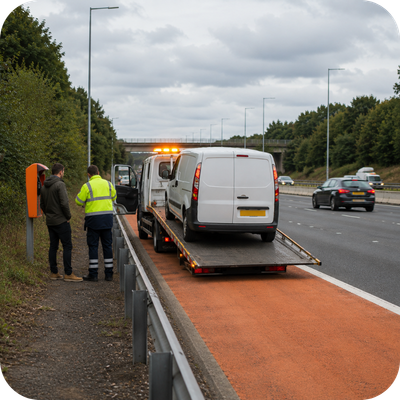
If the vehicle is in a motorway emergency area, use the emergency telephone provided. It identifies the location and connects the driver with the road operator.
Drivers must use the emergency telephone and follow the operator’s instructions before leaving the emergency area. A lane may need to be closed so the vehicle can safely rejoin the carriageway.
Information the recovery team will need
Prepare drivers to provide:
- Their exact location and direction of travel
- The motorway and nearest junction or marker
- The vehicle registration, type, size and weight
- Whether a trailer or load is involved
- The apparent fault or warning lights
- Whether the vehicle is in a live lane
- The number of passengers
- Any vulnerability, medical need or immediate danger
Accurate information helps the call handler arrange appropriate assistance and specialist equipment.
Give drivers a simple breakdown card
Fleet managers should place a short breakdown procedure in every vehicle or driver app. Include the correct telephone number, policy or account details and a reminder that personal safety comes before the vehicle, load or delivery.
Fleetmaxx Solutions works with National Breakdown to provide 24-hour roadside assistance and recovery through a national network. Cover can be arranged for cars, vans, HGVs, coaches and mixed fleets, with European options also available.
No delivery is important enough for a driver to take a risk beside fast-moving traffic.
Review your fleet breakdown procedure today and speak to Fleetmaxx Solutions if your drivers do not yet have a clear route to 24-hour assistance.