Why do we need a National Pothole Day!
Pothole report by Stephen Buckley, Sales Manager, Fleetmaxx Solutions, Burnley
If you spend any amount of time on the road, you do not need a special awareness day to tell you potholes are getting worse. You feel them every morning, hear them every time a suspension groans, and see the damage when a vehicle rolls back into the yard.
What might surprise a lot of business owners and fleet managers is just how expensive pothole damage has become.
New figures released for National Pothole Day show the average pothole damage claim is now sitting at around £4,000, which is a massive jump of 55 percent compared to five years ago. That is not just inflation doing its thing. Modern vehicles are more complex, parts cost more, and a hit that once meant a tyre can now mean wheels, sensors, suspension, and alignment all at once.
For fleets, that quickly turns into downtime, missed jobs, frustrated drivers, and unexpected costs nobody budgeted for.
Even potholes cannot agree on what they are
One of the most frustrating parts of all this is that there is no consistent definition of what actually counts as a pothole.
Research from Allianz UK shows that in some parts of England, a defect just 20 millimetres deep qualifies as a pothole. In other areas, it needs to be more than twice that depth before it even counts. Width rules vary just as much.
It is no wonder drivers are confused. Less than one in ten know how a pothole is defined where they live, and more than half admit that not knowing puts them off reporting defects at all. If you run vehicles across multiple regions, that confusion only gets worse.
Winter makes everything harder
Despite increased government funding for road repairs, potholes remain a daily issue for most drivers. Nearly eight out of ten motorists say they have had vehicle damage caused by a pothole in the last five years, and many have been hit far more recently.
Winter is where things really ramp up. Claims linked to potholes spike sharply between November and January as water gets into cracks, freezes overnight, and road surfaces break up faster. Add poor visibility and long dark evenings, and it is the perfect storm for damaged tyres and bent wheels.
For fleets, this tends to happen at the busiest time of year, when vehicles are working hardest and reliability matters most.
Small habits make a big difference
We cannot fix the roads ourselves, but there is plenty fleets can do to reduce the risk.
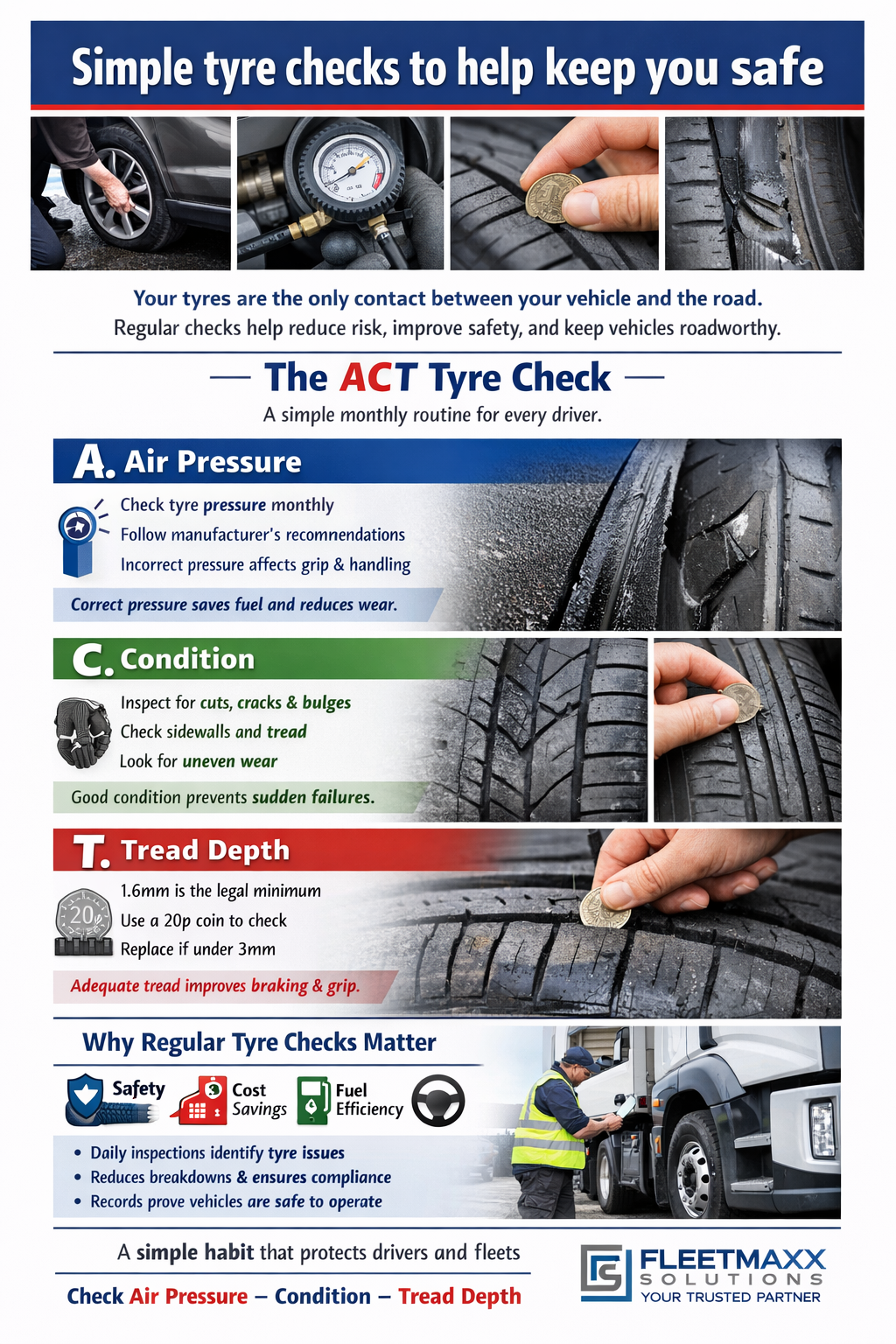
Keeping tyres correctly inflated sounds basic, but it makes a real difference when a vehicle hits a pothole. Encouraging drivers to slow down on rough roads, avoid standing water where possible, and take extra care at night all help reduce the chances of serious damage.
Just as important is catching problems early, before a minor knock becomes a dangerous or expensive issue.
How to report a pot hole?
Daily checks give real peace of mind
This is where daily driver walk-round checks really earn their keep.
Making tyre condition part of a consistent daily check helps ensure vehicles stay legal, safe, and roadworthy. It also gives fleet managers confidence that issues are being spotted and dealt with early, not weeks later when a tyre finally fails.
Using the Fleetmaxx Solutions compliance app makes this process simple to manage. Drivers can quickly record checks, flag problems, and keep everything documented in one place. Fleet managers get visibility without chasing paperwork or relying on crossed fingers.
Potholes are not going away any time soon. But with good habits, clear processes, and the right tools in place, business owners and fleet managers can protect their vehicles, support their drivers, and keep disruption to an absolute minimum.