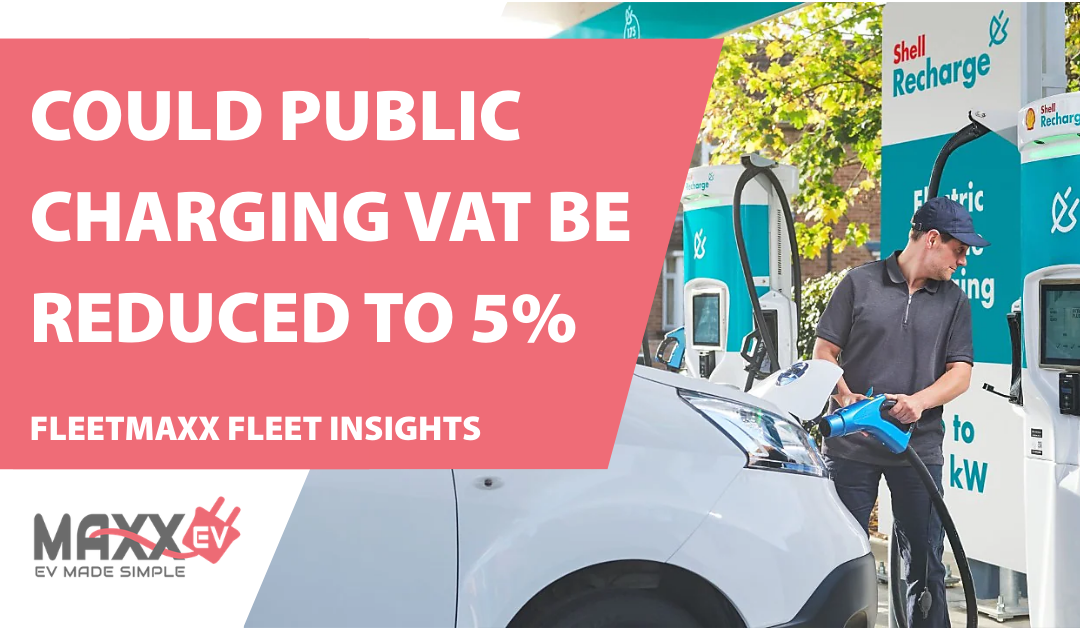
Public charging VAT ruling could reshape EV charging costs in the UK
Public charging VAT update by Kyle Davey, EV Specialist, Fleetmaxx Solutions Ipswich
If you run electric vehicles, you have likely asked this question: why is Public charging VAT 20% when home charging is only 5%?
Now, that debate has taken a major step forward.
A UK tribunal has ruled that, in certain cases, Public charging VAT should fall from 20% to 5%. This aligns it with the rate for domestic electricity. The case was brought by Charge My Street and supported by Deloitte. They challenged the long standing view of HM Revenue & Customs.
The Tribunal decided that when a driver uses less than 1,000kWh per month at a specific public site, the 5% VAT rate can apply. In reality, most drivers would struggle to exceed that level at one location. As a result, this decision could affect a wide range of public charging users.
Why Public charging VAT matters
For years, Public charging VAT has created a two tier system. On the one hand, drivers who charge at home pay 5% VAT. On the other hand, drivers who rely on public charge points pay 20%.
Therefore, those without off street parking often face higher costs. In addition, many urban drivers have no home charging option at all. Because of this, campaigners have argued that the system is unfair.
If more operators can apply the 5% rate, public charging costs could fall. Consequently, EV ownership may become more attractive. This would also support the UK shift to cleaner transport.
What this means for fleets
From a fleet point of view, Public charging VAT has a direct impact on costs. It affects:
• Cost per mile
• Driver expense claims
• Salary sacrifice schemes
• Budget forecasts
Even a small VAT change can make a big difference across a fleet. For example, reducing VAT from 20% to 5% lowers the overall charging bill straight away. Over a year, that saving adds up.
However, it is important to stay realistic. At present, the ruling applies to specific circumstances. HMRC may still appeal. Therefore, we need to watch how this develops.
The bigger picture for EV strategy
Public charging VAT is not just a tax issue. It is a policy issue. If the tax system supports public charging in the same way as home charging, access becomes fairer. As a result, more drivers may feel confident about switching to electric.
Moreover, fleets can plan with greater certainty. Clear VAT treatment helps with reporting, compliance and budgeting. In turn, that supports better decision making.