Widening confidence gap for drivers using smart motorways
Smart Motorway – Fleetmaxx Fleet Insights By Steve Clarke, Marketing Manager, Fleetmaxx Solutions
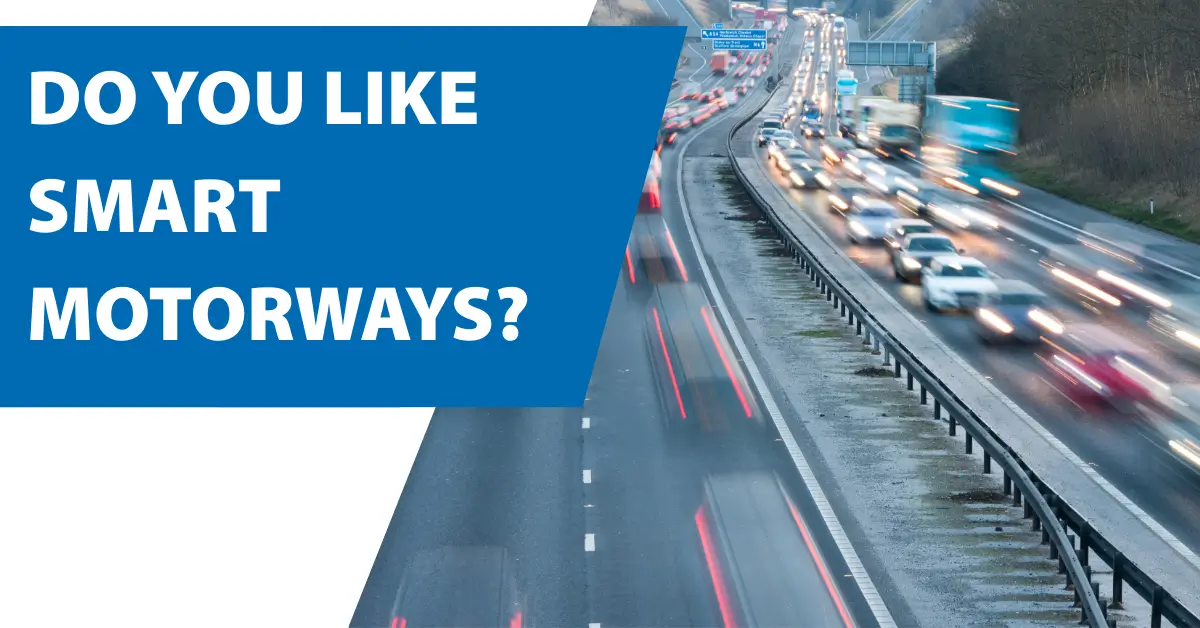
Anxiety on Britain’s roads is changing shape. It is no longer just congestion, fuel costs, or potholes that weigh on drivers’ minds. Increasingly, it is the road layout itself. New research from the AA shows a sharp rise in nervousness among drivers using smart motorways, underlining a growing confidence gap between traditional motorways and newer designs.
Twenty years on, confidence is falling
Smart motorways first appeared two decades ago, with the initial trial on the M42 in the West Midlands. What began as a dynamic hard shoulder experiment eventually evolved into widespread schemes across around seventeen percent of the motorway network between 2010 and the cancellation of the programme in 2023.
These roads differ from conventional motorways in one critical way. Many remove the continuous hard shoulder entirely, replacing it with emergency refuge areas spaced roughly three quarters of a mile apart. Others only open the hard shoulder during peak traffic periods.
According to the AA’s survey of more than 12,700 drivers, the impact on confidence is striking. The proportion of drivers who feel nervous or anxious on all lanes running smart motorways has doubled in a year, rising from 23 percent to 46 percent. On motorways with a dynamic hard shoulder, anxiety levels have increased from 30 percent to 47 percent over the same period.
By contrast, confidence remains highest on conventional motorways with a permanent hard shoulder, although even here there has been a small rise in concern, suggesting wider unease about motorway safety.
Why drivers feel exposed
For many drivers, the fear is visceral rather than theoretical. Breaking down in a live lane, with traffic flowing at motorway speeds, feels fundamentally unsafe. Emergency refuge areas exist, but their spacing and visibility continue to worry motorists.
The AA’s analysis reinforces these concerns. Drivers who break down on motorways without a hard shoulder are around three times more likely to be killed or seriously injured than those on roads with a permanent hard shoulder. Between 2010 and 2024, at least 79 people lost their lives on smart motorways.
Edmund King, President of the AA, summed up the feeling bluntly, describing broken down vehicles in live lanes as “sitting ducks” and pointing to repeated failures of smart motorway technology as a key driver of anxiety.
A lack of clarity after cancellation
One of the most damaging factors for confidence is uncertainty. While a safety stocktake was published in 2023 to 2024, the subsequent decision to cancel the smart motorway programme has left many drivers unclear about how safety is now being independently assessed.
The AA understands that multiple safety and economic review reports covering several stretches of smart motorway remain unpublished, some for years. Calls to release these reports have grown louder, with the argument that transparency is essential if public trust is to be rebuilt.
From a fleet perspective, this lack of clarity matters. Fleet operators depend on predictable, well understood infrastructure to manage risk, plan routes, and support driver wellbeing. Unanswered questions about motorway safety create operational uncertainty that filters straight through to drivers behind the wheel.
Government response and the road ahead
The Department for Transport maintains that smart motorways remain the safest roads in terms of deaths or serious injuries. It points to significant investment, including more than 150 additional emergency refuge areas, and to a forthcoming road safety strategy, the first in over a decade.
From a Fleetmaxx Solutions perspective, the debate highlights a wider truth. Safety is not just about statistics. It is also about confidence. Drivers who feel anxious are more fatigued, less focused, and less comfortable making decisions in already challenging conditions.
As discussions continue about the future of smart motorways, what drivers and fleets need most is clarity. Clear evidence, clear communication, and clear accountability. Until then, the confidence gap identified by the AA is likely to remain, and anxiety on smart motorways will continue to be part of the daily journey for thousands of UK drivers.
At Fleetmaxx Solutions, we will continue to monitor developments closely and share practical insights that help fleets keep drivers safe, informed, and supported on every mile of the road.