
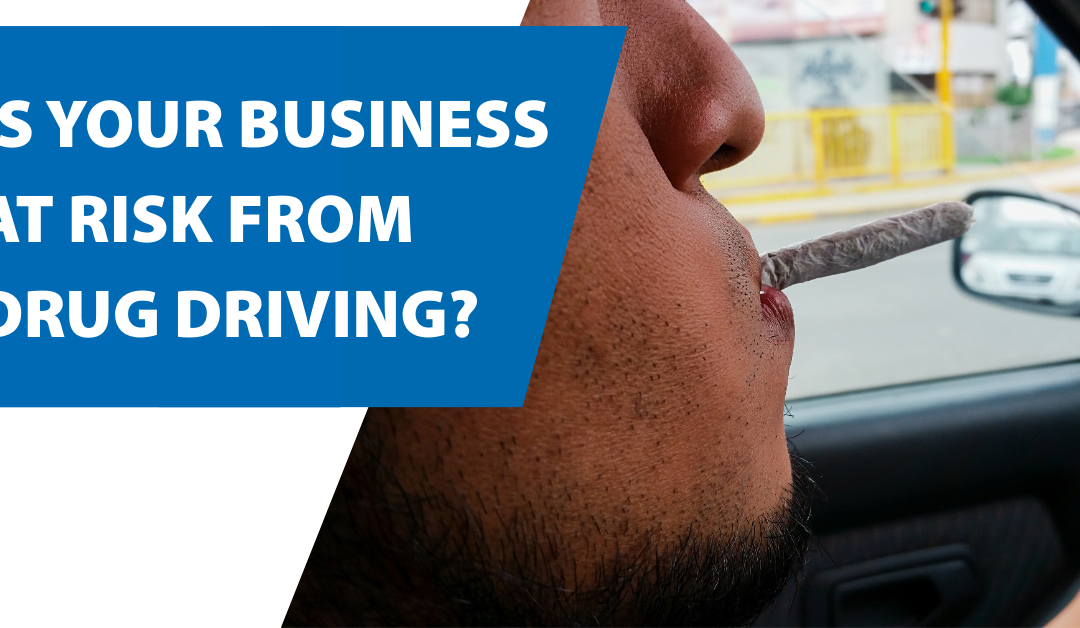
Drug drive reoffending is rising and road safety is paying the price
Drug Drive Reoffending Report by Steve Clarke, Marketing Manager, Fleetmaxx Solutions
New figures released through a Freedom of Information request paint a deeply worrying picture for road safety in England and Wales. Almost half of all drug-driving offences are now committed by repeat offenders, with reoffending rates rising sharply over the past four years.
Data obtained from the Ministry of Justice shows that there were 3,193 instances of drug-drive reoffending in 2024. That represents a 134 per cent increase compared to 2020, when 1,363 offences were recorded. Even more concerning, 44 per cent of all drug-driving offences are now committed by someone who has previously been convicted. In one extreme case, an individual committed the offence despite having 18 prior drink and drug-driving convictions.
From a fleet and road safety perspective, these figures are not just statistics. They represent real risk to drivers, businesses, and the public.
How drug-driving is currently identified
When police suspect drug-driving, officers carry out roadside screening tests, typically using a saliva swab that can detect substances such as cannabis and cocaine. Drivers may also be asked to complete a Field Impairment Test, which assesses coordination and balance through tasks such as walking in a straight line or standing on one leg.
If a driver fails the roadside test or the impairment assessment, or if officers still believe drugs are affecting their driving, the individual is arrested. They are then taken to a police station and required to provide a blood or urine sample for laboratory analysis.
This is where a critical weakness in the system emerges.
Delays that allow offenders back behind the wheel
Road safety charity IAM RoadSmart has highlighted that delays of up to six months in processing blood test results may be a key factor behind rising reoffending rates. During this waiting period, drivers who have already failed a roadside drug test are often allowed to continue driving.
Tragically, there have been fatal consequences. Jane Hickson was killed by Paul Wright while he was on bail for drug-driving, having tested positive at the roadside six months earlier. Tim Burgess was also killed by Joshua Eldred, who had been released pending blood test results that later proved positive.
These cases underline the very real dangers of allowing suspected drug-drivers to remain on the road.
Calls for urgent reform
William Porter, policy, public affairs and communications manager at IAM RoadSmart, has been clear in his criticism of the current system. He argues that enforcement has not kept pace with the scale of drug-driving and repeat offending.
The Government has acknowledged this issue in its new road safety strategy, which includes proposals to give police powers to suspend driving licences immediately where a driver is suspected of drug-driving. The strategy also explores alternative approaches to evidence collection, including faster roadside testing methods.
Australia provides a compelling example. For nearly two decades, it has used immediate roadside evidential saliva testing alongside laboratory confirmation, enabling far quicker case resolution and stronger deterrence.
Public support for immediate licence suspension
Research conducted by IAM RoadSmart in August 2025 surveyed more than 2,000 motorists across the United Kingdom. The results were striking. Eighty-two per cent of respondents supported giving police the power to suspend driving licences immediately for drivers who test positive at the roadside, pending court proceedings.
This level of public backing reflects growing concern about the risks posed by drug-driving and frustration with delays in enforcement.
Drug-driving is rising overall
Reoffending is only part of the picture. Drug-driving itself is increasing at a significant rate. In 2024, 20,072 people in England and Wales were sentenced for drug-driving offences. That figure is 143 per cent higher than in 2017.
A conviction carries serious penalties, including a minimum one-year driving ban, an unlimited fine, and up to six months in prison. For businesses operating fleets, the consequences can extend far beyond the individual driver, affecting insurance, compliance, reputation, and safety performance.
The missing piece: rehabilitation
While drink-driving offenders have had access to a national rehabilitation scheme for more than 25 years, there is still no equivalent programme in place for drug-drive offenders. Trials are underway, but coverage remains limited.
Evidence from drink-drive schemes is clear. Drivers who do not attend a rehabilitation course are up to two and a half times more likely to reoffend than those who do. These courses do more than shorten driving bans. They change attitudes, improve understanding of impairment, and address the behaviours that lead to repeat offences.
William Porter has called for the introduction of a dedicated drug-drive rehabilitation programme, alongside better screening for substance misuse and mental health issues, and clearer pathways into treatment and support.
Why this matters for fleets
For fleet operators, drug-driving is not just a criminal justice issue. It is a duty of care issue. Employers have a legal and moral responsibility to ensure that drivers are fit to drive, whether they are behind the wheel of a van, car, or heavy goods vehicle.
Rising reoffending rates underline the importance of robust drug and alcohol policies, clear driver education, and proactive monitoring. Prevention, awareness, and early intervention are far more effective than dealing with the consequences after an incident has occurred.
At Fleetmaxx Solutions, we believe that safer roads start with better systems, faster enforcement, and meaningful support for drivers to change behaviour. The data makes one thing clear. Without reform, drug-drive reoffending will continue to rise, and the cost will be measured in lives as well as statistics.
