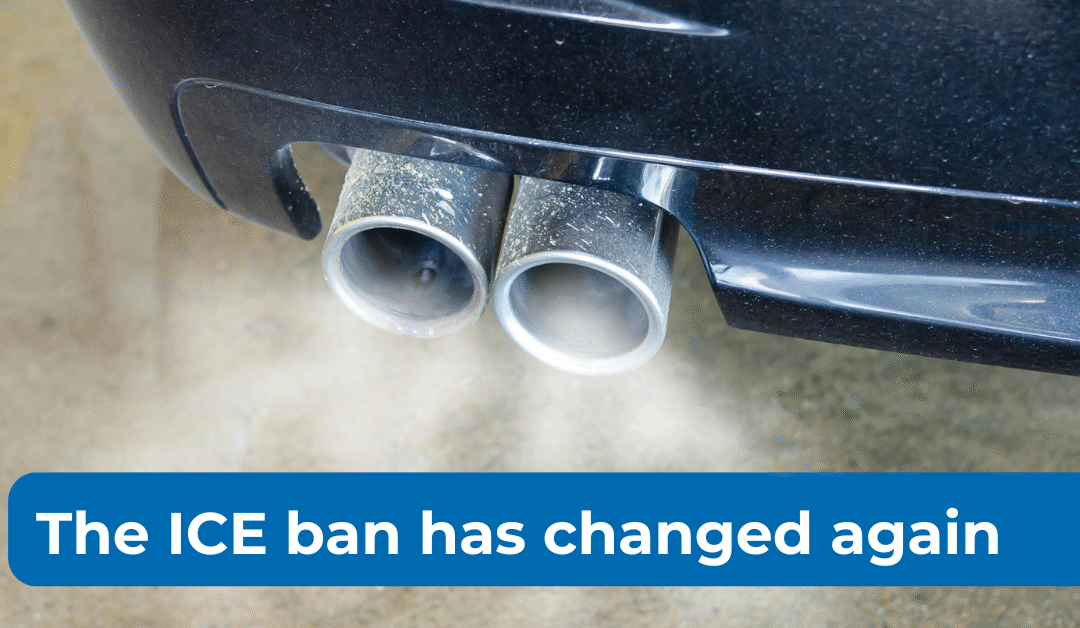
Four Things Fleets Should Know About the New 2030 ICE Ban Announcement
ICE ban update By Kyle Davey, Sales Manager, Fleetmaxx Solutions Ipswich
At Fleetmaxx, we’re always staying ahead of the curve so we can guide our customers through the changes that impact their fleets. The government’s recent announcement on the internal combustion engine (ICE) ban and the Zero Emission Vehicle (ZEV) mandate has sparked a lot of conversation – and with good reason.
After consulting with over 600 respondents, the government has adjusted the timeline and requirements for ICE and hybrid vehicle sales. Here are four key takeaways fleet operators need to know – and how these changes may affect your business:
1. New petrol and diesel vans can be sold until 2035
This is a big one. While the original 2030 ban had fleets preparing for an earlier switch, the extension to 2035 offers some welcome breathing space – especially for those of us running LCV-heavy operations.
Let’s be honest: transitioning vans to electric has been a real challenge for many of our customers. Unlike cars, the technology and infrastructure for electric vans isn’t quite there yet for all use cases. This extra time allows fleet managers to make the switch more strategically without compromising operational needs.
2. Hybrid cars also get the green light until 2035
The government has clarified that full hybrids and plug-in hybrids (PHEVs) can be sold up to 2035, as long as they meet lower emissions targets. That’s great news for businesses looking for an interim solution while they prepare for full electrification.
Mild hybrids, however, won’t make the cut beyond 2030, as they don’t meet the criteria for sustained zero-emission propulsion.
3. ZEV mandate changes may affect van procurement
One of the more technical but important changes is to the ZEV mandate itself. OEMs (vehicle manufacturers) still have to meet annual EV sales targets – 22% of cars and 10% of vans in 2024 – but now there’s more flexibility around how they hit those goals. Fines for missing targets have been slightly reduced, and there’s more room for manufacturers to trade credits or offset emissions from other parts of their fleet.
So, what does that mean for fleets? Potentially fewer bulk-buy demands of EVs when they don’t fit your operational needs. That said, we’ll still need to monitor manufacturer strategies closely – some may still push electric models hard to meet their own targets.
4. No new EV grants (yet)
One thing we were hoping for – and didn’t get – was any new EV grants or financial incentives to help support the transition. With the cost of EVs still high, especially for SMEs and businesses without depot charging, that’s disappointing.
At Fleetmaxx, we believe this is where the industry needs to come together – to support customers in making the switch affordably and sustainably.
Let Fleetmaxx guide you on your EV journey
Whether you’re looking to take your first steps into electrification or you’re already part-way there, we’ve got the tools, knowledge, and products to support you. From EV charge cards to home and workplace charging points – and even a unique home charging solution that lets your team charge their company vehicle from home – we’re here to make the journey smooth, cost-effective, and stress-free.
Want to learn more? Contact us today on 03302 320 220 —the EV team at Fleetmaxx is ready to help you future-proof your fleet.