
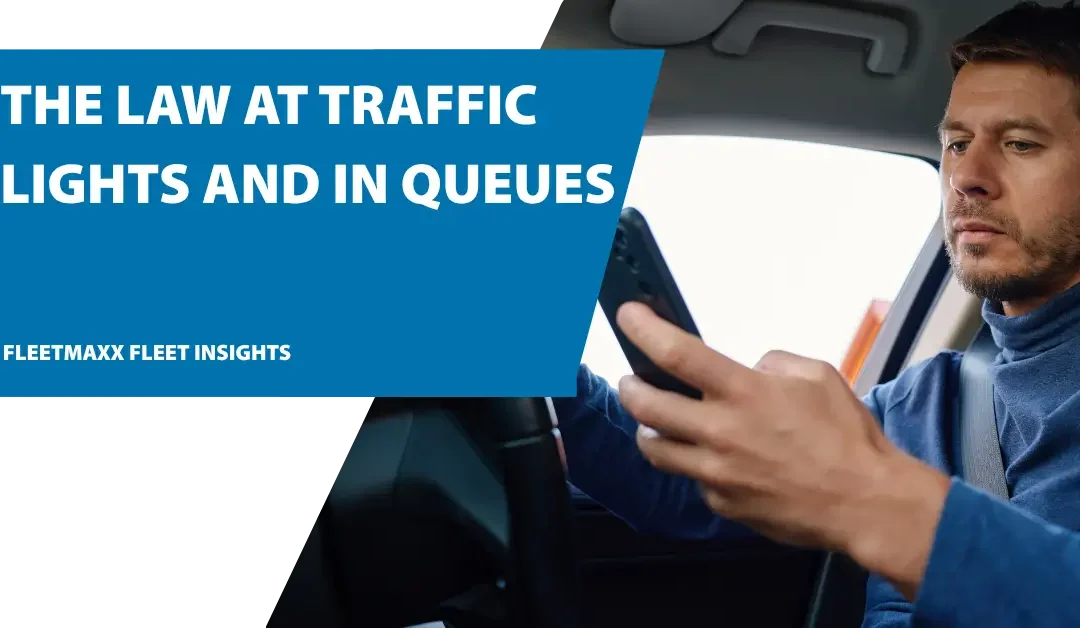
Using your phone at traffic lights could cost you £200 and six points
Using a mobile phone while driving a guide by Mark Checksfield, Head of Operations at Fleetmaxx Solutions
The mobile phone driving law
Using a mobile phone while driving is illegal in the UK, including when you are stopped at traffic lights or sitting in slow-moving traffic.
Some drivers still believe that quickly checking a message, changing a playlist or adjusting their satnav is harmless when their vehicle is stationary. However, if the phone is in your hand, the law is clear. You could receive a £200 fine and six penalty points on your driving licence.
For a newly qualified driver who passed their test within the previous two years, those six points could result in their licence being revoked.
From an operational perspective, this is not simply about avoiding a fine. Mobile phone distraction puts drivers, passengers, pedestrians and other road users at risk. For businesses, it can also lead to vehicle downtime, insurance claims, reputational damage and the loss of a valuable member of the driving team.
The law applies when you are stopped
It is illegal to hold and use a mobile phone, satnav, tablet or another device capable of sending or receiving data while driving.
The rules continue to apply when you are:
- Stopped at traffic lights
- Queuing in traffic
- Sitting in slow-moving traffic
- Supervising a learner driver
- Driving a vehicle with stop-start technology
- Using a device in flight mode or while it is offline
The offence is not limited to making telephone calls or sending text messages. It also covers taking photographs, recording videos, scrolling through music, checking notifications, browsing online and programming a route.
That quick check while waiting for the lights to change could be enough to leave a driver with six points.
What is the penalty for using a mobile phone while driving?
Drivers caught holding and using a mobile phone can receive:
- A £200 fixed penalty
- Six penalty points
- The loss of their licence if they passed their driving test within the previous two years
More serious cases can be taken to court. A driver could be disqualified and receive a fine of up to £1,000, rising to £2,500 for someone driving a lorry or bus.
Any penalty points may also affect future insurance premiums, while a conviction can create additional problems for professional drivers and their employers.
For fleet operators, one poor decision can therefore have a much wider operational and financial impact.
A few seconds can have serious consequences
GEM Motoring Assist reports that mobile phone use was recorded as a contributory factor in 32 fatal collisions in Great Britain during 2025. The true number may be higher because distraction, particularly from hands-free conversations, is not always identified or recorded following a collision.
Research has also shown that using a mobile phone while driving can make someone around four times more likely to be involved in a crash.
When a driver looks at a screen, their attention is no longer fully on the road. Even at low speeds, traffic conditions can change quickly. A pedestrian may step into the road, a cyclist may move alongside the vehicle or the traffic ahead may begin moving unexpectedly.
No message, notification or playlist is worth taking that risk.
Mobile phone detection cameras are increasing the chance of being caught
Police forces and local authorities are investing in roadside cameras and artificial intelligence technology designed to identify drivers using mobile phones.
These systems can capture drivers holding a phone or resting a device on their lap. This means that drivers can be identified even when there is no police officer standing nearby.
There is also a strong argument for using this technology around traffic lights. We have all seen traffic held up because a driver has failed to notice that the lights have changed. That delay causes frustration, contributes to congestion and can encourage other drivers to make poor decisions as they try to regain lost time.
The technology may help catch offenders, but the greatest deterrent should always be the risk of causing a serious or fatal collision.
Is hands-free phone use legal?
Hands-free phone use is legal, provided the driver does not hold the device and remains in full control of the vehicle.
A phone can be used through:
- Voice commands
- A Bluetooth headset
- A dashboard holder
- A windscreen mount
- The vehicle’s built-in controls
The device must not obstruct the driver’s view of the road.
However, legal does not necessarily mean safe. A hands-free conversation can still reduce concentration and distract a driver from what is happening around them. If the police believe that a driver is not in proper control of their vehicle, they can still stop and prosecute them.
Businesses should therefore avoid treating hands-free use as completely risk-free.
When can you legally hold a phone?
There are only a small number of exceptions. A driver may hold and use a phone when:
- They are safely parked
- They need to call 999 or 112 in an emergency and stopping would be unsafe or impractical
- They are making a contactless payment while the vehicle is stationary, such as at a drive-through restaurant or toll point
- They are using the device to park the vehicle remotely
Being stationary in a traffic queue or at red lights does not mean that the vehicle is safely parked.
Set everything before driving
The safest approach is also the simplest. Set the satnav, choose the music and deal with any important messages before beginning the journey.
If something needs attention while travelling, pull over somewhere safe and park before touching the phone. Fleet drivers should never feel under pressure to answer calls or messages while they are driving.
Managers should make this clear through a written mobile phone and vehicle-use policy. Drivers should understand what is expected of them, including the rules covering both handheld and hands-free communication.
Training, regular reminders and sensible communication procedures can all help reduce the temptation to check a device at the wheel.
What fleet operators should do
Businesses have a responsibility to manage occupational road risk. A sensible mobile phone policy should:
- Prohibit handheld phone use while driving
- Explain the risks associated with hands-free calls
- Confirm that drivers will not be expected to answer calls immediately
- Encourage drivers to stop safely before returning calls
- Cover company vehicles, privately owned vehicles used for work and grey fleet drivers
- Be communicated clearly and reviewed regularly
- Set out how breaches of the policy will be handled
Technology can also help businesses understand how vehicles are being used and identify areas where further driver support may be required.
Fleetloc8 telematics from Fleetmaxx Solutions provides vehicle tracking, journey information and driver behaviour insights to help fleet operators improve safety and maintain greater control over their vehicles.
Frequently asked questions; Using a mobile phone while driving
Can I use my phone while stopped at traffic lights?
No. It is illegal to hold and use a phone while stopped at traffic lights. You are still considered to be driving.
Can I use my phone while queuing in traffic?
No. The law applies even when traffic is stationary or moving very slowly.
Can I touch a phone mounted on the dashboard?
Hands-free devices and secured dashboard mounts are permitted, but you must remain in full control of the vehicle. The device must not obstruct your view. The safest option is to set everything before starting the journey or stop somewhere safe before making changes.
Can I use my phone as a satnav?
Yes, provided it is secured in a suitable holder and does not block your view. You must not hold the phone while driving.
Is hands-free phone use safe?
Hands-free use is legal, but it can still be distracting. If your concentration or control of the vehicle is affected, you could still be prosecuted.
Can I lose my licence for using a mobile phone while driving?
Yes. New drivers can have their licence revoked if they receive six points within two years of passing their test. Other drivers may be disqualified if the six points take their total to 12 or more.
Mark’s final word
The message is straightforward: set everything before you set off.
There is no such thing as a harmless quick check when you are responsible for a moving vehicle. Whether you are travelling at motorway speed, sitting in a queue or waiting for the lights to change, your attention needs to remain on the road.
A £200 fine and six points would be a painful lesson. A serious collision could have consequences that last a lifetime.
Put the phone away, remove the temptation and get everyone home safely.

Disclaimer: This article is provided for general information only and does not constitute legal advice. Driving laws, penalties and official guidance may change. Readers and fleet operators should always check the latest rules on the GOV.UK mobile phone driving law page or seek professional legal advice where necessary.