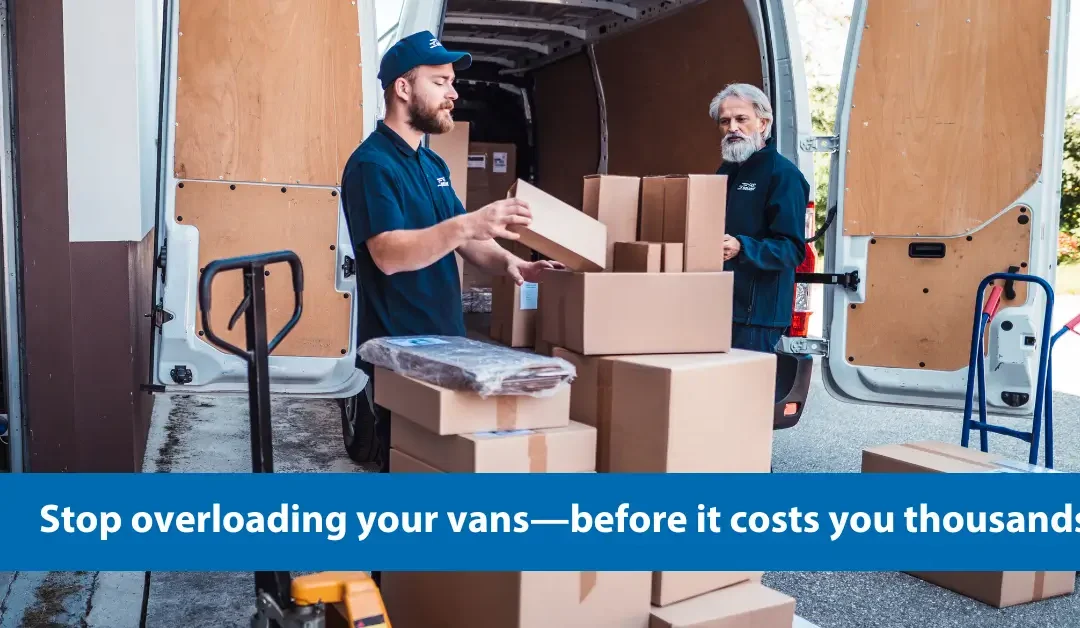
Van overloading fines soar: Protect your fleet and bottom line
Van overloading by Steve Clarke, Marketing Manager at Fleetmaxx Solutions
At Fleetmaxx Solutions, we’re all about helping fleets reduce costs, improve efficiency, and stay compliant on the road. But recent figures from the DVSA (Driver and Vehicle Standards Agency) reveal a worrying trend that could put both your bottom line and your insurance premiums at risk: a rise in van overloading offences.
The numbers are climbing
During the 2024/25 financial year, there were 208 convictions for overloading light goods vehicles (LGVs)—a noticeable jump from the 187 convictions reported in 2023/24. These offences cost UK businesses a total of £391,964.90 in fines, up £71,000 on the previous year.
And the issue runs deeper than simple weight breaches. Additional offences under “construction and use” regulations—which cover uneven, insecure, or axially overloaded vans—brought a further £50,924 in fines. That’s a combined total of 270 convictions and nearly £450,000 in penalties in just one year. It equates to one conviction for overloading or unsafe loading every single working day.
Record-breaking penalties send a clear message
If that isn’t enough of a wake-up call, a landmark case heard at Bristol Magistrates’ Court earlier this year certainly should be. Starling Distribution Services was handed a staggering £759,000 fine—the largest ever issued under a DVSA prosecution—after repeatedly breaching overloading and defective vehicle regulations as part of its milk delivery operation.
This serves as a stark reminder that repeat offenders will be pursued and punished with severity. It’s not just about keeping your business compliant—it’s about ensuring the safety of your drivers, the public, and your financial wellbeing.
Prevention is cheaper than the cure
Overloading isn’t just a legal issue—it has long-term financial implications. As Steve Ramsey of GoCompare rightly points out, even a few extra items in your van—a toolbox, a pallet of materials, or additional passengers—can tip you over the legal threshold and straight into penalty territory.
Beyond the fine itself, these offences can cause your insurance premiums to rise or, worse, result in policy cancellation. That’s a costly risk for something that is entirely avoidable through routine checks and awareness.