
What is FORS?
The complete guide to FORS accreditation, compliance and business benefits
What is FORS? A guide by Rachel Pearson, Advanced FORS Practitioner at Fleetmaxx Solutions in Whitstable
The Fleet Operator Recognition Scheme (FORS) is one of the UK’s most recognised fleet accreditation programmes. Designed to promote best practice in safety, efficiency, environmental performance and compliance, FORS helps fleet operators demonstrate their commitment to operating to the highest standards.
Whether you operate a single van, a mixed fleet or a large HGV operation, FORS provides a structured framework that can help improve performance, reduce costs and create new business opportunities.
Table of contents for What is FORS?
- How does FORS improve road safety?
- How does FORS support environmental goals?
- How can FORS members reduce fuel costs?
- How can telematics help achieve FORS compliance?
- Why is AdBlue management important for FORS operators?
- How can the AdBlue Diesel Ratio Calculator support FORS compliance?
- What training does FORS provide?
- Do I need help achieving FORS accreditation?
- Is FORS accreditation worth it?
What is FORS and why does it matter?
The Fleet Operator Recognition Scheme (FORS) is a voluntary accreditation programme designed to improve fleet safety, efficiency, environmental performance and legal compliance.
Originally developed to raise standards within the transport industry, FORS has become one of the most respected accreditations for operators working within construction, logistics, infrastructure, utilities and public sector supply chains.
FORS provides a structured framework that helps businesses reduce Work Related Road Risk (WRRR), improve operational performance and create a culture of continuous improvement.
Achieving FORS accreditation demonstrates to customers, suppliers and stakeholders that your business is committed to operating safely, responsibly and efficiently.
What are the FORS accreditation levels?
FORS accreditation is divided into three progressive levels.
What is FORS Bronze
Bronze is the entry-level accreditation and demonstrates that your organisation meets the required standards for legal compliance, safety management and operational procedures.
What is FORS Silver
Silver builds on Bronze by introducing additional requirements relating to vehicle safety equipment, environmental performance and performance monitoring.
What is FORS Gold
Gold is the highest level of accreditation and recognises organisations that demonstrate industry-leading standards, continual improvement and a commitment to sharing best practice.
As operators progress through the accreditation levels, they often achieve greater efficiencies, stronger compliance and enhanced commercial opportunities.
How can FORS improve your fleet operations?
FORS helps businesses develop safer, smarter and more efficient fleet operations.
- Improved compliance procedures
- Better vehicle utilisation
- Stronger transport policies
- Enhanced fleet monitoring
- Reduced operational risks
- Improved management reporting
- Greater control over operating costs
Rather than reacting to issues after they occur, FORS encourages businesses to implement proactive systems that identify and manage risks before they become costly problems.
Can FORS save your business money?
One of the biggest benefits of FORS accreditation is its ability to reduce operating costs.
By improving driver behaviour, strengthening compliance and reducing incidents, operators can often reduce fuel consumption, insurance costs, collision repair costs, vehicle downtime, maintenance expenditure, traffic fines and compliance penalties.
Even relatively small improvements in fuel efficiency can generate significant annual savings across a fleet.
Can FORS help win more contracts?
Many major contractors, local authorities and infrastructure projects now require suppliers and subcontractors to hold FORS accreditation.
FORS demonstrates that your business operates responsibly, prioritises safety, supports sustainability goals, invests in continual improvement and meets recognised industry standards.
For many businesses, FORS accreditation has become a valuable tool for winning tenders and securing new contracts.
Can FORS improve customer retention?
Customers increasingly want to work with suppliers who share their commitment to safety, sustainability and compliance.
FORS accreditation provides reassurance that your business is continually investing in improving standards and reducing risk.
This helps strengthen relationships, build trust and improve long-term customer retention.
Can FORS help attract and retain drivers?
The transport industry continues to face driver shortages and recruitment challenges.
FORS demonstrates that your organisation values driver safety, wellbeing and professional development.
The training and development opportunities available through FORS help improve staff engagement, raise morale and encourage long-term retention.
Businesses that invest in their people are often better positioned to attract and retain experienced drivers.
How does FORS improve road safety?
Safety sits at the heart of the FORS framework.
The scheme helps operators reduce Work Related Road Risk through driver training, vehicle safety improvements, policy development, risk management procedures and performance monitoring.
This helps reduce collisions, protect vulnerable road users and create a stronger safety culture throughout the organisation.
How does FORS support environmental goals?
Environmental performance is becoming increasingly important for fleet operators.
FORS helps businesses monitor and reduce fuel consumption, carbon emissions, vehicle idling, unnecessary mileage and environmental impact.
By measuring and improving performance, operators can support both their own sustainability objectives and those of their customers.
How can FORS members reduce fuel costs?
Fuel remains one of the largest expenses for most fleet operators.
Many FORS members use specialist fuel cards to gain greater control over fuel expenditure while accessing discounted diesel and petrol prices.
Fleetmaxx Solutions helps FORS operators access fuel cards that can deliver savings of up to 10p per litre while providing detailed fuel reporting and HMRC-compliant invoicing.
Combining FORS best practice with effective fuel management can deliver substantial reductions in operating costs.
How can telematics help achieve FORS compliance?
Vehicle tracking and telematics systems have become an important part of modern fleet management.
Telematics can help operators monitor driver behaviour, reduce excessive idling, improve route planning, track fuel consumption, monitor speeding events, improve vehicle utilisation and provide evidence following incidents.
Many of the performance indicators monitored within FORS can be measured more effectively through telematics systems.
Fleetloc8 tracking solutions from Fleetmaxx Solutions help operators improve compliance, increase visibility and reduce fleet costs.
Why is AdBlue management important for FORS operators?
Modern diesel vehicles rely on AdBlue technology to meet emissions regulations and operate efficiently.
Poor AdBlue management can lead to increased emissions, vehicle downtime, compliance concerns and higher operating costs.
Effective monitoring and reporting help operators maintain compliance while supporting environmental objectives.
How can the AdBlue Diesel Ratio Calculator support FORS compliance?
Accurate record keeping forms an important part of FORS compliance, particularly when it comes to emissions management and environmental performance.
For operators running Euro 4, Euro 5 and Euro 6 diesel vehicles, monitoring AdBlue consumption can help identify potential issues before they become expensive problems.
FORS auditors may request evidence that operators are actively monitoring vehicle performance and emissions-related systems. Keeping records of diesel and AdBlue consumption can form part of this process.
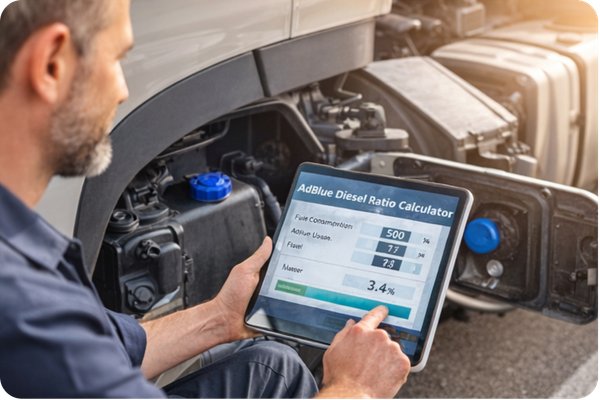
To help simplify compliance, Fleetmaxx Solutions has developed a free AdBlue Diesel Ratio Calculator. The tool allows fleet managers to compare diesel usage against AdBlue consumption and determine whether vehicles are operating within expected manufacturer tolerances.
Benefits of monitoring AdBlue consumption
- Supports FORS environmental objectives
- Provides useful audit evidence
- Identifies potential SCR system faults
- Highlights unusual consumption patterns
- Supports preventative maintenance programmes
- Demonstrates proactive fleet management
- Reduces the risk of vehicle downtime
Monitoring AdBlue usage alongside fuel consumption provides transport managers with greater visibility over fleet performance while helping support the robust record keeping expected within a FORS-accredited operation.
What training does FORS provide?
FORS provides access to a wide range of professional development resources.
Training topics include driver assessments, road risk management, collision procedures, transport policies, fuel efficiency, vulnerable road user awareness, health and safety, and compliance management.
This ongoing professional development helps businesses remain compliant while continuously improving performance.
Do I need help achieving FORS accreditation?
Achieving FORS accreditation can feel overwhelming, particularly for businesses applying for the first time or progressing from Bronze to Silver or Gold.
That is why many operators choose to work with specialist transport consultants.
Fleetmaxx Solutions offers dedicated transport consultancy services designed to help operators achieve, maintain and improve FORS accreditation.
Our consultancy team can support you with FORS Bronze accreditation, FORS Silver accreditation, FORS Gold accreditation, FORS pre-audits, compliance gap analysis, policy and procedure development, Work Related Road Risk management, driver compliance requirements and ongoing audit preparation.
A FORS pre-audit is particularly valuable, helping identify potential issues before your official assessment and giving you confidence that your operation is fully prepared.
Whether you are applying for Bronze for the first time or progressing to Silver or Gold, our experienced consultants can help simplify the process and improve your chances of success.
FORS consultancy services at a glance
| Service | Benefit |
|---|---|
| FORS Accreditation Support | Guidance throughout the accreditation process |
| FORS Pre-audits | Identify gaps before your official audit |
| Compliance Reviews | Strengthen policies and procedures |
| Transport Management Support | Improve operational performance |
| Driver Compliance Guidance | Meet FORS training requirements |
| Ongoing Compliance Support | Maintain accreditation standards |
Is FORS accreditation worth it?
For most fleet operators, the answer is yes.
FORS accreditation provides a proven framework for improving safety, compliance, efficiency and environmental performance while creating opportunities for business growth.
Businesses that achieve FORS accreditation often benefit from improved road safety, reduced fuel costs, lower insurance claims, better driver performance, stronger compliance, enhanced reputation, increased tender opportunities, better customer retention, improved driver recruitment and retention, and reduced environmental impact.
Many FORS operators combine fuel cards, telematics, AdBlue monitoring and transport consultancy services to create a fully compliant fleet management strategy. By monitoring fuel usage, vehicle emissions, driver behaviour and AdBlue consumption together, operators can improve audit readiness, reduce operating costs and demonstrate a commitment to continual improvement across their transport operation.
Whether your goal is winning more contracts, reducing operating costs, improving compliance or strengthening your fleet’s reputation, FORS provides a proven pathway to long-term success.
Fleetmaxx services for FORS members



Ready to start your FORS journey?
Now that you know what is FORS, we are pleased to tell you that Fleetmaxx Solutions supports FORS operators across the UK with fuel cards, telematics, AdBlue, compliance solutions and specialist transport consultancy services.
Find out more about our FORS support services , or speak to me about how we can help your business achieve, maintain or progress its FORS accreditation while reducing fleet operating costs.

What Is FORS? 25 Frequently Asked Questions
1. What is FORS?
FORS (Fleet Operator Recognition Scheme) is a voluntary accreditation programme that promotes best practice in fleet management, road safety, fuel efficiency and environmental performance.
2. What does FORS stand for?
FORS stands for Fleet Operator Recognition Scheme.
3. Why was FORS created?
FORS was developed to raise standards across the transport industry by helping fleet operators improve safety, compliance and operational efficiency.
4. Who can join FORS?
Any organisation that operates vehicles, including vans, HGVs, buses, coaches and company cars, can apply for FORS accreditation.
5. Is FORS a legal requirement?
No. FORS is voluntary, although many contracts require suppliers and subcontractors to hold FORS accreditation.
6. What are the benefits of FORS accreditation?
FORS can help improve safety, reduce fuel consumption, lower fleet costs, strengthen compliance and increase contract opportunities.
7. What are the levels of FORS accreditation?
FORS has three levels:
- Bronze
- Silver
- Gold
Each level builds upon the requirements of the previous one.
8. What is FORS Bronze?
Bronze is the entry-level accreditation and demonstrates that a fleet operator meets key legal and operational compliance standards.
9. What is FORS Silver?
Silver focuses on performance monitoring, environmental improvements and reducing road risk.
10. What is FORS Gold?
Gold is the highest level of accreditation and recognises fleet operators that demonstrate industry-leading standards and continuous improvement.
11. How can FORS help reduce fuel costs?
FORS encourages fuel monitoring, route optimisation, driver training and efficient vehicle management, all of which can reduce fuel consumption.
12. Can fuel cards support FORS compliance?
Yes. Fuel cards provide detailed fuel reporting, spending controls and consumption data that can support fleet management objectives.
13. How can vehicle tracking help FORS operators?
Vehicle tracking provides visibility of vehicle movements, driver behaviour, idling time and route efficiency, helping operators improve performance and reduce costs.
14. Does FORS improve driver safety?
Yes. FORS promotes driver training, risk assessments, incident reporting and safety best practices to help reduce collisions.
15. What type of driver training does FORS require?
Depending on accreditation level, operators may need to complete approved training covering road risk, vulnerable road users and environmental awareness.
16. Does FORS help reduce vehicle downtime?
Yes. Improved maintenance procedures and vehicle inspections can help identify issues before they lead to costly breakdowns.
17. How does FORS help the environment?
FORS encourages lower emissions through fuel-efficient driving, vehicle maintenance, route planning and sustainability initiatives.
18. What records do FORS operators need to keep?
Operators must maintain records relating to vehicle maintenance, driver checks, fuel use, incidents, training and compliance activities.
19. Why is AdBlue® monitoring important for FORS fleets?
Monitoring AdBlue® usage helps demonstrate environmental responsibility and can help identify potential vehicle performance issues.
20. What is an AdBlue Diesel Ratio Calculator?
An AdBlue Diesel Ratio Calculator compares diesel and AdBlue® consumption, helping fleet operators maintain records and identify unusual usage patterns.
21. Can small businesses achieve FORS accreditation?
Yes. FORS is suitable for businesses of all sizes, including owner-drivers and small fleets.
22. How long does it take to achieve FORS accreditation?
The timeframe depends on fleet size and existing compliance processes, but many operators achieve Bronze accreditation within a few months.
23. Can FORS help win more contracts?
Yes. Many construction firms, local authorities and major contractors require FORS accreditation from suppliers and transport providers.
24. What industries benefit most from FORS?
Construction, logistics, distribution, utilities, waste management, passenger transport and service fleets commonly benefit from FORS accreditation.
25. How can Fleetmaxx Solutions support FORS operators?
Fleetmaxx Solutions helps FORS operators reduce costs and improve compliance through discounted fuel cards, FleetBlue AdBlue®, vehicle tracking, telematics, transport consultancy services, emissions reporting tools and a free AdBlue Diesel Ratio Calculator. Our Advanced FORS Practitioner, Rachel Pearson, also provides guidance to help operators improve fleet performance and maintain compliance standards.