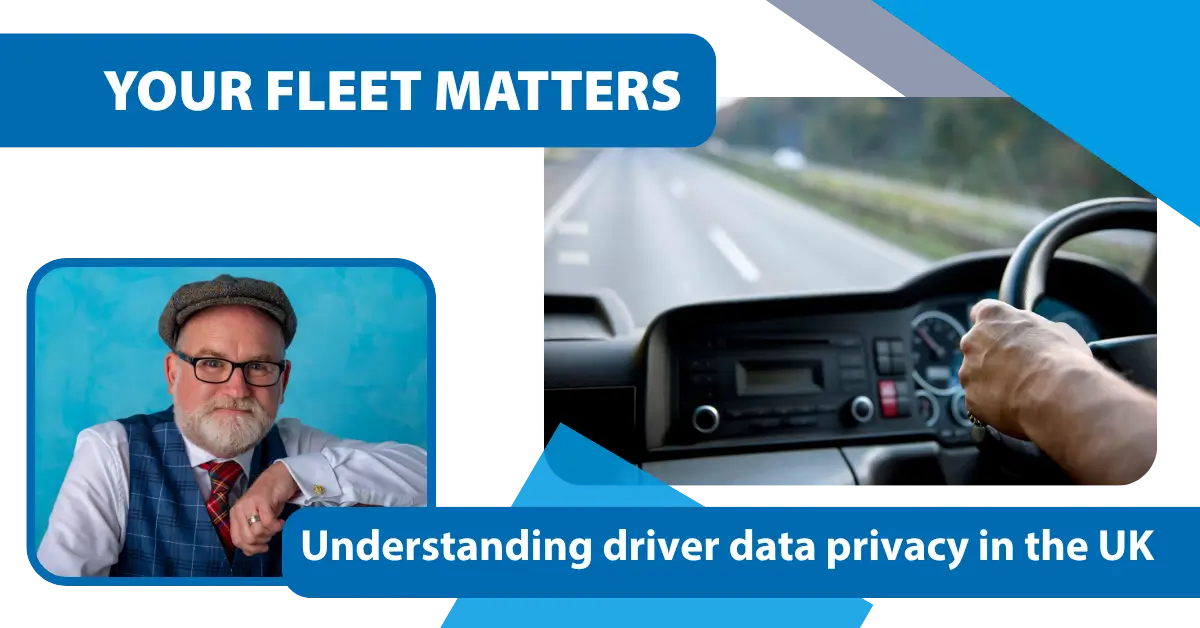
A Your Fleet Matters guide: Fleet driver data privacy UK
Fleet driver data privacy, Guide by Steve Clarke, Marketing Manager at Fleetmaxx Solutions
Understanding the foundations of fleet driver data privacy in the UK
When we talk about fleet driver data privacy UK, we are referring to the legal and ethical framework for handling information about your drivers. This includes everything from where a vehicle is located to how hard a driver presses the brake pedal. It is a vital part of modern logistics that requires a careful balance. The Information Commissioner’s Office, or the ICO, is the body that oversees these rules in the United Kingdom. They have the power to investigate businesses and issue those heavy fines if data is handled poorly. It is their job to ensure that every individual has their rights protected while allowing businesses to operate efficiently.
As of July 2026, the Data (Use and Access) Act 2025 is fully in force. This legislation has updated how we manage digital records, making it even more important to understand your specific role. In this relationship, your business is the data controller. This means you are the one who decides why and how personal data is processed. Your provider of fleet telematics systems acts as the data processor, as they simply handle the data on your behalf. If you feel unsure about these roles, our transport consultancy services can help you conduct a thorough privacy audit to ensure every part of your operation is secure.
The seven principles of UK GDPR for fleets
The UK GDPR is built on seven core principles that you must follow to stay on the right side of the law. Lawfulness, fairness, and transparency mean that you must have a valid reason for tracking and you must be completely honest with your drivers about it. Purpose limitation is another big one; it means you should only use the data for the specific reason you collected it. For example, if you use tracking to improve route efficiency, you should not use that same data for unrelated purposes without a clear policy. Finally, data minimisation requires you to only collect what is strictly necessary. You do not need to store years of minute-by-minute journey history if a simple daily summary meets your needs for productivity and safety.
Determining your legal basis for data processing
You cannot just collect data because it is convenient. You need a clear legal basis. Many managers rely on legitimate interests, which allows you to process data if it is necessary for your business and does not unfairly override the rights of the driver. You might also process data to fulfil an employment contract, such as calculating wages based on hours worked. In some cases, you have a legal obligation to collect data. This is common with tachograph records for heavy goods vehicles, where the law requires you to monitor driving hours for safety. If you need assistance managing these complex requirements, our fleet HR services can provide bespoke support to keep you compliant.
Written by Steve Clarke, Marketing Manager at Fleetmaxx Solutions.
Navigating the legal requirements for vehicle tracking and surveillance
It is a common misconception that installing a tracker is a simple matter of hardware. In reality, the legality of GPS tracking systems depends entirely on how you communicate their presence. You must ensure that your drivers are fully aware that they are being monitored. This is a cornerstone of fleet driver data privacy UK compliance. Covert tracking is almost always illegal in the United Kingdom, except in very rare cases involving serious criminal suspicion. If you are using tracking to manage your fleet, you must be open about it from the very first day.
Dashcams and in-cab cameras have become standard tools for protecting physical assets and proving innocence in the event of an accident. However, if your vehicles use cameras that record footage of the public or the driver, you must register with the Information Commissioner’s Office and pay the annual data protection fee. For most small businesses, this fee is approximately fifty-two pounds per year. Audio recording is a much more sensitive area. It is rarely justifiable under United Kingdom law and is often seen as a significant breach of privacy. I strongly advise you to disable audio features unless you have a specific, documented safety reason that cannot be met by other means.
Clear signage is not just a suggestion; it is a requirement. You should place visible stickers inside the cab to remind anyone in the vehicle that recording is taking place. This simple step helps you maintain transparency and avoids any “big brother” accusations from your team.
Conducting a data protection impact assessment
A Data Protection Impact Assessment, or DPIA, is a mandatory requirement if your tracking activities are likely to result in a high risk to the rights of your drivers. This document helps you evaluate whether the benefits to your business, such as reduced fuel costs or improved safety, outweigh the privacy risks. It is a vital piece of evidence if the Information Commissioner’s Office ever audits your company. If you find this process daunting, you can access professional support through our road risk management services to ensure your documentation is watertight.
Managing tracking during private use
Tracking during personal journeys is a major legal pitfall that you must avoid. If a driver is allowed to take a vehicle home, you should use a “Personal Mode” feature in your telematics system. This allows the driver to stop the collection of location data outside of working hours. Collecting data during annual leave or weekends without a clear business need is a breach of fleet driver data privacy UK standards. To ensure your policies are up to date, you might consider a review of our transport consultancy services to stay ahead of 2026 regulations.
Practical steps for managing data and protecting driver rights
You have the tracking hardware in place, but how do you handle the digital paper trail? It is essential to build a secure framework for storage and access that keeps information out of the wrong hands. You should only allow authorised personnel to view sensitive driver performance metrics. Integrating these privacy standards into your road transport HR services ensures that your team feels respected and your business stays within the law. This approach is the heart of maintaining fleet driver data privacy UK standards in a busy operational environment.
I recommend that you conduct regular audits of who can see your data. It is not just about the software; it is about the people and processes behind it. When you create clear rules for data access, you reduce the risk of internal leaks and build a culture of accountability. If you are looking to streamline your compliance, you can explore our transport consultancy services for a bespoke data audit.
Data retention and storage policies
It is a common mistake to keep data forever just in case you might need it. You should realistically keep GPS journey logs and fuel records for twelve to twenty-four months. Keeping information beyond its useful life increases your risk if a data breach occurs. When you no longer need the records, you must use secure digital wiping or physical shredding for any paper copies. Minimising what you store is a powerful way to protect your business from the heavy fines mentioned earlier.
Responding to driver data requests
Under United Kingdom law, every driver has the right to see the data you hold about them. This is called a Subject Access Request, or a SAR. When you receive one, you have exactly one month to provide the information. Drivers are entitled to see their speeding reports, location history, and idle times. Managing these requests is a critical part of maintaining fleet driver data privacy UK across your entire workforce. If an incident occurs on the road, you can use our Fleetguard RTA support to manage data when it is needed for legal claims or accident investigations. Handling these requests professionally builds trust and proves that you are a transparent employer.
How to foster driver trust through transparent privacy policies
Trust is the foundation of any successful fleet operation. If your drivers feel like they are being watched by a big brother figure, morale will drop and your staff turnover will likely rise. Transparency is the most effective way to avoid these disputes and keep your team on your side. By being completely open about fleet driver data privacy UK, you turn a potential source of conflict into a collaborative effort that benefits everyone. I have found that drivers are far more accepting of technology when they understand exactly how it works and how it protects them.
I recommend involving your drivers from the very beginning of the telematics implementation process. Ask for their input on which features matter most for their safety. When you choose new technology, look for a philosophy known as privacy by design. This means selecting systems that have built-in protections, such as automatic data deletion or easy-to-use personal modes that I mentioned earlier. To help you get started, here is a checklist of what you should include in a fleet-specific privacy notice:
- A clear list of the specific data points being recorded, such as speed, location, and idling time.
- The specific lawful basis for processing, such as legitimate interests or a legal obligation.
- Information on exactly who within the business has permission to view the data.
- Details on the security measures in place to protect digital records from unauthorised access.
- Clear instructions on how a driver can submit a Subject Access Request to see their own data.
Communicating the why behind the data
You should frame data collection as a tool for driver safety and exoneration. If an accident occurs, dashcam footage and GPS data can prove a driver was not at fault, protecting their professional reputation. It also makes fuel card management much fairer by ensuring that expenses are tracked accurately without manual errors. Our transport consultancy team can help you create clear policies that explain these benefits in plain English, ensuring your message is not lost in legal jargon.
Training and ongoing engagement
Compliance is not a task that you can finish and then forget about. You should conduct an annual review of your privacy policies to ensure they still meet the latest standards of fleet driver data privacy UK. It is also vital to train your managers on the ethical use of driver performance data. They should use this information for coaching and safety improvements, not for unfair punishment. Finally, create a feedback loop where drivers can voice their privacy concerns. This ongoing dialogue is the best way to maintain a high level of trust across your entire business.
Securing the future of your fleet with confidence
Maintaining high standards for fleet driver data privacy UK is about more than just avoiding a fine from the Information Commissioner’s Office. It is about creating a culture of respect and efficiency that keeps your wheels turning. We have explored how the Data (Use and Access) Act 2025 has changed the landscape and why transparency is your most valuable tool for keeping drivers on your side. By following a clear data retention policy and conducting regular impact assessments, you protect your bottom line and your people.
You do not have to navigate these complex regulations alone. Our team provides personal service from UK-based experts who are dedicated to your success. We offer a comprehensive range of fleet and HR services with a commitment to transparent pricing; there are no hidden fees or unexpected costs to worry about. If you are ready to ensure your business is fully compliant, contact our friendly consultants for a fleet compliance review today. We are here to help you achieve peace of mind and operational excellence.

Frequently asked questions
Is it legal to track my employees vehicles in the UK?
It is entirely legal to track your employees’ vehicles in the United Kingdom, provided that you have a valid legal basis and are transparent about the monitoring. Most businesses use legitimate interests to justify tracking for safety, efficiency, and asset protection. You must inform your drivers that tracking is in place and ensure the monitoring is proportionate to your business needs. I always suggest having a friendly chat with your team to explain these benefits before you start.
Do I need my drivers to sign a consent form for vehicle tracking?
You do not necessarily need a signed consent form for vehicle tracking, as consent is often difficult to rely upon in an employment relationship. Instead, most fleet managers rely on legitimate interests or the necessity of the data for fulfilling an employment contract. However, you must still provide a clear privacy notice that explains the tracking to ensure you are meeting your obligations for fleet driver data privacy UK. It is all about keeping everyone in the loop.
How long am I allowed to keep GPS tracking data for my fleet?
There is no single fixed period set by law, but you should only keep GPS tracking data for as long as it is needed for its original purpose. For routine operations and fuel management, a period of twelve to twenty-four months is the standard industry practice. Keeping data longer than necessary increases your liability if a breach occurs. You should implement a clear policy for the secure disposal of old records to keep your storage costs down and your compliance up.
Can I track a company car when the driver is using it for personal time?
You cannot legally track a company car when it is being used for personal time without a very exceptional reason, such as suspected serious criminal activity. To remain compliant, your vehicle tracking systems should include a privacy button or a personal mode that allows drivers to disable location tracking outside of working hours. Failing to respect this boundary is a significant breach of privacy rights under United Kingdom law and can lead to a lot of friction with your drivers.
What should be included in a fleet driver privacy notice?
Your privacy notice should be easy to read and must include the specific types of data you are collecting, such as location and driving behaviour. You also need to explain the reason why you are collecting it and who has access to this information. You should state how long it will be stored and how drivers can exercise their rights to see the data. Providing this information clearly helps you maintain fleet driver data privacy UK and shows your team that you are a fair and honest employer.
What happens if I do not comply with UK GDPR for my fleet?
If you do not comply with the regulations, you risk facing severe financial penalties from the Information Commissioner’s Office. The maximum fine for a serious breach is seventeen point five million pounds or four percent of your global annual turnover, whichever is greater. Beyond the financial impact, a lack of compliance can damage your reputation and lead to significant resentment or legal challenges from your drivers. It is much better to get your policies right from the start.
This article is provided for general information only and does not constitute legal, employment, data protection or regulatory advice. Laws, regulations and official guidance may change, and their application will depend on your organisation’s individual circumstances. Before introducing or changing any vehicle tracking, telematics, dashcam or driver-monitoring system, you should seek appropriate professional advice and consult the latest guidance from the Information Commissioner’s Office and GOV.UK. Fleetmaxx Solutions accepts no liability for actions taken solely in reliance on the information contained in this article.