Your 2026 guide to daily commercial vehicle check requirements in the UK
Daily commercial vehicle check requirements, Your Fleet Matters guide by Steve Clarke, Marketing Manager at Fleetmaxx Solutions
Understanding the legal framework for daily commercial vehicle check requirements
Every morning before a driver turns the key, there is a vital legal duty to perform. The Driver and Vehicle Standards Agency (DVSA) is very clear that every commercial vehicle must be roadworthy before it hits the tarmac. This responsibility is rooted in the Road Vehicles (Construction and Use) Regulations 1986 and the Road Traffic Act 1988. These laws create a strict duty of care for employers to ensure their staff are driving safe equipment. While an annual MOT test provides a snapshot of safety once a year, the commercial vehicle daily check requirements uk ensure that safety is maintained every single day.
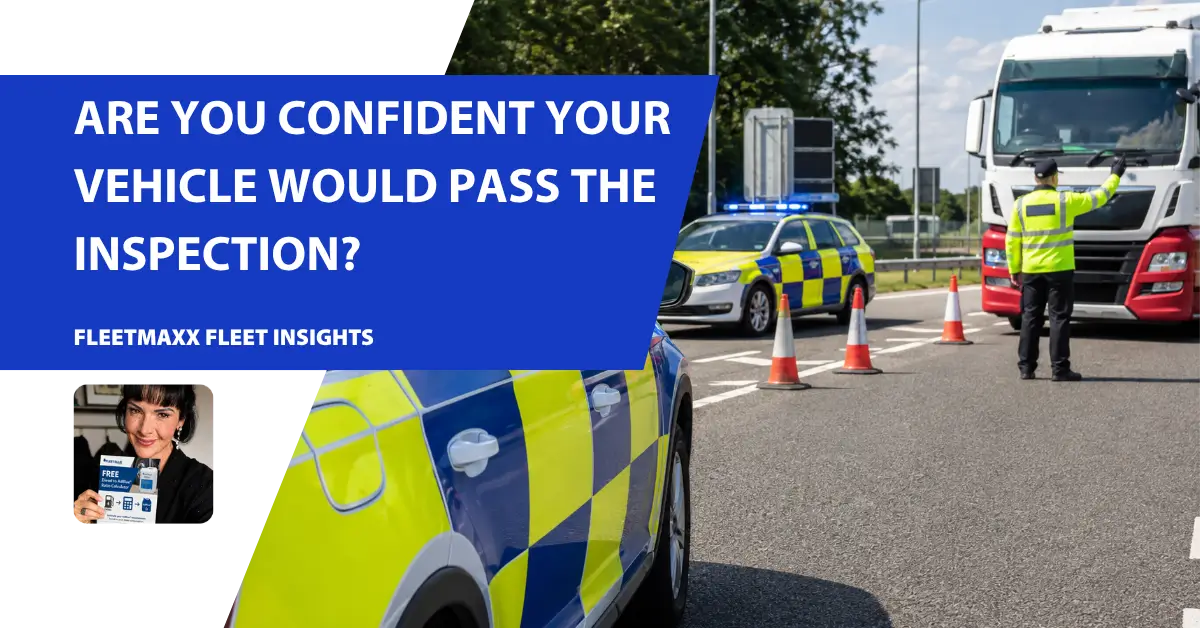
The police and DVSA officers have the power to stop any commercial vehicle at any time. If they find defects that should have been spotted during a morning walkaround, the consequences for your business can be severe. Common enforcement actions include:
- Fixed penalty notices for the driver.
- Immediate prohibitions that prevent the vehicle from moving.
- Points on the driver’s licence.
- Referrals to the Traffic Commissioner for the business owner.
Why the DVSA mandates walkaround inspections
The primary goal of the DVSA is to reduce road traffic accidents caused by mechanical failures. A missing wheel nut or a frayed tyre sidewall can lead to disaster. By mandating these checks, the DVSA helps operators stay within the Earned Recognition scheme, which rewards compliant businesses with fewer roadside stops. If your fleet fails to maintain these standards, the Traffic Commissioner has the authority to review, suspend, or even revoke your operator licence. You might find our transport consultancy services helpful if you are worried about staying on the right side of these regulations. It is a high-stakes environment where silence on defects is not an option.
The difference between HGV legal duties and van best practice
Heavy Goods Vehicle (HGV) drivers are legally required to record their checks to protect their O-licence. For van operators, the rules can seem slightly more relaxed, but do not let that fool you. While a written record for a light commercial vehicle is not always a statutory requirement, it is essential for your insurance coverage. If a van is involved in an accident and you cannot prove it was checked, your insurer may refuse to pay. Even worse, driving a van with a known defect can lead to dangerous driving charges. Following the commercial vehicle daily check requirements uk is just as critical for a small van as it is for a forty tonne truck.
What to include in your daily walkaround check
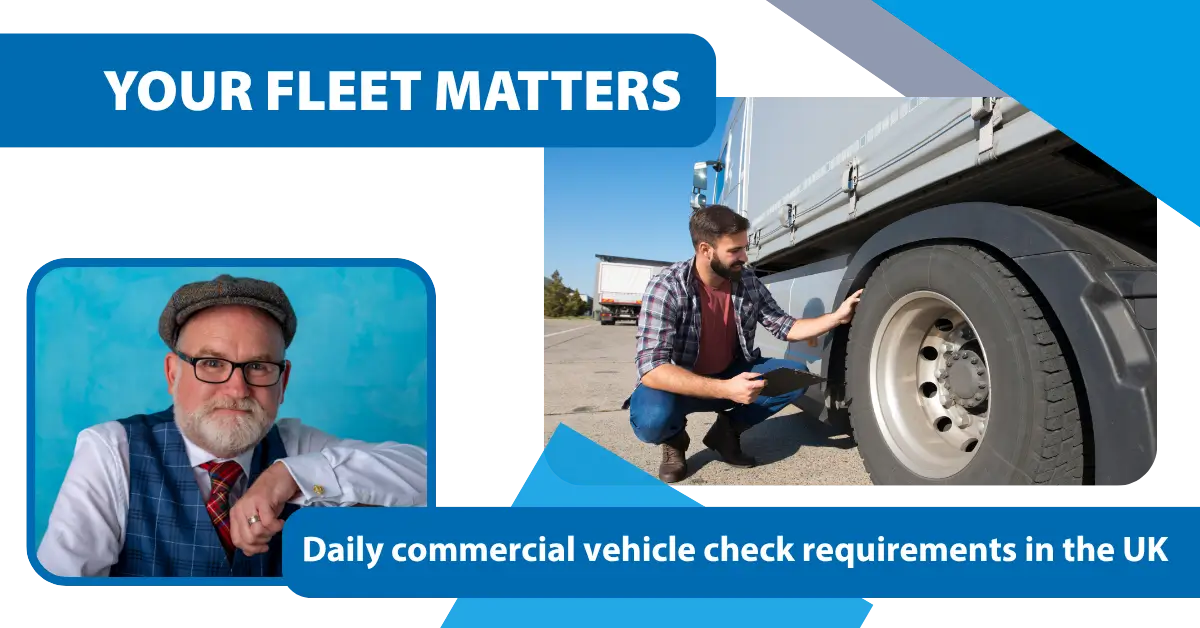
To comply with the commercial vehicle daily check requirements uk, your drivers must perform a systematic and thorough inspection every single day. This process is not a quick glance; it is a detailed verification that the vehicle is fit for the road. A proper walkaround should take at least fifteen minutes to complete. It is a small investment of time that prevents large financial losses later. Beyond the mechanical parts, do not forget to check your fluid levels. Low oil or coolant can lead to engine failure, while a lack of AdBlue may trigger limp mode and cause delivery delays. You can keep your fleet moving efficiently by using our smart AdBlue management system to ensure you never run dry.
External vehicle and load security checks
The exterior of the vehicle is your first line of defence against roadside prohibitions. Drivers should start by inspecting the tyres for a minimum tread depth of 1.6mm, though many fleets prefer a higher safety margin. Look closely for any cuts, bulges, or exposed cords in the sidewalls. Check that all lights and indicators are clean and functioning correctly. It is also vital to verify that the fuel cap and AdBlue tank cover are secure to prevent leaks or contamination. If the vehicle is carrying cargo, the driver must ensure the load is distributed evenly and secured with appropriate straps. An unsecured load or an overloaded axle is a serious safety risk that attracts heavy fines.
Internal cabin and safety equipment inspections
Once the exterior is clear, the driver should move inside the cab to check the controls. Turn on the ignition and look for any dashboard warning lights that stay on. It is essential to test the windscreen wipers and washers to ensure the view through the glass is perfectly clear. Press the horn to verify it works and move the steering wheel to check for any unusual play or resistance. For larger vehicles, the driver must wait for the air pressure to build up and check that the braking system is fully operational before pulling away. Finally, ensure that all seatbelts are in good condition and that the mirrors are adjusted correctly for maximum visibility.
Transitioning from paper to digital compliance systems
Relying on paper logs is a gamble that many fleet managers can no longer afford to take. It is common for paper sheets to get lost, stained with grease, or filled out retrospectively by a driver who forgot to do it in the morning. These fraudulent entries are a major risk during a DVSA audit because they lack credibility. Transitioning to a digital system ensures you meet the commercial vehicle daily check requirements uk with absolute precision. The CheckedSafe app is a modern compliance solution that replaces unreliable clipboards with a secure, digital interface. It provides a timestamped, tamper-proof audit trail that satisfies even the most rigorous inspections.
How to record and report vehicle defects correctly
A walkaround inspection is not officially finished until the driver files a report. Even if the vehicle is in perfect condition, a ‘nil defect’ report must be submitted. This document serves as legal evidence that the check actually occurred. If a driver finds a problem, they must categorise it immediately. Minor issues, such as a small chip in the paintwork, might only require monitoring. However, safety-critical defects, like a bald tyre or a broken mirror, mean the vehicle cannot be driven until the repair is complete. Digital reporting allows the transport office to see these issues in real-time, preventing the vehicle from leaving the yard in an unsafe state.
Using the CheckedSafe app for tamper-proof records
One of the greatest advantages of using the CheckedSafe app is the inclusion of GPS location data. This feature proves that the driver was actually standing by the vehicle when the check was performed, which eliminates the risk of ‘armchair’ inspections. Drivers can also attach clear photos of any defects directly to the report, providing instant visual proof to the maintenance team. All these records are stored in a secure cloud portal, which saves hours of administrative time every week. You do not need to spend your afternoons filing away hundreds of soggy pieces of paper when everything is organised automatically.
If you are ready to modernise your fleet and eliminate the stress of manual paperwork, you should learn more about our vehicle compliance app today.
How daily checks reduce your fleet operating costs
Many operators view compliance as a legal burden, but it is actually one of the most effective financial tools at your disposal. Following the commercial vehicle daily check requirements uk is the easiest way to protect your profit margins from erosion. When a driver catches a minor defect early, you can arrange a repair in your own workshop for a fraction of the cost of an emergency call-out. It is far more cost-effective to replace a worn belt during a scheduled break than to deal with a snapped one on the hard shoulder of the M25. At Fleetmaxx Solutions, we position ourselves as your partner for both compliance and long-term savings.
Preventing costly breakdowns and roadside prohibitions
A downed vehicle is a significant financial drain that goes far beyond the repair bill. Industry research indicates that unplanned downtime can cost a business an average of £1,370 per van, per day, when you account for missed deliveries and driver wages. If a DVSA officer issues a roadside prohibition notice, your vehicle is effectively impounded until the fault is rectified and cleared. This can stop your business from operating for several days, leading to unhappy customers and lost contracts. To ensure you are never left stranded, our national breakdown services provide total fleet protection and rapid recovery to get you back on the move.
Improving fuel efficiency through better vehicle health
There is a direct and measurable link between vehicle health and fuel economy. For instance, under-inflated tyres increase rolling resistance, which forces the engine to burn more fuel to maintain speed. Similarly, a clogged air filter or a dragging brake caliper will silently destroy your efficiency. By making these items part of a strict daily routine, you are actively lowering your fuel spend. You can monitor these efficiency trends by linking your vehicle health reports with our fuel card data. Our transport consultancy team is always available to help you analyse this data and implement proactive maintenance strategies that protect your bottom line.
Securing your fleet for the road ahead
Managing a modern fleet requires a balance between strict legal compliance and operational efficiency. We have discussed how meeting the commercial vehicle daily check requirements uk is not just a box ticking exercise, but a vital strategy to prevent costly roadside prohibitions and accidents. By choosing to digitise your records, you eliminate the risks associated with lost or damaged paper logs and gain a clear, real-time view of your vehicle health.
At Fleetmaxx Solutions, we are dedicated to helping you reduce business overheads while maintaining the highest safety standards. Whether you need our CheckedSafe app for digital compliance, our expert transport consultancy services, or a direct AdBlue supply to keep your costs low, we are here to support your journey. Protecting your bottom line starts with a robust inspection routine that keeps your drivers safe and your vehicles on the move. Please explore CheckedSafe and our fleet compliance tools to stay legal and ensure your business remains profitable in 2026.

Frequently asked questions: Commercial vehicle check requirements
What is the maximum fine for failing to carry out a daily vehicle check?
Fines for using a vehicle in a dangerous condition can reach up to £2,500 for small vans and £5,000 for HGVs. Drivers can also receive three penalty points on their licence for each defective item found. If the failure to check a vehicle leads to a serious accident, the costs for the business in terms of legal fees and insurance premiums will far exceed these fixed penalties. It is always cheaper to be safe.
Are daily walkaround checks required for small vans under 3.5 tonnes?
Yes, while the strict record keeping rules for HGVs do not always apply to light commercial vehicles, you still have a legal duty to ensure any vehicle used for work is roadworthy. Meeting the commercial vehicle daily check requirements uk is a critical best practice for van operators. Failing to perform these checks can invalidate your insurance and lead to prosecution under the Road Vehicles (Construction and Use) Regulations 1986.
How long should a driver spend performing a daily vehicle check?
A thorough walkaround check should take a minimum of fifteen minutes to complete properly. This duration is recommended by the DVSA to ensure that all internal and external components are inspected correctly. If a driver claims to have checked a forty tonne truck in only two minutes, it is highly likely that they have missed a safety critical defect. Providing sufficient time for this task is a vital part of your health and safety policy.
Can the DVSA fine the business owner if the driver forgets their check?
Yes, the business owner or the designated transport manager is ultimately responsible for the roadworthiness of the fleet. If a driver is stopped and a defect is found that should have been spotted, the DVSA can take action against the operator. This may involve a follow up audit of your maintenance records or a referral to the Traffic Commissioner, which puts your operator licence and your entire business at risk.
What is the best way to record vehicle checks for a small fleet?
The most efficient and secure way to record inspections is by using a digital vehicle compliance app. Paper logs are often lost or damaged, which makes it difficult to provide a clear audit trail during a roadside stop or an office inspection. A digital system provides timestamped evidence and GPS data to prove that the checks were done. This modern approach ensures you meet the commercial vehicle daily check requirements uk without the administrative headache.
Do I need to check the AdBlue levels every single day?
It is highly recommended to check your AdBlue levels as part of your daily walkaround routine. If a vehicle runs out of this fluid, the engine will often go into limp mode or refuse to restart after being turned off. This leads to unplanned downtime and expensive recovery costs. Checking the gauge daily ensures that your drivers have enough fluid to complete their routes without facing avoidable mechanical restrictions or delivery delays.
*The £1,100 figure is supported by 2026 research conducted by Opinium for Mercedes-Benz Vans. The survey of 500 senior decision-makers found that one van being off the road costs a UK business an average of £1,172.20 per day. Commercial Vehicle Show
This article is for general guidance only and does not constitute legal or professional advice. Rules and enforcement guidance may change, so always check the latest information from the DVSA and GOV.UK. Operators and drivers remain responsible for ensuring vehicles are roadworthy, checks are completed correctly, defects are reported and all applicable legal requirements are met. Fleetmaxx Solutions accepts no liability for actions taken solely in reliance on this content.