2026 guide for drivers on passing a DVSA roadside check
DVSA roadside check guide by Rachel Pearson, Key Account Manager and Advanced FORS Practitioner at Fleetmaxx Solutions
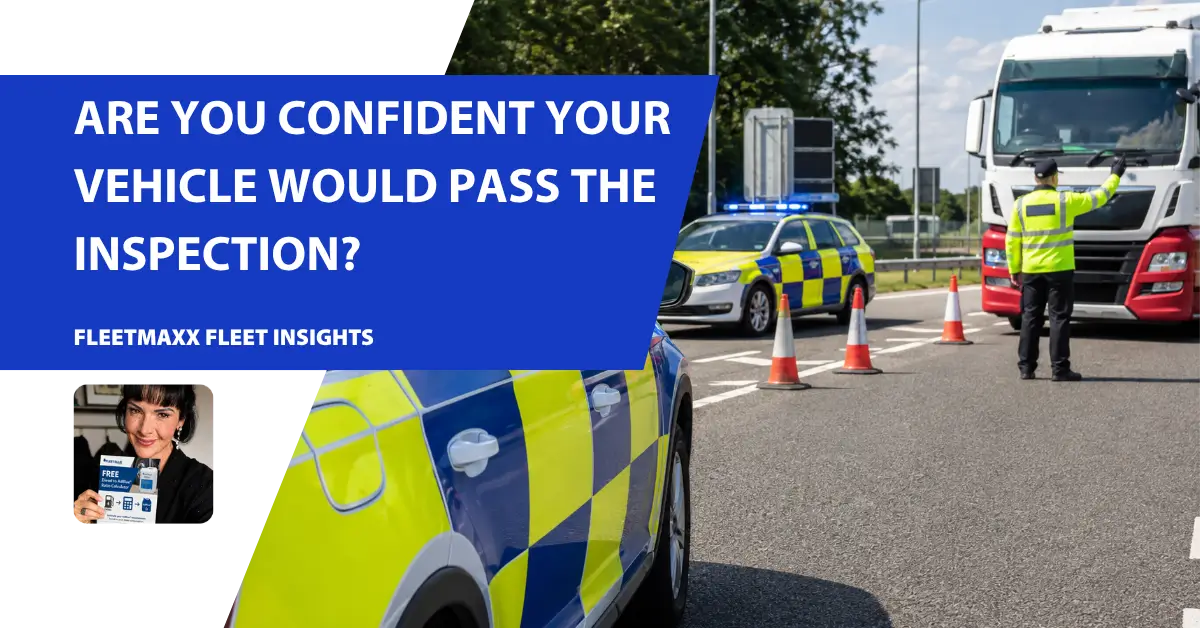
Blue lights. A DVSA officer waves you in. Are you confident your vehicle would pass the inspection?
Between April and December 2024, DVSA officers conducted 8,613 mechanical checks on HGVs operated in Great Britain and issued 2,379 mechanical prohibitions, representing a prohibition rate of 27.63%. This means more than one in four HGVs subjected to these targeted checks received a mechanical prohibition.*
For drivers and fleet operators, a DVSA roadside check can mean far more than an inconvenient delay. Vehicle defects, missing paperwork, drivers’ hours infringements or tachograph problems can potentially lead to prohibitions, fines, delayed deliveries and unwanted attention on your operator compliance record.
But a roadside inspection should not be something you fear.
In this 2026 guide to passing a DVSA roadside check, I will take you through what DVSA examiners may inspect, the common problems that catch drivers out, the paperwork you should have ready and the checks you can make before setting off.
The goal is simple: when the DVSA tells you to pull in, you are ready.
Key takeaways
- You will understand the step-by-step process of a DVSA inspection so that you can remain calm and professional throughout the encounter.
- Identify the specific physical and digital records you must carry to avoid fines for missing driver qualification evidence or tachograph data.
- Discover the top mechanical priority areas and learn exactly how to pass a DVSA roadside check by maintaining perfect tyre and load standards.
- Learn how switching from paper-based logs to digital compliance tools can eliminate human error and protect your operator licence.
- Gain the confidence to manage daily vehicle checks efficiently to avoid costly prohibitions and keep your deliveries moving without delay.
What to expect during a DVSA roadside check
A DVSA roadside inspection allows officers to check whether a commercial vehicle and its driver are complying with the relevant rules.
According to official government guidance on roadside checks, DVSA can stop commercial vehicles to carry out checks on both drivers and vehicles.
These checks can cover areas including vehicle roadworthiness, weight, load security, drivers’ hours, tachograph records and whether the driver holds the appropriate vocational driving licence.
If you are stopped, remain calm, professional and co-operative. A properly maintained vehicle, accurate records and evidence of effective daily checks can make the process much more straightforward.
How to identify a genuine DVSA officer duricng a DVSA roadside check
It is important to know who has the authority to stop your vehicle.
DVSA stopping officers have legal powers to stop commercial vehicles for roadside checks. Drivers should follow an officer’s instructions and pull over safely when directed to do so.
If you are uncertain about the identity of the person stopping you, you can ask to see official identification.
The important thing is not to ignore an instruction to stop. Failing to stop for an authorised DVSA officer is an offence.
Common reasons for being selected for a DVSA roadside check
Commercial vehicles can be selected for roadside checks for several reasons.
Some vehicles may be stopped as part of routine enforcement activity, while DVSA can also use information about operators and previous compliance history when deciding which vehicles to inspect.
Visible roadworthiness problems may also attract attention. Defective lights, damaged tyres, an obviously insecure load or other noticeable defects could indicate that a vehicle requires closer inspection.
This is one of the reasons why an effective daily walkaround check is so important.
Rather than waiting for an inspection to reveal a problem, drivers should be identifying defects before the vehicle starts its journey.
Fleet operators can also use a vehicle compliance app to record daily checks digitally and help ensure defects are reported promptly.
The Essential documentation for commercial drivers during a DVSA roadside check
Being organised can make a roadside inspection considerably easier.
The exact documents and records required will depend on the vehicle, journey and type of operation. Drivers and operators should therefore understand which requirements apply to them rather than relying on a one-size-fits-all checklist.
Driver qualifications and records
DVSA officers can check whether a commercial driver has the correct vocational driving licence and whether applicable Driver CPC requirements have been met.
Where Driver CPC applies, drivers should make sure they meet the current requirements and can provide the appropriate evidence when required.
Fleet operators should also have robust procedures in place for checking driving licence entitlement and ensuring drivers remain legally entitled to drive the vehicles they are operating.
Tachograph records and drivers’ hours compliance
Tachograph and drivers’ hours compliance can form an important part of a DVSA roadside inspection.
Drivers must be able to provide the records required under the rules that apply to their particular journey.
Depending on the applicable regulations and journey, this can include records for the current day and the previous 28 calendar days, while certain international journeys require records covering the current day and previous 56 days.
Drivers using digital tachographs should ensure their driver card is being used correctly and that all required records are available for inspection.
Missing records, incorrect use of a tachograph or breaches of drivers’ hours rules can result in enforcement action.
If your business needs additional support understanding its responsibilities, our transport consultancy services can help you review your existing compliance procedures and identify areas that may require attention.
Vehicle and operator paperwork requirements
The documentation associated with a commercial vehicle will vary depending on the vehicle, the journey and how it is being operated.
Operators should make sure that any documents, licences and records required for their particular operation are valid, correctly maintained and available when necessary.
Vehicles that require an operator licence disc should display it correctly, while operators and drivers should understand the vehicle’s permitted weights and any other restrictions that apply.
The important thing is not simply having paperwork filed somewhere in the office. Your business should have a clear and reliable system so that the information you need can be accessed when required.
Ensuring vehicle roadworthiness and load safety
Roadworthiness is one of the most important elements of commercial vehicle compliance.
A roadside check can identify defects that could result in a prohibition, prevent a vehicle from continuing its journey and create costly downtime for the operator.
According to the Government’s roadworthiness guidance for commercial drivers, drivers are responsible for making sure their vehicle is safe to drive.
Daily checks should therefore never become a box-ticking exercise.
Conducting the daily walkaround check effectively
Drivers should carry out an effective walkaround check before using their vehicle.
Depending on the vehicle, your checks may include:
- Lights and indicators
- Tyres and wheels
- Wheel fixings
- Mirrors and glass
- Brakes
- Steering
- Bodywork and doors
- Trailer coupling and connections
- Number plates and markings
- Load security
- Fluid leaks
- Windscreen washers and wipers
- Warning lights
- Vehicle height information, where required
Any defects identified should be reported through the operator’s defect-reporting procedure.
Drivers should never simply notice a problem and carry on regardless. Defects need to be assessed and, where necessary, rectified before the vehicle is used.
Keeping accurate records of these checks is also important because it helps operators demonstrate that appropriate roadworthiness procedures are being followed.
Managing load security
A vehicle can be mechanically sound and still present a serious road safety risk if its load is not properly secured.
Drivers should make sure loads are stable and appropriately restrained so that they cannot move, fall from the vehicle or adversely affect its handling.
Load security should therefore form part of the driver’s checks before setting off and should be reconsidered during the journey where appropriate.
If DVSA considers a vehicle or its load unsafe, enforcement action can follow.
Managing vehicle fluids and mechanical standards
Vehicle maintenance goes far beyond checking tyres and lights.
Brake performance, steering and other safety-critical systems need to be maintained correctly, while drivers should also look for warning signs such as fluid leaks during their daily checks.
Fluid levels should form part of good preventative vehicle maintenance too.
For diesel vehicles fitted with selective catalytic reduction systems, maintaining the correct AdBlue® level and using AdBlue® that meets the required ISO 22241 standard helps the emissions system operate as intended.
Fleetmaxx Solutions can supply AdBlue® solutions for commercial fleets, including British-made licensed AdBlue®.
Drivers and operators should also regularly check products such as screenwash and antifreeze, always following the vehicle manufacturer’s recommendations.
These might seem like small details, but good preventative maintenance can help identify problems before they become roadside defects or cause unnecessary vehicle downtime.
Proactive compliance strategies for your fleet
The best time to think about DVSA compliance is not when one of your drivers sees an enforcement vehicle at the side of the road.
Compliance needs to be built into the everyday running of your fleet.
That means having clear procedures covering vehicle checks, defect reporting, maintenance, drivers’ hours, record keeping and responsibility for rectifying problems.
It also means being able to demonstrate that those procedures are actually being followed.
Utilising digital tools for vehicle safety checks
Paper defect books can work, but they can also be lost, damaged, completed incorrectly or left sitting in a vehicle when a transport manager needs the information.
Digital systems can make the process considerably easier to manage.
The CheckedSafe app available through Fleetmaxx Solutions allows drivers to carry out and record their daily vehicle checks digitally.
Defects can be reported promptly, while fleet and transport managers can have greater visibility of what is happening across their vehicles.
Most importantly from a compliance perspective, digital records can provide a clear, auditable history of checks and defect reporting.
That can help operators demonstrate that roadworthiness is being actively managed rather than relying on loose pieces of paper or someone’s memory.
Could you prove your daily vehicle checks to DVSA?
This is a question I believe every fleet and transport manager should ask themselves.
If one of your vehicles was stopped today and a defect was identified, could you demonstrate when that vehicle was last checked?
Could you show who completed the check?
Could you demonstrate that previously reported defects had been acted upon?
Could you quickly access the relevant records?
If the answer to any of those questions is uncertain, it may be time to review your current system.
CheckedSafe can help drivers complete their checks digitally, report defects promptly and give fleet managers a clear record of vehicle checks.
For me, that is where technology really earns its place in fleet compliance. It is not about replacing good management. It is about giving good managers better information and greater visibility across their fleet.
The role of transport consultancy in avoiding prohibitions
Sometimes it helps to have another pair of experienced eyes looking at your operation.
Our transport consultancy services can support commercial vehicle operators with their compliance responsibilities and help identify potential weaknesses before they become bigger problems.
A review of your procedures can highlight areas where record keeping, maintenance management, driver processes or internal systems could be strengthened.
For an operator, the consequences of poor compliance can extend well beyond one delayed delivery. Repeated or serious problems can result in greater scrutiny and could potentially have implications for the operator licence.
Prevention is considerably easier than trying to resolve a compliance problem after it has already reached that stage.
Stay roadworthy and ready for a DVSA roadside check
There is no magic trick for passing a DVSA roadside check.
The strongest protection is a roadworthy vehicle, a properly trained driver and a business that takes compliance seriously every day.
Make effective walkaround checks part of your daily routine. Report defects promptly. Keep vehicles properly maintained. Understand which records apply to your operation and make sure they are accurate and accessible.
Most importantly, make sure you can demonstrate what you are doing.
Fleetmaxx Solutions can help businesses strengthen their fleet compliance through CheckedSafe vehicle compliance software, transport consultancy and reliable AdBlue® solutions.
The aim should not be to scramble into action when DVSA appears at the roadside.
Run your fleet as though a roadside inspection could happen today and make good compliance part of every journey.

*Source: DVSA vehicle enforcement checks at roadside and operators’ premises, April–December 2024. Figures relate to targeted HGV mechanical checks in Great Britain and do not represent the entire HGV fleet.
This article is provided for general information only and does not constitute legal or regulatory advice. Requirements can vary according to the vehicle, driver, journey and type of operation, and guidance may change. Operators and drivers should check the latest official guidance from the DVSA and GOV.UK or seek advice from a qualified transport compliance professional.

Use Fleetmaxx Solutions’ free Diesel-to-AdBlue Ratio Calculator to monitor AdBlue usage, identify potential faults and maintain audit-ready records for FORS and DVSA compliance.
DVSA roadside check frequently asked questions
What happens if I fail a DVSA roadside check?
What happens will depend on what the inspection identifies.
An offence or defect could result in a fixed penalty or prohibition notice, while more serious offences may result in prosecution.
DVSA graduated fixed penalties can include £50, £100, £200 and £300 penalties depending on the offence.
Problems and prohibitions identified during roadside checks can also affect an operator’s Operator Compliance Risk Score (OCRS), potentially increasing the likelihood of future DVSA attention.
Do I have to stop for a DVSA officer if they signal me?
Yes. Drivers must stop when instructed to do so by an authorised DVSA stopping officer.
Failing to stop is an offence.
If you have genuine concerns about the identity of the person who has stopped you, ask to see official identification, but do not ignore an instruction to stop.
What is the difference between an inspection and a prohibition?
An inspection is the process of examining the driver, vehicle, load or relevant records.
A prohibition is an enforcement notice that can be issued when a problem is identified.
An immediate prohibition can prevent the vehicle from being driven until the relevant problem has been rectified.
A delayed prohibition can allow time for the defect to be repaired before the prohibition comes into force, depending on the circumstances.
Serious roadworthiness problems can have wider implications for an operator, particularly where they indicate weaknesses in maintenance or compliance procedures.
Can a DVSA officer immobilise my vehicle?
DVSA has powers to immobilise vehicles in certain circumstances.
For example, a vehicle subject to an immediate prohibition may not be permitted to continue until the problem has been rectified and the relevant requirements have been satisfied.
The exact circumstances will depend on the offence, defect and enforcement action being taken.
How long does a typical roadside inspection take?
There is no single standard duration for a DVSA roadside inspection.
The amount of time required will depend on the type of check, the vehicle, the records being examined and whether officers identify defects, drivers’ hours infringements, weight issues or other problems.
Keeping your vehicle roadworthy and your required records accurate and organised can help the inspection proceed as smoothly as possible.
What paperwork must a van driver carry compared with an HGV driver?
There is no single universal list that applies to every van and HGV driver.
Requirements depend on factors including the vehicle, its weight, how it is being used, the journey being undertaken and which regulations apply.
HGV drivers may need to provide evidence relating to their vocational driving entitlement, Driver CPC and applicable tachograph and drivers’ hours records.
Van drivers can also fall within additional requirements depending on the vehicle and operation, particularly where vehicles are being used commercially or internationally.
Operators should therefore check the current official requirements for their specific vehicles and journeys rather than relying on a generic paperwork checklist.