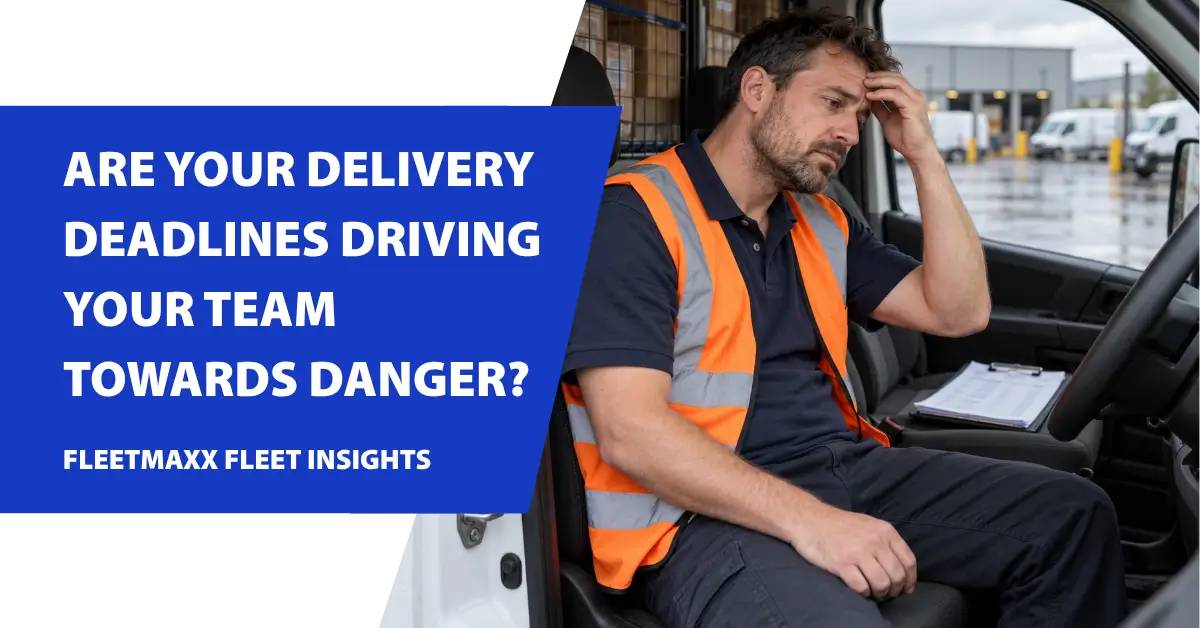
Are your delivery deadlines driving your team towards danger?
Mitigating Road Risk Guide by, Rachel Pearson, Advanced FORS Practitioner at Fleetmaxx Solutions in Whitstable
People who drive for work contribute to about a third of road fatalities in the UK, so mitigating road risk for delivery drivers means managing more than the vehicle itself. The Management of Health and Safety at Work Regulations 1999 require UK employers to carry out suitable and sufficient risk assessments, including for road-related tasks, according to the UK legislation register. Those assessments should reflect the real demands of delivery work, from route conditions to pressure on drivers.
Tight schedules and changing delivery demands can put safety under strain. Practical policies and planning help employers spot risks early and support safer decisions on the road.
This article explains how work policies, journey risk assessments and driver behaviour affect delivery safety, and why fatigue and unrealistic schedules matter. You’ll learn how clear expectations, suitable route planning and planned breaks can help reduce risk while keeping deliveries moving.
Key Takeaways
- Build work-driving policies around clear safety expectations, driver support and a practical way to report concerns.
- Use behaviour monitoring to identify patterns such as speeding or harsh braking, then give drivers useful feedback.
- Assess each journey for changing conditions, vehicle readiness, delivery-site hazards and the needs of the driver.
- Plan realistic schedules that allow for breaks, delays and changing road conditions rather than encouraging rushed decisions.
- Use route planning to prepare for disruption and help delivery teams make safer journey choices.
How are delivery drivers at risk?
Delivery work combines public-road driving with repeated stops, time pressure and activity at unfamiliar locations. In the UK, people who drive for work contribute to about a third of road fatalities. Up to one-third of road traffic collisions involve someone working at the time, and work-related collisions cause thousands of injuries and hundreds of fatalities each year. These figures show why risk management must cover the whole delivery task, not just time behind the wheel.
The legal starting point is clear. The Management of Health and Safety at Work Regulations 1999 require UK employers to carry out suitable and sufficient risk assessments, including for road-related tasks, according to the UK legislation register. The Health and Safety at Work etc Act 1974 also requires employers to protect employees and others affected by their work, so far as is reasonably practicable. That responsibility includes considering how driving, delivery locations and work arrangements interact.
Road conditions and driver choices can quickly change risk levels. Inappropriate speed was identified as a contributory factor in 56% of UK road deaths in 2023. A route that is familiar in daylight may become harder in poor weather, heavy traffic or darkness. Delivery plans should leave room for changing conditions, rather than encouraging drivers to rush, take risks or continue when a journey no longer feels safe.
Risk continues after the vehicle stops. Drivers may encounter an unsafe unloading area, poor access, an aggressive customer or an unrestrained dog. Train drivers in general safety precautions for site visits and give clear instructions for unsafe arrangements. Drivers should be authorised to pause or stop unloading if they have safety concerns. For example, a blocked or unstable unloading area should prompt a pause and a report, not pressure to proceed.
Training needs to match real delivery tasks. Refresh driver safety training at least every 2 years, and revisit it after a new route, vehicle, procedure or recurring near-miss pattern. Cover safe driving, site hazards, reporting procedures and how to raise concerns. Practical examples, such as reversing into a restricted yard or managing a difficult delivery, help drivers apply guidance under pressure.
Make reporting an ordinary part of the job. After an accident, near miss or safety concern, drivers should report what happened, where it happened, the route and conditions, and any injury or vehicle damage. A report about harsh braking near a junction, for example, can prompt a review of the route or schedule. For serious collisions, FleetGuard+ RTA support can help transport operators respond professionally from the outset. Record concerns promptly, investigate contributing factors and share useful changes with the team.
Effective health and safety consultancy links these actions. Use accident and near-miss records to identify repeated hazards, then update risk assessments, training or delivery arrangements. This is a practical foundation for mitigating road risk for delivery drivers: identify exposure, make safe choices possible and learn from incidents before the same problem affects another journey.
Driving-for-work policies and behaviour monitoring
A clear policy sets expectations for every employee who drives for work, including delivery staff using their own vehicles. Monitoring can help managers spot behaviour patterns and respond with practical support. Good policies also explain how driving fits into the wider transport operation, so staff and managers understand their responsibilities. Where additional support is needed, transport consultancy services can help businesses strengthen compliance and operational processes.
Driving-for-work policies
A driving-for-work policy explains the standards, responsibilities and processes that apply during business journeys. The Health and Safety at Work etc Act 1974 requires UK employers to protect employees and others affected by work, so far as is reasonably practicable. Make the policy useful in daily operations: explain how staff report concerns, what happens after an incident, and how managers address unsafe conduct. Include examples such as stopping somewhere safe before using a mobile phone or reporting a vehicle fault before the next journey.
Cover work-related driving in personal as well as company vehicles. Employees should understand which standards apply, how to raise concerns and where to find guidance. This clarity helps managers handle issues consistently across different roles and vehicles.
Monitoring driving behaviour
Telematics uses vehicle data to show driving patterns, helping managers identify behaviour that may increase risk. In a UK interview sample, 18 of 39 delivery drivers used telematics. A separate UK survey of nearly 800 last-mile delivery drivers found around half used it. Monitoring can highlight speeding, harsh braking, parking choices and unsafe vehicle operation. Use the information to understand patterns, not to judge one event without context. A sudden stop may reflect a road hazard, while repeated harsh braking may warrant discussion. A structured road risk management approach can help organisations review these patterns and strengthen safety controls.
Studies cited in the research found telematics implementation reduced crash rates by 37%-50%. These findings show potential value, not a guaranteed result for every transport operation. Explain what information is collected, who can access it and how it will inform conversations with employees. Clear communication helps drivers understand the purpose and contribute relevant context.
Feedback and safe-driving rewards
Driver feedback turns monitoring data into specific guidance, while fair rewards can recognise safer habits. Studies cited in the research found feedback reduced speeding by 15%-80% and harsh braking by 10%-52%. Share individual feedback privately, use clear examples and agree a realistic improvement. For instance, discuss a pattern of sharp braking alongside the driving circumstances before setting a goal. Recognition should encourage safe habits, not competition or hidden mistakes.
Set a clear mobile phone policy. Drivers should not handle a phone while the vehicle is moving. They can stop somewhere safe before responding to messages, changing navigation settings or contacting a customer. Dispatchers should avoid creating expectations that encourage phone use on the road, such as urgent requests that can wait until the driver has stopped safely.
Delivery work can involve long periods of sitting, repetitive movement and operational pressure. These conditions may contribute to discomfort, stress or reduced concentration. Include health discussions in feedback sessions and encourage employees to raise concerns early. A joined-up approach to policy, telematics and driver wellbeing helps make safer conduct part of everyday fleet management. Fleet HR services can also support transport businesses with practical guidance across the employee life cycle.
Mitigating road risk checklist
Fleetmaxx Solutions
Your fleet matters · Delivery driver safety
A safer delivery journey starts with four checks
Spot changing risks, support safer decisions and learn from every concern.
Plan for change
Allow for weather, traffic, darkness and unfamiliar delivery locations.
Put safety first
Build realistic schedules with time for breaks and unexpected delays.
Keep learning
Review training when duties, vehicles, routes or risks change.
Before setting off, check what has changed
Consider the route, schedule, vehicle, delivery location and whether the driver is fit and alert.
Check 1: Route conditions
Have conditions changed or made the route harder?
Think about weather, heavy traffic and darkness. A familiar route can become more difficult.
Check 2: Schedule pressure
Does the schedule allow for breaks, delays and changing conditions?
Tight schedules and changing delivery demands can put safety under strain.
Check 3: Vehicle and delivery site
Is the vehicle ready and is the unloading area safe?
Risk does not end when the vehicle stops. Consider access and hazards at unfamiliar locations.
Check 4: Driver concerns and learning
Is the driver alert, and are there any safety concerns?
A near miss, accident or concern can reveal a route, site or work-planning risk.
Risk assessments for work-related journeys
Assess each journey alongside the delivery site, vehicle and driver’s tasks. Before setting off, check the brakes, tyres, lights and mirrors, and report faults that could make the vehicle unsafe.
A useful assessment considers the route, weather, access, delivery work and what could change during the journey. It helps the responsible person choose controls to prevent foreseeable harm.
Assessing journey risks
A journey risk assessment considers hazards on the road and at each delivery location, so controls match the task. HSE workplace-delivery guidance does not cover driving on the public highway, so employers need to assess road journeys as well as site activity.
Consider the driver’s role, route, timing and delivery requirements. A longer or higher-risk journey may need a journey management plan that records routes, rest breaks, hazards and mitigations. Include alternative routes for roadworks or collisions, and make clear that drivers should use a mobile phone only after stopping safely.
Reducing delivery risks
Reduce risk by changing the journey or delivery arrangements to prevent harm, rather than relying on drivers to manage every hazard alone. For example, warn drivers about severe weather, restricted access, driveway hazards or dogs before they reach a property.
Share safety announcements when routes change or local hazards emerge. For high-crime areas or late-night work, consider risks such as theft, carjacking and assault. Support lone workers with employee-activated location visibility, scheduled check-ins and panic buttons. Choose controls that reflect the driver’s responsibilities and the specific delivery.
At a delivery site, assess the unloading area before work starts. Suppliers, carriers and recipients should agree safety arrangements in advance. If access is blocked or an unloading position feels unsafe, the driver should be able to pause and report the concern. This prevents pressure to complete a delivery from overriding a safe decision.
Vehicle checks and maintenance
Pre-trip checks help drivers identify defects before they become road hazards. Drivers should check the brakes, tyres, lights and mirrors, then report issues through the employer’s maintenance process before continuing in an unsafe vehicle.
Employers have the same duty of care for employees’ personal vehicles used for business as for company vehicles. For grey-fleet vehicles, check business-use insurance, tax, MOT status and safe condition. A worn tyre or faulty light can affect the whole journey, particularly when visibility or road conditions worsen.
Keep records of reported defects, repairs and recurring problems, then use them to review vehicle readiness. A daily walk-round check can identify visible issues, while planned maintenance addresses faults a driver may not spot in a quick inspection. For example, a driver who reports a brake concern should not be pressured to continue before the vehicle is assessed. Regularly reviewing findings helps employers update controls and reduce risks across routes and vehicles.
Fatigue and unrealistic delivery schedules
Long hours and strict delivery deadlines can cause fatigue, slowing reaction times and impairing judgement. A tired driver may also make panicked movements when traffic changes suddenly. Pressure to meet a delivery window, for example, could lead someone to brake sharply or turn before properly assessing the road. Schedule design is therefore part of managing driving risk, not just an operational decision.
Consider the whole shift when planning delivery work: driving time, loading, unloading, traffic disruption and the work required at each stop. A route that looks manageable on paper can become demanding when a customer is unavailable or a road is closed. Allow time to respond to delays, and make clear that safe driving takes priority over an unrealistic arrival time.
Regular breaks give drivers a chance to pause and reset during the working day. Build suitable opportunities into the schedule rather than expecting drivers to fit rest around an unbroken sequence of deliveries. Drivers can use a break for light exercise, such as a brief walk after sitting for a long period. This can make the pause more restorative than staying behind the wheel or continuing with delivery tasks.
Dispatch teams also affect pressure. Repeated calls for updates, last-minute route changes and demanding arrival targets can distract drivers or encourage rushed decisions. Set a simple process for communicating delays: drivers should stop somewhere safe before using a phone, then explain the disruption. Dispatchers can adjust the plan and update customers without asking the driver to make up time on the road.
Encourage drivers to speak up when fatigue affects their ability to work safely. A driver who is struggling to concentrate should be able to pause, take a break and discuss the next safe step with their manager. Treat this as a useful safety report, not a failure to meet a target. Managers can then review the shift pattern, route demands and workload that contributed to the concern.
Look for recurring warning signs across the operation. Examples include drivers regularly finishing late, reporting missed breaks or arriving at their final stops visibly tired. Compare schedules with actual delivery conditions, then adjust the workload or sequence where needed. If roadworks repeatedly delay a route, changing the order of stops may reduce pressure without requiring faster driving.
Fatigue can also reduce attention during loading and unloading. A tired driver may overlook a hazard, misjudge a manoeuvre or handle a delivery less carefully. Keep the work plan realistic across the full shift, including time away from the vehicle. Managers should discuss demanding days with drivers and use their experience to identify where the schedule creates avoidable pressure.
Consistent planning makes safer decisions easier. Review how delays, breaks and delivery demands affect each route, then adjust the plan before the same pressure becomes routine. Regular breaks, light movement and open communication give drivers practical ways to respond when tiredness develops. The schedule should support safe performance throughout the day, not just a fast start or an on-time first delivery.
Fleetmaxx Solutions: EV charge cards
Fleetmaxx Solutions offers EV Charge Cards for businesses operating electric vehicles. They can form part of wider fleet planning, alongside decisions about routes, delivery schedules and charging needs. A charge card does not replace journey risk assessments, safe-driving policies or realistic delivery plans, but it is relevant when introducing electric vehicles into a delivery operation.
Consider how electric vehicles fit your routes and daily work before making operational changes. Clear planning helps teams account for vehicle use while keeping driver safety central to delivery decisions. If you are reviewing fleet needs, contact Fleetmaxx Solutions or visit fleetmaxxsolutions.co.uk.
Make safer journeys part of everyday planning
Make safer driving part of routine fleet decisions. Review how route changes, delivery demands and driver feedback are handled together, then assign responsibility for each action. This helps reveal unclear procedures or operational pressures that undermine safe choices. Base the process on what drivers encounter on actual journeys, and use their experience to shape improvements.
Mitigating road risk for delivery drivers is an ongoing responsibility, not a one-off policy exercise. Fleetmaxx Solutions offers Vehicle Tracking Systems that can support a wider fleet management approach. The right tools should inform clear processes and decisions, while employers remain responsible for managing work-related risks.
For a practical conversation about your fleet’s needs, contact Fleetmaxx Solutions. Take the next step at a pace that works for your operation, and keep building safer journeys into the way your team works.

Mitigating Road Risk frequently asked questions
How can employers minimise WRRR?
Employers can minimise work-related road risk by combining clear responsibilities with practical controls. Include business journeys in risk management, whether employees use company vehicles or their own. Explain how staff should report defects, near misses and changing conditions, then review reports for recurring issues. For example, repeated delays on a delivery run may point to a route or workload problem that needs operational changes, rather than more pressure on drivers.
What are the main road risks for delivery drivers in the UK?
Delivery drivers face risks from traffic, inappropriate speed, changing weather, fatigue and pressure to meet demanding schedules. The work also involves repeated stops and unfamiliar roads, where access restrictions or sudden route changes can complicate driving. Risks continue at delivery locations, including unsafe unloading areas, aggressive customers or dogs. Consider the whole task, from departure and driving to parking, unloading and returning to the depot.
What UK laws and HSE guidance apply to delivery driver road safety?
The Health and Safety at Work etc Act 1974 requires employers to protect employees and others affected by work, so far as is reasonably practicable. According to the UK legislation register, the Management of Health and Safety at Work Regulations 1999 require suitable and sufficient risk assessments, including road-related tasks. HSE workplace-delivery guidance addresses delivery-site risks, but does not cover driving on the public highway. Employers need to assess both contexts.
How should employers assess and reduce risks for delivery drivers?
Assess the work, the driver’s responsibilities, journey conditions and delivery arrangements, then choose controls that address the hazards. For example, if roadworks regularly disrupt a route, plan an alternative and explain the change before dispatch. Make sure drivers know how to raise concerns, and use accident or near-miss reports to review whether controls are working. Update assessments when routes, vehicles or delivery tasks change.
What driver training helps prevent delivery vehicle accidents?
Training should prepare drivers for both road decisions and delivery-site tasks. Use realistic scenarios, such as approaching a restricted yard, encountering a blocked unloading area or reporting a vehicle defect. Practise safe driving choices, incident reporting and how to respond when arrangements feel unsafe. Refresh delivery driver safety training at least every 2 years, and revisit key guidance when a driver’s duties or working practices change.
How can route planning and scheduling reduce fatigue and time pressure?
Plan routes around realistic delivery demands, likely disruption and opportunities for regular breaks. Give dispatchers a process for revising arrival expectations when traffic or roadworks cause delays, rather than asking drivers to make up time. For longer or higher-risk journeys, a journey management plan can record routes, rest breaks, hazards and controls. Drivers can use breaks for light exercise, offering a change from prolonged sitting.
Disclaimer: This Mitigating Road Risk article provides general information about managing road risk for delivery drivers and does not constitute legal advice or a substitute for a competent, business-specific risk assessment. Requirements may vary by vehicle, journey, location and operation. Employers and drivers should check current legislation and official guidance, including applicable drivers’ hours, working time and data protection requirements. Statistics and research findings relate to specific sources and circumstances; training intervals are recommendations unless stated otherwise. Vehicle tracking, route planning and other fleet services can support safer working practices but do not guarantee safety or compliance.