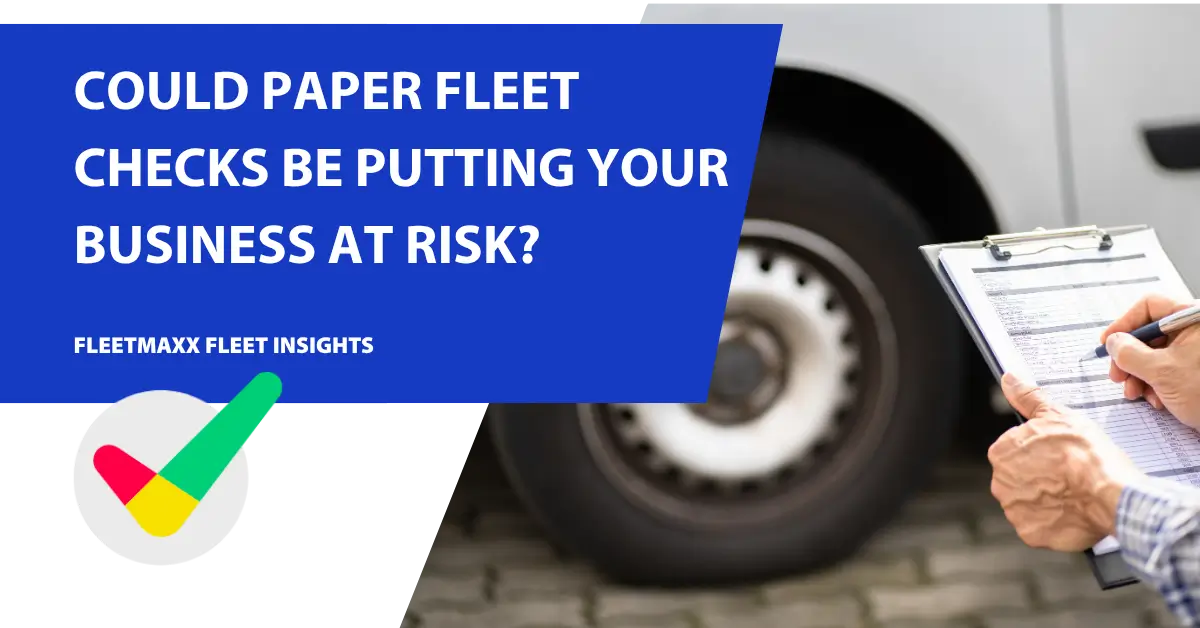
Still using paper fleet checks?
It could be costing your business more than you think
Fleet compliance app, guide by Stephen Buckley, Sales Manager and Senior Fuel Analyst at Fleetmaxx Solutions, Burnley
Did you know that the cost of vehicle downtime for a small or medium enterprise in the United Kingdom now averages five hundred pounds every single day? When you combine that with the July 2026 tachograph regulations for vans over two point five tonnes, the stakes for your fleet operations have never been higher. If you are still relying on a paper-based system for your daily walkaround checks, you are likely facing a mountain of administrative work and a constant fear of Driver and Vehicle Standards Agency fines or losing your hard-earned FORS accreditation.
I understand that transitioning to digital systems can feel like a daunting task, especially when you need to convince the board that the investment is worthwhile. However, making the business case for a fleet compliance app is no longer just about ticking a box; it is about protecting your bottom line and ensuring operational continuity. In this article, I will show you how to quantify the financial and operational benefits of digital compliance so that you can secure the approval you need. We shall explore how moving away from manual records reduces human error and transforms compliance into a powerful strategic advantage for your business.
Key Takeaways
- Identify the substantial hidden costs of manual record-keeping and see how paper-based daily walkaround checks hinder your operational efficiency.
- Master the process of making the business case for a fleet compliance app by comparing subscription costs against a significant reduction in administrative hours.
- Learn how to frame digital compliance as a safeguard for your Operator Licence while supporting your wider corporate social responsibility goals.
- Discover the critical features to look for in a 2026 compliance partner to ensure your business benefits from UK-based expertise and professional transport consultancy.
The hidden costs of manual fleet compliance in the United Kingdom
RAC Business research found that one-third of surveyed small and medium-sized businesses that knew the financial impact of vehicle downtime estimated it could cost them up to £500 per vehicle, per day. Although the research was published in 2015, it demonstrates how quickly downtime costs can mount. Meanwhile, since 1 July 2026, goods vehicles weighing 2,501kg or more must have a Smart Tachograph 2 when undertaking international journeys for hire and reward. With compliance requirements increasing, relying on paper-based daily walkaround checks can create unnecessary administration and make important records harder to manage.
Modern Telematics technology provides real-time insights that paper simply cannot match. Manual systems often lead to missed maintenance windows because a defect reported on a Monday might not reach the fleet manager until the end of the week. By then, a minor fault has often developed into a major mechanical failure, putting the safety of your drivers and the public at risk. These delays make it impossible to maintain a proactive maintenance schedule, leaving your operation reactive and expensive.
The regulatory burden of the DVSA and FORS
Manual systems struggle to meet the strict “Earned Recognition” standards set by the Driver and Vehicle Standards Agency (DVSA). If your records are incomplete, illegible, or missing, your Operator Compliance Risk Score (OCRS) will suffer. A poor score makes your vehicles a primary target for roadside inspections and full fleet investigations. Furthermore, preparing for a FORS audit using paper files is an exhausting process that can take days of cross-referencing. A digital system like CheckedSafe provides an instant, searchable audit trail that satisfies auditors and protects your reputation.
Quantifying the cost of vehicle downtime
The financial impact of vehicle downtime is a critical factor for any UK business. Research indicates that the cost of a vehicle being off the road (VOR) for small and medium enterprises is approximately five hundred pounds per day. Delayed defect reporting via paper forms directly contributes to these costs by allowing small issues to escalate. By the time a mechanic sees the vehicle, the repair bill has often tripled compared to what it would have been if the issue was flagged instantly. If you require expert guidance on reducing these risks, our transport consultancy services can help you identify specific operational leaks.
Quantifying the return on investment for a compliance app
When making the business case for a fleet compliance app, the most persuasive argument for any board of directors is the direct impact on the bottom line. While a paper logbook might seem like a negligible expense, the cumulative cost of printing, distributing, and physically storing thousands of documents is substantial. In contrast, a monthly subscription for a digital tool provides a fixed, predictable outgoing that eliminates these hidden overheads. Most UK fleets that transition to digital management see a positive return on investment within six to twelve months of implementation.
Beyond the stationary costs, the financial protection against regulatory action is immense. The Driver and Vehicle Standards Agency (DVSA) operates a graduated penalty system where fines for offenses such as overloading can reach three hundred pounds per instance. Serious health and safety breaches can result in penalties exceeding one hundred thousand pounds. By ensuring every vehicle is inspected and every defect is logged, you significantly reduce the risk of these avoidable legal fees and the potential for a costly public inquiry.
Administrative efficiency and time savings
Time is a finite resource in transport management. A digital interface allows a driver to complete a thorough check in minutes, but the real saving occurs in the back office. Instead of a fleet manager manually reviewing paper sheets and chasing missing signatures, data is available instantly. Automated alerts replace the need for manual follow up phone calls, as the system notifies the maintenance team the moment a defect is reported. This transition can reduce administrative hours by a significant margin, allowing your staff to focus on high value tasks such as route optimisation or driver training.
Risk mitigation and insurance benefits
Commercial fleet insurance premiums in the United Kingdom increased by approximately 35% between 2023 and 2026. To combat these rising costs, you must demonstrate a robust risk profile to your underwriter. A clear, timestamped audit trail satisfies “Duty of Care” requirements and proves that your business is proactive rather than reactive. Integrating these digital records with our Road Risk Management services creates a comprehensive safety culture that insurers value. You may find that having transparent, real time data leads to more competitive premium renewals. To see how this technology fits into your wider strategy, you should explore the benefits of our CheckedSafe app for daily safety checks.
Presenting the business case to your board of directors
When you are standing in front of the board, your narrative must shift from operational convenience to strategic risk management. The most powerful point to make is that a digital system is the ultimate safeguard for the company Operator Licence. If the Driver and Vehicle Standards Agency (DVSA) calls for a public inquiry, having a disorganised paper trail is a significant liability. You should frame the investment as a proactive measure to protect the directors from personal liability under health and safety legislation. Real time visibility allows the C-suite to see exactly how the fleet is performing at any given moment, ensuring they remain informed and compliant with their legal duties. Additionally, digital solutions offer effortless scalability; as your fleet grows, your compliance processes remain consistent without requiring additional administrative staff.
Aligning with financial and strategic goals
A robust compliance programme supports broader business objectives in ways that paper records simply cannot. For instance, the data gathered by an app provides a clear picture of vehicle health, which helps the finance department plan more accurate vehicle replacement cycles. Instead of guessing when a van is past its prime, you have the proof of recurring defects and repair costs. Moving away from paper also aligns with corporate social responsibility goals by reducing waste. Many high value client contracts in the United Kingdom now require proof of FORS or Earned Recognition status. A green, digitally managed fleet is a competitive advantage that enhances your brand reputation and proves you are a modern, responsible organisation.
Addressing the common objections of the C-suite
Directors often worry about two things: will the drivers adopt the technology, and is the data secure? Modern apps are designed for ease of use, and most drivers find them far less tedious than filling out paper booklets every morning. Regarding security, cloud storage offers superior protection compared to physical files that can be lost, damaged, or stolen. You can also explain that making the business case for a fleet compliance app is easier when you show how it integrates with our Business Fuel Cards to provide a total solution for fleet management. By centralising your data, you reduce complexity and administrative friction across the entire business.
To begin the process of modernising your operation and protecting your directors, I recommend looking at the features of our CheckedSafe app to see how it can transform your reporting accuracy.
Choosing the right compliance partner for your United Kingdom fleet
Selecting a partner for your digital transition is just as critical as the software itself. You need a team that understands the nuances of United Kingdom law, from the 2026 tachograph changes to the evolving standards of the Driver and Vehicle Standards Agency. When making the business case for a fleet compliance app, you should emphasize that integration is the key to long-term success. A solution that communicates with your telematics and fuel management systems creates a single source of truth, which reduces the risk of data silos. To ensure a smooth transition, I recommend starting with a pilot group of drivers to gather feedback and refine your digital checklists before you move to a full fleet rollout.
The benefits of the CheckedSafe solution
The CheckedSafe app is a market leader because it provides a complete, tamper-proof audit trail that is impossible to replicate with paper systems. Every check is Global Positioning System stamped and timed, which gives you absolute certainty that the inspection actually took place at the vehicle. One of the most significant advantages is the ability to customise checklists for your specific needs. Whether you are managing heavy goods vehicles, electric vans, or specialised plant machinery, you can tailor the questions to suit the asset. This flexibility ensures that no critical safety point is ever overlooked by your team.
Leveraging transport consultancy expertise
Technology is only one part of the compliance puzzle. Working with Transport Consultancy experts ensures that your digital tools are backed by professional knowledge. My team and I specialise in helping businesses achieve and maintain Fleet Operator Recognition Scheme accreditation, which is increasingly vital for securing lucrative contracts in the United Kingdom. Beyond daily checks, we provide comprehensive Road Traffic Accident support through our Fleetguard service. This professional support gives you peace of mind that, should an incident occur, you have expert guidance to manage the aftermath and protect your business reputation. Making the business case for a fleet compliance app becomes much simpler when you can demonstrate that the technology is supported by industry-leading consultancy.
Transforming your fleet compliance strategy
Transitioning from manual paper trails to a digital system is a strategic move that pays dividends in operational efficiency and financial security. By eliminating the administrative burden of paper daily walkaround checks, you empower your team to focus on growth rather than filing. Making the business case for a fleet compliance app is about proving that the protection of your Operator Licence and the reduction of vehicle downtime are worth the initial shift in process. With the right technology, your business becomes more transparent, accountable, and attractive to high-value contract providers across the United Kingdom.
At Fleetmaxx Solutions, we provide the tools and expertise to make this transition seamless. From our CheckedSafe digital compliance partner to the Advanced FORS Practitioner guidance offered by our comprehensive UK transport consultancy, we are here to support your success. We look forward to helping you build a more efficient and compliant future for your fleet.
Contact me or any of the team af Fleetmaxx to discuss your fleet compliance needs today and discover how we can help you reduce overheads while improving safety standards.

Fleet compliance app: Frequently Asked Questions
Is a digital fleet compliance app legally accepted by the DVSA?
Digital records are legally accepted and actively encouraged by the Driver and Vehicle Standards Agency (DVSA). The agency supports the use of electronic systems for daily walkaround checks provided they are as robust and reliable as paper records. Using a digital platform makes it far easier for your business to participate in the Earned Recognition scheme. This high level of transparency proves to the authorities that you maintain a safe and compliant operation at all times.
How much can a business save by switching from paper to a compliance app?
Businesses often see a positive return on investment within six to twelve months of implementation. When you are making the business case for a fleet compliance app, you should consider the reduction in administrative hours and the avoidance of fines that can reach three hundred pounds for simple overloading. By preventing vehicle downtime, which costs five hundred pounds per day, the savings quickly outweigh the modest monthly subscription costs of the software.
Will my drivers find it difficult to use a compliance app on the road?
Drivers generally find modern compliance apps very straightforward to use on their mobile devices. The interface is designed to be intuitive; often requiring simple taps to confirm that a vehicle component is safe. Most drivers prefer this method because it eliminates the need to carry and protect physical logbooks. Once the initial training is complete, the digital process becomes a fast and seamless part of the daily routine for every member of your team.
Can a compliance app help my business achieve FORS accreditation?
A compliance app is a vital tool for any business seeking to achieve or maintain FORS accreditation. The system provides the clear, timestamped audit trail that auditors require to see during their inspections. I have seen how digital records simplify the preparation process. It ensures that all safety data is organised and accessible; which is a core requirement for those aiming for the silver and gold levels of the scheme.
What happens if a driver has no signal while performing a safety check?
If a driver is in an area with no mobile signal, the app will still function as normal. The safety check data is stored locally on the device and will automatically synchronise with the central database as soon as a connection is restored. This ensures that compliance is never interrupted by poor coverage. Your office based staff will receive the report the moment the driver enters a signal zone or connects to a local network.
Does a compliance app store data securely for the required legal period?
Digital compliance platforms utilise secure cloud storage to keep your data safe for the legally required duration. For vehicle maintenance records, this is typically fifteen months. Unlike paper files, which can be damaged by fire, flood, or simple misplacement, cloud based data remains protected and easily searchable. This level of security provides peace of mind that your business can always produce the necessary evidence during a DVSA inspection or a formal legal inquiry.
Disclaimer: The information provided in this article is for general informational purposes only and does not constitute legal or professional advice. Fleetmaxx Solutions accepts no responsibility for any loss which may arise from reliance on information contained in this article.