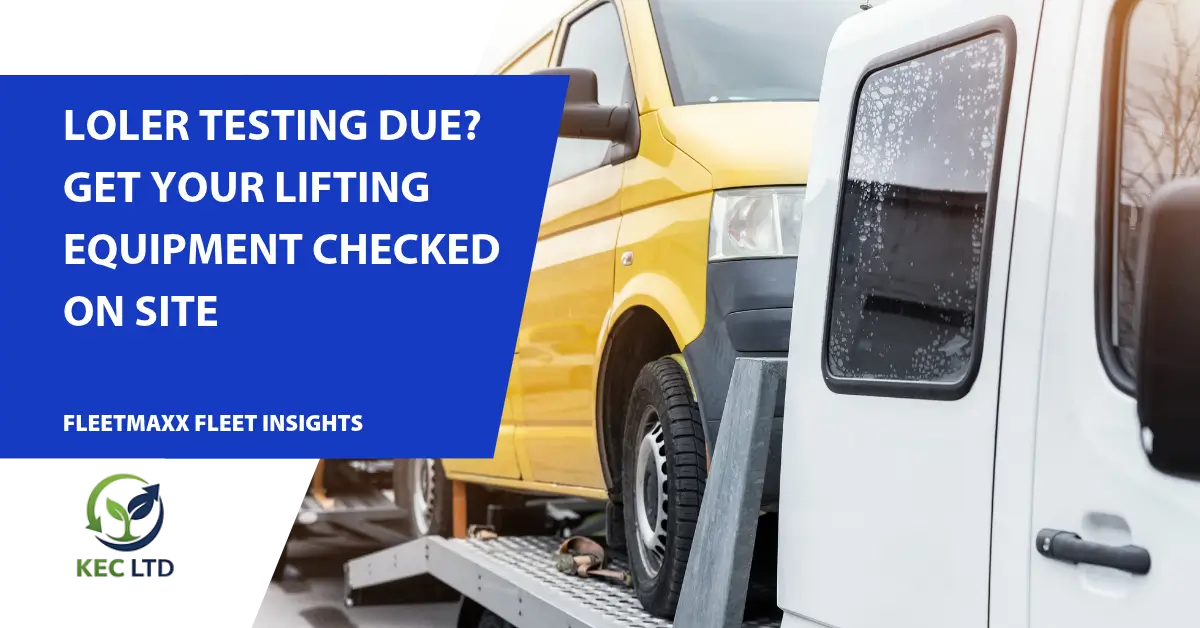
LOLER testing for recovery operators and workshops
LOLER testing , Stephen Buckley, Sales Manager at Fleetmaxx Solutions in Burnley
If you run a recovery business or a busy workshop, finding a gap in the diary for LOLER equipment checks can be half the battle. Between call-outs, jobs already on the ramp and the next vehicle due in, there is rarely a quiet day to get everything looked at.
So here is some good news from our Burnley office partner, Karen Ellis Consulting. Karen and her team have welcomed a new affiliate, BEST Ltd (Battery Examinations Services and Training Ltd), which offers nationwide on-site LOLER equipment examinations, testing and certification. BEST comes to your premises, so you can arrange the visit around what is happening in your yard or workshop.
Here at Fleetmaxx Solutions in Burnley, I spend a lot of time talking to businesses about keeping their vehicles on the road and their costs under control. The kit that gets those vehicles back on the road matters just as much. That is why I wanted to share the news, especially if you have a few examination dates coming up and want to see what you can get done in one visit.
What can BEST check at your premises?
-
Recovery equipment
Underlifts, tilt-and-slides, beavertails, overbooms and HIAB cranes.
-
Lifting accessories and attachments
Chains, snatch blocks, strops, bow shackles, D-links, lifting forks and straight bars.
-
Mobile elevating work platforms and forklift trucks
Forklift coverage includes models up to 3.5 tonnes, from 3.5 to 10 tonnes and over 10 tonnes.
-
Garage equipment
Ramps, axle stands, trolley jacks, pit jacks and engine stands.
-
Recovery truck inventory checks
Inventory checks for police contracts, along with work to PAS 43 requirements.
Got several identical items? As a rule of thumb, BEST may be able to include around four identical items on one certificate. Give them the details when you book so they can confirm what can go together.
If your next examination is coming up, get in touch with Karen Ellis Consulting with a list of your equipment, where it is based and when your reports are due. That gives the team a starting point to help you arrange a visit with BEST.

What is LOLER?
LOLER stands for the Lifting Operations and Lifting Equipment Regulations 1998. In Great Britain, the regulations cover lifting equipment and accessories used at work. Employers and others responsible for lifting equipment have duties that include making sure lifting operations are properly planned and carried out safely, and arranging thorough examinations where required.
LOLER testing FAQs
What is LOLER?
LOLER stands for the Lifting Operations and Lifting Equipment Regulations 1998. In Great Britain, the regulations cover lifting equipment and accessories used at work. They set out duties for planning and carrying out lifting operations safely and arranging thorough examinations where required.
What happens during a LOLER examination?
A competent person examines the equipment and its safety-critical parts for defects or deterioration. They decide what testing is needed and issue a written report showing when the examination took place, when the next one is due and any defects that could present a danger.
How often does lifting equipment need a thorough examination?
Unless a competent person has drawn up an examination scheme with different intervals, the standard intervals are:
- Every six months for equipment and associated accessories used to lift people.
- Every six months for lifting accessories such as chains and slings.
- Every 12 months for other lifting equipment.
The Health and Safety Executive recommends thorough examination of vehicle lifts every six months in motor vehicle repair workshops. A further examination may be needed after damage or major repairs that could affect safety.
Do axle stands and trolley jacks need the same checks?
The Health and Safety Executive advises having trolley jacks thoroughly examined every 12 months and axle stands inspected every 12 months by a competent person. List both when you book so BEST can confirm the checks for each item.
Does a service cover the LOLER examination?
Servicing and thorough examination are separate jobs. Keep up routine maintenance and operator checks alongside your examination schedule. The competent person carrying out the examination should be sufficiently independent and impartial to assess the equipment.
What happens if the examiner finds a dangerous defect?
If the examiner says the equipment is unsafe to use, take it out of service until the defect is fixed. If the report gives a deadline to correct a defect, fix it by that date or stop using the equipment.
Health and Safety Executive guidance on thorough examinations and workshop lifting equipment.