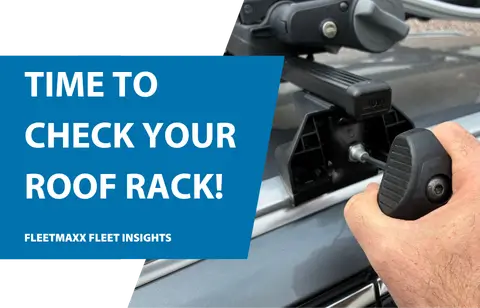
Could your roof rack ruin your summer holiday?
Roof racks guide By Steve Clarke, Marketing Manager at Fleetmaxx Solutions
More people are choosing to drive to their summer holiday destinations this year, both in the United Kingdom and abroad. That means plenty of roof boxes and cycle carriers will be making an appearance, sometimes for the first time in months.
A roof rack can provide valuable extra space, but only when it is fitted, loaded and checked correctly. A loose roof box, bike carrier or strap could damage your vehicle, strike another road user or leave you stranded at the roadside.
Check every roof rack fastening before travelling
Never assume that a roof rack is secure simply because it was fitted correctly at the start of the journey. Wind resistance, vibration and motorway speeds can gradually loosen fittings and straps.
“Take the time to check every fastening nut and strap – not just when you fit the rack but regularly during your journey,” advises Lee Puffett, Managing Director of breakdown provider Start Rescue. “At motorway speeds, the wind can easily loosen fixings and cause roof-mounted loads to escape.”
Check the roof bars, mounting points, locking mechanisms and straps before setting off. It is also sensible to stop and check everything again shortly after beginning the journey and during longer rest breaks.
Watch your vehicle height
A roof box or bicycles mounted on top of a vehicle can add a surprising amount of height.
Before travelling, make sure you know the vehicle’s total height with everything fitted. Pay particular attention when approaching:
- Low bridges
- Height barriers
- Multi-storey car parks
- Hotel entrances
- Ferry terminals
- Overhanging trees
Forgetting what is on the roof could result in serious damage to the vehicle, roof rack and anything being carried.
Do not overload the roof rack
Check the vehicle handbook for the maximum permitted roof load. Remember that this limit includes the combined weight of the roof bars, roof box or carrier and everything loaded onto it.
Lee Puffett adds: “Check the maximum weight a roof rack or box can hold in the owner’s manual and adjust tyre pressures to suit. Try to pack heavy bags in the car and lighter items in the roof box to keep the car’s centre of gravity as low as possible for safe driving. And remember to lock boxes and bikes to deter thieves.”
Keeping heavier luggage inside the vehicle will help maintain a lower centre of gravity. This can make the car feel more stable, particularly when cornering, braking or driving in strong winds.
Allow for different handling
A heavily loaded vehicle with equipment on its roof will not handle in exactly the same way as it normally does. It may take longer to stop, feel less stable through bends and be more affected by crosswinds.
Drivers should reduce their speed, leave a larger gap from the vehicle ahead and avoid sudden steering or braking. Tyre pressures should also be adjusted in line with the manufacturer’s recommendations for a fully loaded vehicle.
Add roof rack checks to your routine
For businesses, roof racks, ladders and other externally mounted equipment should form part of the driver’s daily vehicle checks whenever they are being used.
A few minutes spent checking the load before setting off could prevent vehicle damage, a breakdown or a serious road safety incident.
You might also like to read our guide on “The five most common car faults that could ruin your summer getaway.”
Before your drivers head away this summer, make sure everything is secure, within the permitted weight limit and checked regularly throughout the journey.