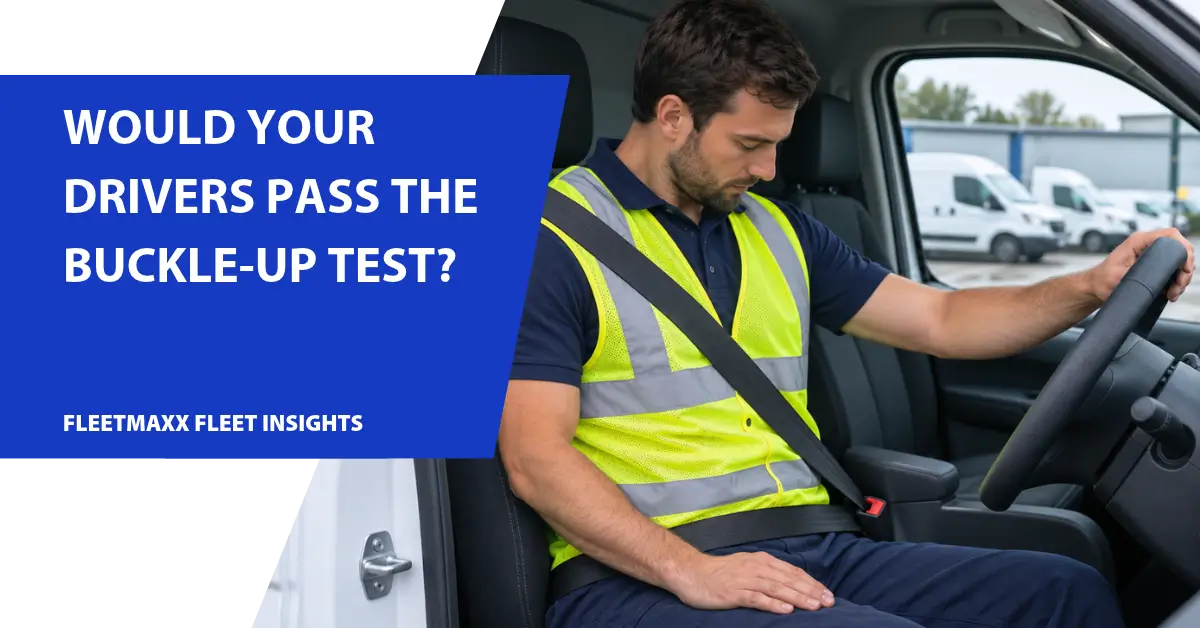
Would your fleet pass the buckle-up test?
Seat belt rules guide by Rachel Pearson, Advanced FORS Practitioner at Fleetmaxx Solutions
“I am only going round the corner.”
How many times have you heard that one? It might be a quick trip between jobs, a teammate hopping into the passenger seat or the last delivery of the day. It takes seconds to buckle up, yet those short, familiar journeys can be the ones where people are tempted to skip it.
Volvo Car UK asked police forces for their seat belt enforcement figures. The 37 UK forces that supplied data for 2023 to 2025 issued 107,969 notices to drivers and passengers for failing to wear a seat belt. That is nearly 100 notices a day across those forces.
Among the 21 forces with comparable figures going back to 2019, notices were 39% higher in 2025 than in 2019, although they fell from their 2024 peak. The number of notices can vary with how often police carry out checks, so the figures only tell part of the story.
The Department for Transport figures are more sobering. Around one in four car occupants killed in reported collisions in Great Britain in 2025 were unbelted, among those whose seat belt status was known.
Who is responsible for wearing a seat belt?
In Great Britain, drivers and passengers aged 14 or over are generally responsible for wearing their own seat belt where one is fitted. The driver is responsible for making sure children under 14 use the correct child restraint or seat belt, as required. Failing to wear a seat belt when the law requires it can lead to a fine of up to £500 if prosecuted. Northern Ireland has its own official seat belt guidance, linked below.
There are specific exemptions, including for a driver who is reversing, someone with a valid medical exemption certificate, and a driver making deliveries in a goods vehicle travelling no more than 50 metres between stops. That last exemption is narrow. A short trip between jobs does not, by itself, qualify.
Seat belt rules for businesses
The individual has a legal responsibility to buckle up, and the employer has a separate duty to manage the risks of driving for work. In Great Britain, that means assessing the risks and taking reasonably practicable steps to manage them. It applies to company vehicles and to employees using their own cars or vans for work, often called the grey fleet.
Here is how I would put that into practice.
Make the rule clear
Put seat belt use in your driving-for-work policy and cover it at induction. Ask drivers to make a quick “everyone buckled up?” check before moving off with passengers. Explain any exemptions that apply to your operation so drivers know exactly when they can use them.
Check that the belts work
Add seat belts to your daily walkaround checks. Look for frayed webbing, buckles that will not latch and belts that will not retract. Drivers can use CheckedSafe to record their checks and report faults straight away, giving fleet managers a clear record to follow up.
Keep any seat with a faulty belt out of use until it is repaired. If the driver’s belt is faulty, take the vehicle out of service until it is fixed.
Reinforce the habit
Use a short toolbox talk or team briefing to cover the situations drivers actually face, such as frequent stops, shared vans and passengers joining mid-route. Ask your drivers when they are most tempted to skip the belt. Their answers can tell you where your policy needs to be clearer or where schedules are putting people under pressure.
Follow up when someone breaks the rule
Find out what happened. Was there a faulty belt, confusion about an exemption or a deliberate breach? Fix any safety issue and deal with conduct consistently through your usual procedures. Where disciplinary action is appropriate, follow a fair process.
Need a hand with driver policies or a conduct issue?
At Fleetmaxx Solutions, we work with Steve Hale Transport Consultancy to help businesses write or review driver policies, improve vehicle defect reporting and put together practical toolbox talks. When things do not go to plan, our Fleet HR services can support you with driver conduct issues and disciplinary procedures.
If you are reviewing your policy or dealing with a recurring issue, talk to us about the support available. Explore transport consultancy or get help with Fleet HR.

Seat belt FAQs for fleets in Great Britain
Do I have to wear a seat belt in a work van or lorry?
Yes. Drivers and passengers must wear a seat belt where one is fitted, unless a legal exemption applies. That includes passengers in the back and drivers making short trips between jobs.
Who is responsible if a passenger does not buckle up?
Passengers aged 14 or over are generally responsible for wearing their own seat belt. If you are carrying a child under 14 in a car or van, you are responsible as the driver for making sure they use the correct child restraint or seat belt, as required. A quick “everyone buckled up?” before you set off is a good habit.
Can I skip the seat belt on a short delivery round?
There is a specific exemption for drivers making deliveries in a goods vehicle when travelling no more than 50 metres between stops. If your next delivery is further away, buckle up before moving off.
Are there exemptions for reversing or medical reasons?
Yes. A driver can remove their seat belt while reversing. Once the manoeuvre is finished, buckle up again before driving on. If your doctor issues a medical exemption certificate, you must keep it in the vehicle and show it to the police if stopped. You also need to tell your insurer.
How much can I be fined for failing to wear a seat belt?
You can be fined up to £500 if prosecuted for failing to wear a seat belt when the law requires it. A driver can also face a fine of up to £500 for failing to make sure a child under 14 is correctly restrained.
What is my business responsible for?
Employers must assess the risks of driving for work and take reasonably practicable steps to manage them. That includes journeys in company vehicles and in employees’ own cars or vans used for work, known as the grey fleet. In practice, make your seat belt policy clear, brief drivers on any exemptions relevant to their work and follow up on reported faults or repeated breaches.
What should a driver do if a seat belt is faulty?
Report it straight away. If the driver’s belt will not latch, will not retract or shows signs of damage, take the vehicle out of service until the fault is resolved. If the fault affects a passenger belt, keep that seat out of use until it is repaired. Drivers can record the defect during their daily walkaround check using CheckedSafe.
Official guidance
GOV.UK seat belt rules and exemptions
· Health and Safety Executive guidance on driving for work
Sources and further reading
Disclaimer
This article provides general guidance on seat belt use and employers’ responsibilities when people drive for work. It does not constitute legal advice. The rules and exemptions discussed relate to Great Britain. Northern Ireland has separate guidance. Check the official guidance and seek professional advice if you are unsure how the rules apply to your business.