
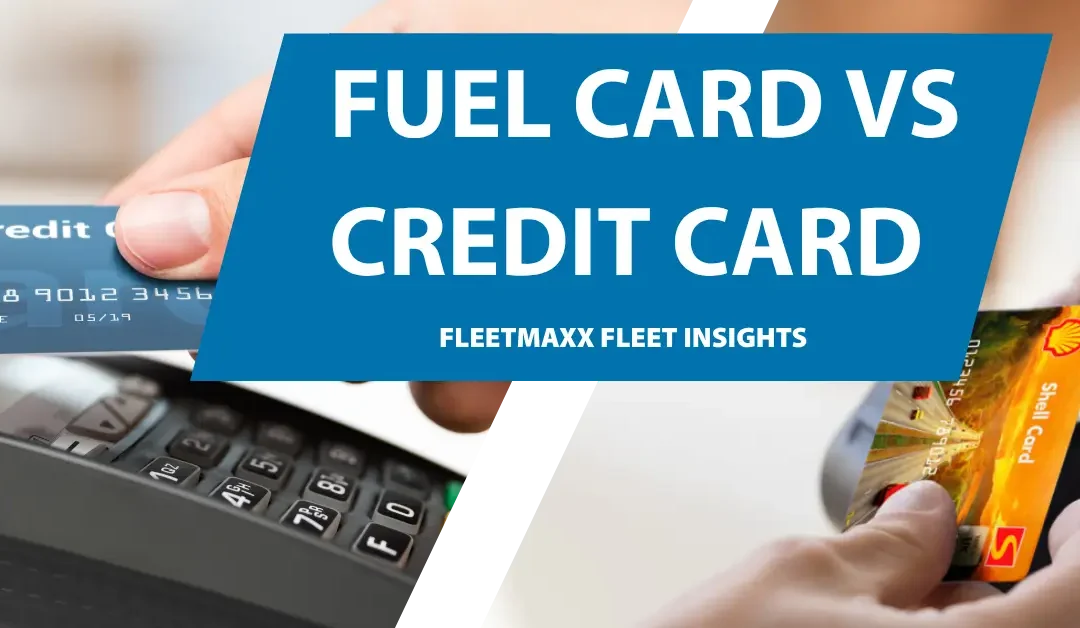
Fuel card vs company credit card: Which is better for business fuel?
Fuel card Vs company credit card: A guide by Steve Clarke, Marketing Manager at Fleetmaxx Solutions
If your drivers regularly buy diesel or petrol for work, you may be wondering whether a fuel card or a company credit card is the better way to manage fuel expenses.
At first glance, both options let employees pay for fuel while they are on the road. However, when you look a little closer, there are some big differences that can affect your fuel costs, admin time, VAT records, security, and overall fleet control.
In this guide, we compare fuel cards and company credit cards to help you decide which option is best for your business.

Fuel card Vs company credit card: Table of contents
- Fuel card or company credit card: which one could save your business more money?
- What is a fuel card and why do fleet operators use one?
- What is a company credit card and where does it fall short for fuel?
- The key differences most businesses miss
- Fuel card vs company credit card: the quick comparison table
- Which option gives you better control over driver spending?
- Which option makes VAT and fuel paperwork easier?
- Which option offers better security against misuse?
- Can a fuel card help reduce your fuel costs?
- Is a fuel card worth it for a small business?
- Fuel card vs credit card questions business owners ask first
- The verdict: should your business use a fuel card or company credit card?
Fuel card Vs company credit card: which one could save your business more money?
Many businesses start by using company credit cards because they are familiar, flexible, and easy to issue to staff.
However, as fuel costs increase and vehicle usage grows, company credit cards can become harder to manage. Receipts get lost, spending becomes harder to track, and it can be difficult to see exactly how much fuel each driver or vehicle is using.
A fuel card is different because it is designed specifically for fuel and fleet-related purchases. Rather than being a general business payment card, it gives your company fuel-specific controls, reporting, and invoicing.
For businesses that operate vehicles regularly, this can make a significant difference.
What is a fuel card and why do fleet operators use one?
A fuel card is a payment card used by businesses to buy diesel, petrol, and sometimes other vehicle-related products such as AdBlue®.
Drivers use the card at participating fuel stations, and the transaction is recorded electronically. The business then receives a consolidated invoice showing fuel purchases across its drivers and vehicles.
Fuel cards are commonly used by:
- Van fleets
- HGV operators
- Courier companies
- Construction firms
- Sales teams
- Mobile engineers
- Taxi operators
- Coach and bus operators
- Sole traders
- Small businesses
The main purpose of a fuel card is to help businesses reduce admin, improve control, and manage fuel costs more effectively.
What is a company credit card and where does it fall short for fuel?
A company credit card is a general business payment card. It can be used for a wide range of purchases, including fuel, hotels, meals, parking, travel, office supplies, and other business expenses.
That flexibility can be useful, but it can also create problems when the card is being used for fuel.
Because company credit cards are not designed specifically for fleet management, they usually do not provide the same level of fuel-specific reporting, purchase controls, or VAT support as a fuel card.
This means businesses may still need to collect paper receipts, manually check transactions, and separate fuel purchases from other types of spending.
Fuel card Vs company credit card – The key differences most businesses miss
The biggest difference between a fuel card and a company credit card is purpose.
A fuel card is built for fuel management. A company credit card is built for general spending.
That means a fuel card can usually tell you more about your fuel usage, including where drivers are filling up, how much fuel they are buying, and which vehicle or driver each transaction relates to.
A company credit card may show the amount spent and the location, but it often lacks the deeper fleet information that businesses need to manage fuel costs properly.
For a business with multiple drivers, this difference can quickly become important.
Fuel card vs company credit card: the quick comparison table
| Feature | Fuel card | Company credit card |
|---|---|---|
| Buy diesel and petrol | Yes | Yes |
| Fuel-specific reporting | Yes | Limited |
| Driver controls | Yes | Limited |
| Vehicle controls | Yes | Limited |
| Purchase restrictions | Yes | Limited |
| HMRC-compliant fuel invoices | Yes | Usually no |
| Potential fuel discounts | Often available | Rarely available |
| General business spending | No | Yes |
| Fleet management support | Yes | No |
Which option gives you better control over driver spending?
Fuel cards usually offer better control over fuel spending than company credit cards.
Depending on the provider, fuel cards can be assigned to a specific vehicle, driver, or registration number. They may also include restrictions on what can be purchased.
For example, a business may be able to limit a card so it can only be used for diesel, petrol, or approved vehicle-related purchases.
This helps prevent drivers from using the card for unrelated spending and gives business owners more confidence that fuel purchases are genuine.
With a company credit card, spending controls may be broader and less fuel-specific. That can make it harder to separate legitimate fuel costs from other purchases.
Fuel card Vs company credit card what option makes VAT and fuel paperwork easier?
VAT and receipt management can become a real admin headache for any business with vehicles on the road.
When drivers use company credit cards, they often still need to provide fuel receipts. If receipts are lost, damaged, or incomplete, it can create problems for accounts teams.
Fuel cards make this process easier by providing a consolidated fuel invoice. This helps reduce paperwork and gives the business a clearer record of fuel purchases.
Instead of chasing multiple drivers for receipts, the business can work from one invoice covering all fuel card transactions.
For many businesses, this alone can save hours of admin each month.
Which option offers better security against misuse?
Both fuel cards and company credit cards can include security features, but fuel cards are usually better suited to controlling fuel-related spending.
Common fuel card security features may include:
- PIN protection
- Driver identification
- Vehicle registration checks
- Purchase limits
- Fuel-only controls
- Transaction monitoring
These controls help reduce the risk of misuse, fraud, or accidental overspending.
A company credit card may still have limits and security checks, but it is often less specific to fuel purchases. This means the card may be more open to non-fuel spending unless carefully managed.
Can a fuel card help reduce your fuel costs?
Yes, in many cases a fuel card can help reduce fuel costs.
Some fuel cards provide access to fixed weekly pricing or discounted fuel rates. Depending on the card and network, businesses may be able to save up to 10p per litre on diesel or petrol.
Fuel cards can also help reduce costs indirectly by improving visibility.
When you can see where drivers are filling up, how often they are buying fuel, and which vehicles are using more than expected, it becomes easier to spot waste and take action.
That could include reviewing routes, checking driver behaviour, identifying inefficient vehicles, or introducing better fleet controls.
Is a fuel card worth it for a small business?
Fuel cards are not just for large fleets.
Small businesses, sole traders, and growing companies can also benefit from using a fuel card.
Even if you only operate one or two vehicles, a fuel card can help you keep better records, simplify fuel payments, and separate business fuel from personal spending.
For tradespeople, mobile engineers, delivery drivers, and small van fleets, this can make fuel management far easier.
As the business grows, the benefits become even stronger because fuel cards provide a clear structure for managing multiple vehicles and drivers.
Fuel card vs credit card questions business owners ask first
Can I use both a fuel card and a company credit card?
Yes. Many businesses use fuel cards for fuel and vehicle-related expenses, while keeping company credit cards for general business purchases.
Are fuel cards cheaper than credit cards?
A fuel card may help reduce fuel costs through discounted pricing, better reporting, and improved spending control. However, the best option depends on your fuel usage and business needs.
Can fuel cards be used for petrol and diesel?
Yes. Many fuel cards can be used for both petrol and diesel, depending on the fuel card provider and network.
Do fuel cards help with VAT?
Yes. Fuel cards usually provide consolidated invoices, which can make VAT records and fuel administration much easier.
Are fuel cards only for large fleets?
No. Fuel cards can be useful for sole traders, small businesses, SMEs, and large fleet operators.
The verdict for your business:
fuel card Vs company credit card?
If your business only buys fuel occasionally, a company credit card may be enough.
However, if your drivers regularly purchase fuel, a fuel card is usually the better option.
A fuel card provides better visibility, stronger controls, easier VAT administration, and the potential to access lower fuel prices.
Company credit cards are useful for general business expenses, but they are not designed specifically for fleet fuel management.
For most businesses operating cars, vans, HGVs, or mixed fleets, a fuel card gives greater control over one of the biggest day-to-day costs.
At Fleetmaxx Solutions, we help businesses find the right fuel card for their vehicles, routes, and fuel usage. Whether you operate one van or a nationwide fleet, our team can compare leading fuel card options and help you choose the solution that fits your business best.
Contact Fleetmaxx Solutions today for a free fuel cost analysis and discover whether a fuel card could help your business save money.
