Planting Mangrove trees in Kenya and supporting local communities
At Fleetmaxx Solutions, we are not just focused on fuel and fleet cost reduction but also on making a positive impact globally, particularly when it comes to preserving the environment and supporting local communities. As part of our ongoing sustainability efforts, we are proud to partner with Carma to help restore mangrove forests in Coastal Kenya, one of the country’s most vulnerable regions.
In addition to our commitment to planting native trees across the UK and supporting veterans with their mental health, we are now contributing to mangrove restoration in Kenya. This initiative is pivotal in not only enhancing local livelihoods but also in addressing one of the world’s most pressing environmental challenges: CO2 sequestration.
The importance of Mangrove trees in coastal Kenya
Mangrove tree ecosystems in Coastal Kenya have long been a lifeline for local communities. They provide essential resources such as fishing grounds, nutrition, and livelihoods, with many families depending on these ecosystems for sustenance. However, the recent surge in urbanisation and mangrove overexploitation—exacerbated by weak governance—has led to the destruction of these vital coastal habitats. This has only deepened the cycle of poverty and vulnerability for coastal communities, leaving them exposed to the impacts of climate change and the loss of essential resources.
Our role in Mangrove tree restoration
In partnership with Carma, we are dedicated to helping restore mangrove forests in this coastal region of Kenya. Our restoration efforts focus on planting several key mangrove tree species, which will provide numerous benefits to the local population and the environment alike.
These mangrove species include:
- Avicennia marina (Gray Mangrove)
- Rhizophora mucronata (Red Mangrove)
- Bruguiera gymnorrhiza (Black Mangrove)
- Ceriops tagal (Tagal Mangrove)
These species are vital for the region as they stabilise coastlines, support diverse marine life, and offer natural protection against storm surges. Mangroves also act as a critical CO2 store, which helps to combat climate change—a global issue that we all must take action on.


Avicennia Marina
Commonly known as the Gray Mangrove tree, is a resilient species of tree belonging to the family Acanthaceae. Native to the Pacific Basin (excluding Hawaii), this species plays a vital role in forming and maintaining mangrove swamps, which are critical ecosystems for coastal protection and biodiversity.
Key characteristics:
- Growth Form: Self-supporting, allowing it to thrive in intertidal zones.
- Height: Individuals can grow up to 7.3 meters tall.
- Leaves: Simple and broad, adapted to saline environments.
- Habitat: Typically found in tropical and subtropical coastal regions, forming dense mangrove tree forests.
Ecological importance:
- Coastal Defense: Acts as a natural barrier against erosion and storm surges.
- Biodiversity Hotspot: Provides habitat for numerous marine and terrestrial species.
- Carbon Sequestration: Plays a significant role in capturing and storing carbon.
- Lifespan:
On average, Avicennia marina lives for around 40 years, showcasing remarkable adaptability to challenging saline and anoxic conditions often found in mangrove swamps.
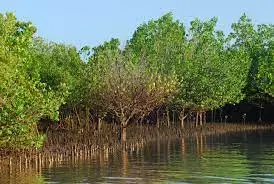

Rhizophora Mucronata
Commonly known as the loop-root mangrove, red mangrove, or Asiatic mangrove, is a key species in coastal ecosystems, particularly in East Africa and the Indo-Pacific region.
Key characteristics:
- Growth Form: Known for its distinctive arching stilt roots that loop both above and below the waterline, which provide stability in the tidal zone.
- Height: Typically grows between 8 to 25 meters tall, with some individuals reaching greater heights in favorable conditions.
- Leaves: Glossy and dark green, offering resilience against saline conditions.
- Bark: Color can range from a reddish to dark grey hue, contributing to its unique appearance.
Ecological importance:
- Habitat for Marine Species: Rhizophora mucronata provides crucial nursery habitats for fish and crustaceans, supporting marine biodiversity.
- Wildlife Support: Its flowers and leaves serve as food for a variety of insects and small animals, enriching the local food web.
- Coastal Protection: Plays a significant role in reducing erosion and buffering against storm surges, making it vital for coastal communities and ecosystems.
Lifespan:
On average, Rhizophora mucronata lives for about 50 years, thriving in the unique environments of mangrove tree forests, where its unique root system helps it survive in unstable, waterlogged soils.
These trees not only enhance biodiversity but also provide numerous benefits to human communities, including coastal defense and supporting fisheries.
Our positive impact to date
Empowering local communities
Our mangrove tree restoration project goes beyond environmental benefits; it’s about empowering local communities in Coastal Kenya to break the cycle of poverty. By restoring these ecosystems, we’re creating new fishing grounds and sustainable harvesting opportunities, which will provide additional income streams for local families. Mangroves also act as natural buffers against tropical storms, reducing the devastation of storms and improving the resilience of coastal communities.
In essence, this project is a win-win: We help restore critical ecosystems while giving the local people the resources they need to thrive, both now and in the future.
Join us in making a difference
At Fleetmaxx Solutions, we understand that positive change happens when we all work together. Our commitment to mangrove restoration in Kenya is just one example of how we are striving to make the world a better place. With your support, we can continue to restore the mangrove forests that are so vital to the environment and the people who rely on them.
Together, we can help Coastal Kenya break free from poverty, protect their coastal ecosystems, and mitigate the effects of climate change, all while supporting global biodiversity.
Thank you for your continued support in making these critical efforts possible.