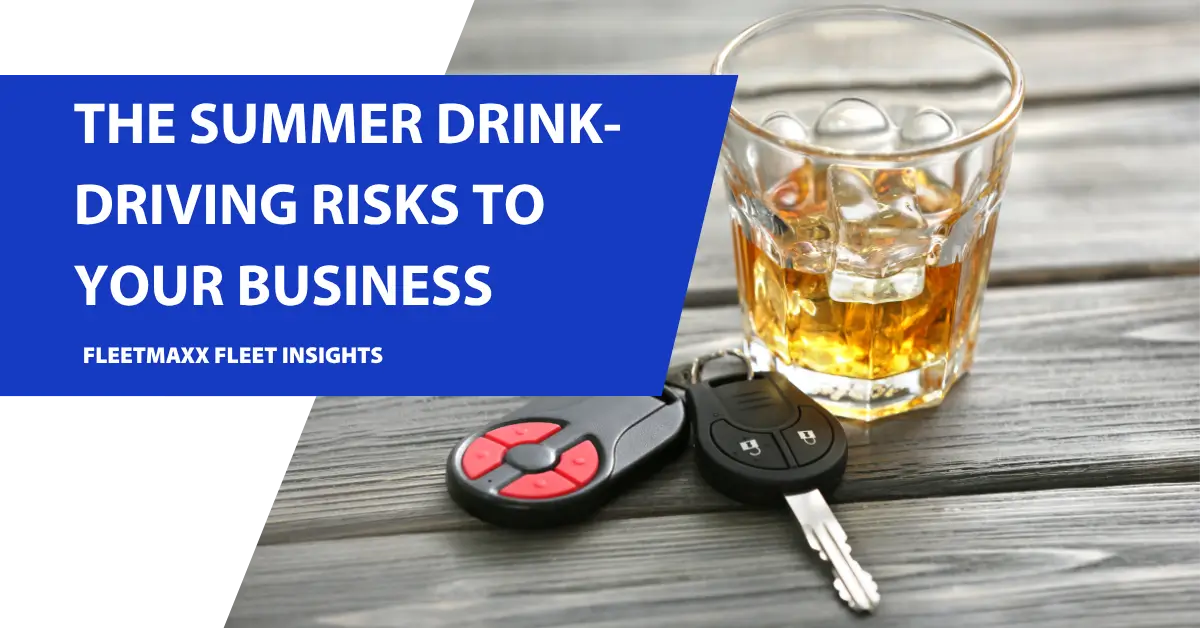
Drink-driving: Why fleets must stay alert this summer
Summer Drink-driving guide by Rachel Pearson, Key Account Manager and FORS Advanced Practitioner at Fleetmaxx Solutions
Hi, Rachel here again!
Over the years, I have worked closely with transport operators and fleet managers, helping them manage the everyday challenges that come with running vehicles while keeping their drivers safe and compliant.
When we talk about drink-driving, most people immediately think about Christmas parties, festive nights out and New Year celebrations.
However, new analysis from the RAC has highlighted something that may surprise many fleet operators: drink-drive collisions are actually more common during the summer than they are in winter.
These figures are an important reminder that drink-driving policies, driver awareness and workplace procedures must be taken seriously throughout the year, not just during the festive season.
August is the highest-risk month
According to the RAC’s analysis of Department for Transport data, August has recorded the highest average number of drink-drive incidents over the last decade:
- An average of 721 casualties
- An average of 485 collisions
July follows closely behind, averaging 704 casualties from 474 collisions. By comparison, December averages 663 casualties from 459 collisions.
Overall, June to August averaged 16% more drink-drive casualties and 16% more collisions than December to February over the period analysed. In 2024 alone, there were 1,810 casualties from 1,220 drink-drive collisions during the summer months, compared with 1,570 casualties from 1,060 collisions in winter. Read the RAC analysis reported by Fleet World.
Those are worrying figures, particularly when summer can sometimes feel like the more relaxed time of year.
Why can summer present a greater risk?
Summer brings holidays, barbecues, festivals, sporting events, longer evenings and more opportunities for social drinking.
There can also be a dangerous assumption that one or two drinks on a sunny afternoon will not cause a problem. However, alcohol affects everyone differently, and there is no reliable way for somebody to calculate whether they are safe to drive based simply on the number of drinks they have had.
The risk is not limited to the same evening either. Alcohol can remain in the body the following morning, meaning a driver may still be impaired or over the legal limit when they arrive for an early shift.
Hot weather can add further risks. Tiredness, dehydration and alcohol can all affect concentration, reaction times and decision-making. For somebody driving a van, HGV, company car or their own vehicle for work, that can be an extremely dangerous combination.
The consequences of drink-driving can be life-changing
Drink-driving can cause devastating injuries and loss of life. It can also have serious consequences for the individual driver and their employer.
A person convicted of driving or attempting to drive while over the legal alcohol limit could face:
- Up to six months in prison
- An unlimited fine
- A driving ban of at least one year
- A criminal record
- Significantly increased insurance costs
- The possible loss of their job or livelihood
Drink-driving endorsements can remain on a driver’s record for 11 years. Full details of the penalties are available on GOV.UK.
For a transport business, an incident may also lead to vehicle downtime, insurance difficulties, staff shortages, reputational damage and questions about how effectively occupational road risk is being managed.
Drink-driving: What should fleet operators be doing?
I do not think this needs to become overly complicated, but every business with employees who drive for work should have clear, documented procedures.
These should include:
- A clear alcohol and drugs policy
- Defined rules covering drinking before and during work
- A requirement for drivers to report convictions, bans and licence changes
- Regular driving licence checks
- Training for managers on recognising and responding to concerns
- A safe process for preventing somebody from driving when there is a genuine concern
- Support for employees who may be experiencing alcohol dependency
- Consistent investigation and disciplinary procedures
- Appropriate records showing that risks are being actively managed
These arrangements should cover company vehicles, hired vehicles and grey fleet drivers using their own vehicles for business journeys.
The Health and Safety Executive advises employers to manage the risks faced by people driving for work in the same way as other workplace health and safety risks. This includes considering the journey, the driver and the vehicle. Read the HSE guidance for employers.
Make sure managers know how to respond
This can be a difficult area for managers.
What happens if an employee arrives for work smelling of alcohol? What if another member of staff raises a concern? Should the driver be suspended from driving? How should the conversation be recorded? Is it a conduct issue, a health issue or both?
The immediate priority must always be safety. A person should never be permitted to drive if there is a genuine concern that they may be impaired.
However, any investigation or employment action must also be handled fairly, consistently and in line with the company’s policies. Managers should avoid making assumptions and seek professional HR advice where necessary.
We can help you put the right support in place
At Fleetmaxx Solutions, we understand that managing a fleet involves much more than vehicles and fuel. It also means looking after drivers, protecting the public and making sure the correct policies and procedures are in place.
Our range of transport consultancy services can help businesses review their driver policies, compliance processes, licence-checking arrangements and occupational road risk procedures.
Our transport HR support services can also assist when drink-driving concerns arise, including helping with investigations, disciplinary processes, policy wording and the fair management of sensitive employee situations.
Hopefully, you will never need that support following an incident. However, having the right arrangements in place before a problem occurs can make a huge difference.
If you would like help reviewing your current driver policies, transport compliance procedures or HR arrangements, please get in touch with the Fleetmaxx Solutions team.

Our transport consultancy services include:
DVSA Investigation Preparation & Assistance
When it comes to operators grappling with DVSA challenges, Steve Hale Transport Consultancy excels in offering pre-audits, expert guidance, and tailored corrective measures to address compliance issues. They maintain a close partnership with a Transport Law firm, conducting comprehensive investigative work on behalf of their clients, ensuring effective support and resolution.
Operator Licensing Applications
Our partners, Steve Hale Transport Consultancy, possess specialised knowledge to guide you and your business through the operator license application process. They offer operators ongoing support for all your license requirements. Whether you will benefit from continuous transport management or just require one-time assistance with the application submission to ensure accuracy.
Tachograph Analysis
Tachograph analysis is legally required, and our expert partners are ready to help with analysis, software provision, and complete setup services. Their platform generates reports and alerts for compliance, and they offer supplementary tools, such as the Driver Daily Walk Round App and Driver License Checking Services. For a comprehensive list of services, please request one.
Fleet Compliance Audits
Running a fleet, large or small, can be difficult and daunting. Our partners are often requested to undertake a full site or fleet compliance audit by companies to provide an overview of their operation’s general compliance and condition.
During the audit, they will offer guidance and advice on any improvements we feel are necessary and needed.
Health & Safety Services
Alongside transport compliance support, this enhanced service helps organisations meet their legal responsibilities, manage workplace risks effectively, and build safer, more resilient operations.
All consultancy is delivered by a highly experienced, NEBOSH qualified Health and safety professional with more than 25 years of industry experience. The guidance provided is practical, proportionate, and tailored to real working environments, ensuring that compliance strengthens operational performance rather than slowing it down.
Fleet HR Consultancy Services
Running a fleet brings plenty of challenges. Managing people can be even more complex.
That is why Fleet HR consultancy services are now available through our trusted transport consultancy partnership, providing practical, expert HR support for small to medium sized transport, logistics and fleet businesses.
From recruitment to retirement, the service is designed to help protect your business, support your team, and ensure you remain compliant at every stage of employment.
Understanding your OCRS Score
Your operator’s licence is one of the most valuable assets your business holds. Understanding what OCRS is and how it works is essential for protecting that licence and maintaining a strong compliance record.
The Operator Compliance Risk Score (OCRS) is used by the DVSA to assess how well operators manage vehicle roadworthiness and regulatory compliance. A strong score can reduce inspections and demonstrate good management practices.
With the right systems, procedures, and expert support in place, operators can maintain a healthy OCRS score and keep their fleet operating safely and efficiently.
Road Risk Management
Driving for work remains one of the most significant risks faced by many organisations today. Whether your fleet includes vans, HGVs, company cars or grey fleet vehicles, having a clear and structured Road Risk management strategy is essential to help protect drivers, vehicles, business operations and other road users.
Through our consultancy partners, businesses benefit from the expertise of highly experienced specialists, including former Roads Policing Officers with extensive frontline experience. Their knowledge has been built through years of investigating serious collisions, assessing driver behaviour and understanding the underlying causes of road incidents.
This real world experience enables organisations to receive practical, informed guidance that helps improve driver standards, strengthen vehicle safety and create safer, more effective operational procedures across the fleet.
RTA Support
Fleetmaxx Solutions is proud to introduce FleetGuard+, a specialist emergency response and incident support service available to our customers through our trusted consultancy partner, Steve Hale Transport Consultancy Ltd.
Created specifically for UK transport operators and professional drivers, FleetGuard+ delivers immediate access to expert guidance, legal assistance and driver wellbeing support following serious or fatal road traffic collisions.
In the aftermath of a serious incident, the actions taken in the first few hours can be critical. FleetGuard+ is designed to support drivers, transport managers and business owners from the very beginning, helping them respond appropriately, reduce operational and legal risk, and navigate what can often be an extremely stressful and challenging situation.
This article provides general information and does not constitute legal or HR advice. Laws, official guidance and individual circumstances can change. Businesses should consult the latest government guidance and obtain professional advice for specific cases.